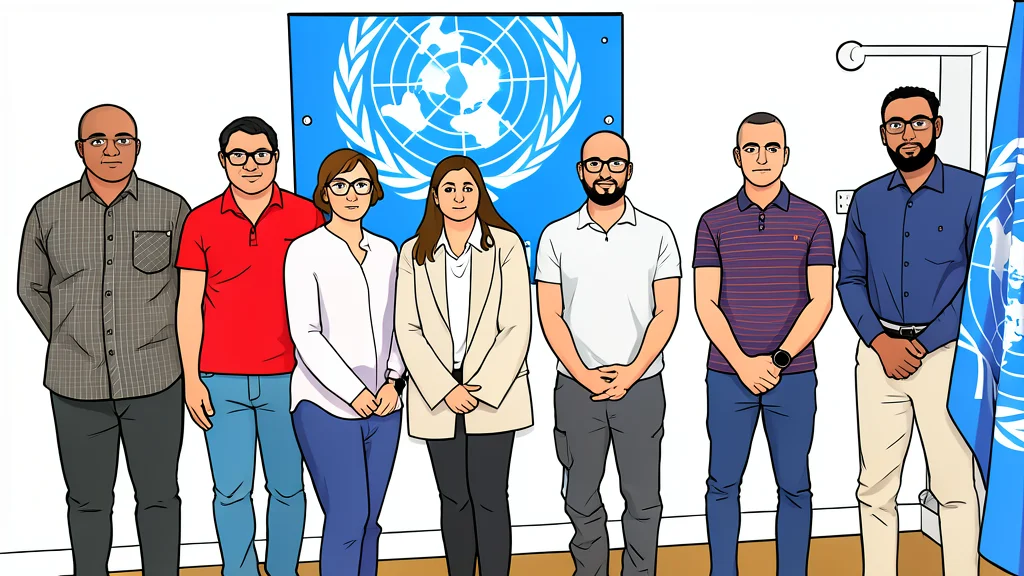
Washington Ends UN Human Rights Council Membership
The United States has formally terminated its participation in the UN Human Rights Council, a move announced shortly after new UN findings regarding military strikes in Iran.
The United States has officially ended its membership in the UN Human Rights Council, marking a significant shift in Washington’s engagement with international multilateral bodies. The State Department confirmed the withdrawal on Thursday, citing what it described as the body's promotion of anti-American rhetoric and its perceived failure to hold repressive regimes accountable. This formal exit occurs during the council’s current session in Geneva, underscoring a deepening disconnect between U.S. policy and the institution’s operational framework.
According to reporting from GN geopolitics/rights (en-US), the timing of this decision is particularly notable given recent developments in the Middle East. The withdrawal was announced one day after an independent UN fact-finding mission reported that there were reasonable grounds to believe U.S. military actions in Iran could constitute war crimes. The mission specifically examined strikes on civilian infrastructure, including a school in Minab, finding no evidence that these facilities were being used for military purposes at the time of the attacks.
Context of Recent UN Findings
The UN fact-finding mission on Iran released a report indicating that U.S. forces were responsible for two specific incidents, one involving a strike on a clearly identifiable civilian school and another targeting a sports complex. The mission emphasized that the school in Minab was a civilian building with no apparent military use during the period of the attack. These findings provide a factual backdrop to the diplomatic tensions that have characterized the relationship between Washington and the UN body in recent months.
Washington has long expressed dissatisfaction with the council’s composition and procedural dynamics, arguing that it disproportionately focuses on U.S. conduct while failing to address violations by other state actors. The State Department’s statement highlighted this imbalance as a primary driver for the decision to withdraw, reflecting a broader administrative strategy to reduce reliance on international institutions that are viewed as politically biased or ineffective in enforcing global human rights standards.
Broader Strategic Implications
This move aligns with a wider pattern of the current administration withdrawing from various international organizations and agreements. The White House had previously indicated that the U.S. would not seek future membership on the council, signaling a long-term disengagement from this specific forum for human rights oversight. Analysts suggest that this decision is part of a broader recalibration of U.S. foreign policy, prioritizing national sovereignty and bilateral engagements over multilateral commitments.
Simultaneously, the U.S. government has intensified its economic pressure on Iran, imposing new sanctions on entities alleged to support the Islamic Revolutionary Guard Corps. The Treasury Department recently targeted a cryptocurrency platform, accusing it of facilitating the transfer of significant funds to Iranian state actors. This dual approach—withdrawal from diplomatic forums and increased financial pressure—illustrates a coordinated strategy to leverage economic tools while distancing itself from multilateral diplomatic channels.
Future Diplomatic Considerations
The immediate aftermath of the withdrawal will likely involve discussions within the council regarding the implications of losing a major member state. Observers will be watching how other nations respond to this move and whether it prompts a broader reevaluation of the council’s structure and effectiveness. The ongoing session in Geneva, which is scheduled to continue through early October, may see increased debate over the council’s future direction and its ability to maintain credibility without U.S. participation.
For the international community, the key question remains how the absence of U.S. engagement will affect the council’s capacity to address global human rights challenges. The next several weeks will be crucial in determining whether this withdrawal leads to a reconfiguration of the council’s membership and operational priorities, or if it results in a stagnation of its work. Stakeholders will need to closely monitor diplomatic efforts to bridge the gap created by this decision and assess the long-term impact on global human rights governance.