Iran Asserts Nuclear Programme Will Continue Despite External Pressure
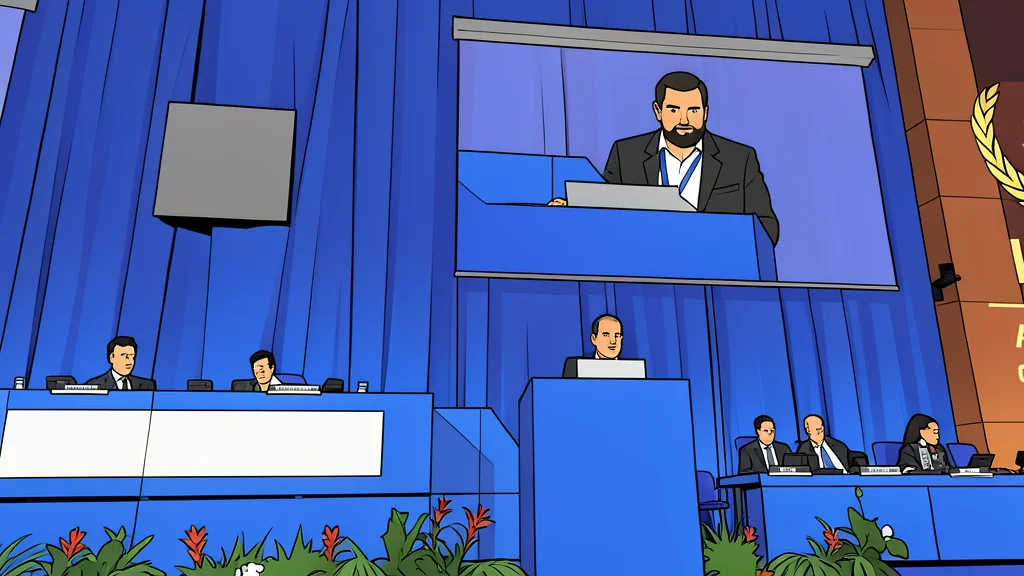
Iran's deputy nuclear chief stated in Vienna that the country will not abandon its peaceful atomic activities, citing deep-rooted technical expertise and a history of unilateral sanctions.
Iran has reaffirmed its commitment to maintaining its peaceful nuclear programme, with the deputy head of the Atomic Energy Organisation of Iran (AEOI) asserting that the country will not surrender to external pressures or military threats. Speaking at the International Atomic Energy Agency (IAEA) General Conference in Vienna, Behrouz Kamalvandi emphasized that decades of accumulated expertise have made the nation's nuclear industry resilient to elimination through force.
The statement comes amid heightened regional tensions and ongoing diplomatic complexities. According to reports from GN auto geopolitics/middle-east: Iran nuclear, Kamalvandi addressed the assembly by highlighting the long history of Iran's engagement with international nuclear frameworks, arguing that the country's technical capabilities are now deeply embedded in its industrial fabric. He contended that previous attempts to halt progress through sanctions or military means had failed to dismantle the foundational knowledge and infrastructure within the region.
Historical context of diplomatic friction
Kamalvandi outlined a timeline of diplomatic interactions that he described as characterized by broken commitments from international partners. He noted that Iran has been a party to the Treaty on the Non-Proliferation of Nuclear Weapons for several decades and has consistently maintained the peaceful nature of its activities. However, he pointed to the United States' withdrawal from the Joint Comprehensive Plan of Action (JCPOA) as a pivotal moment that shifted the landscape of negotiations.
The official stated that despite the US exit, Iran continued to implement its obligations under the agreement for approximately eighteen months. He cited fifteen consecutive reports from the IAEA director general that confirmed Iran's adherence to these commitments during that period. Nevertheless, he argued that this cooperation was met with additional unilateral sanctions, which he described as severe and economically damaging, ultimately complicating the path back to full international agreement.
Criticism of agency impartiality
Turning to the role of the IAEA, Kamalvandi questioned the effectiveness of the agency's inspection regimes. He asked whether any of the repeated inspections had resulted in a finding that nuclear material had been diverted for military purposes. Instead, he accused the agency's leadership of exhibiting double standards and politicized conduct that, in his view, provided pretexts for adversaries to justify hostile actions against Iranian territory.
The AEOI deputy chief called for the agency to condemn recent military strikes on Iranian nuclear facilities. He urged the IAEA to treat Iran with the same impartiality it affords other member states and to act strictly within its statutory mandate. By emphasizing the need for neutral oversight, Tehran seeks to position its nuclear activities as transparent and compliant with international norms, even as security threats persist.
Strategic autonomy and security concerns
Kamalvandi explained that Iran’s drive toward indigenous nuclear capabilities stems from historical experiences with European partners who failed to honor contractual commitments. He argued that reliance on external guarantees was insufficient for meeting the country's strategic needs, leading Tehran to complete its nuclear fuel cycle for peaceful civilian requirements. This pursuit of self-sufficiency is framed as a response to the unreliability of international partners rather than a deviation from non-proliferation goals.
Furthermore, the official defended the location of sensitive facilities in secure and underground sites as a necessary measure against continuing military and security threats. He insisted that such defensive positioning should not be interpreted as concealment. As diplomatic talks remain fragile, the focus now shifts to whether the IAEA can maintain its role as a neutral verifier while navigating the geopolitical pressures exerted by major powers and regional actors.