Iran's Spymaster Allegedly Derailed Peace Deal Amid Strait Attacks
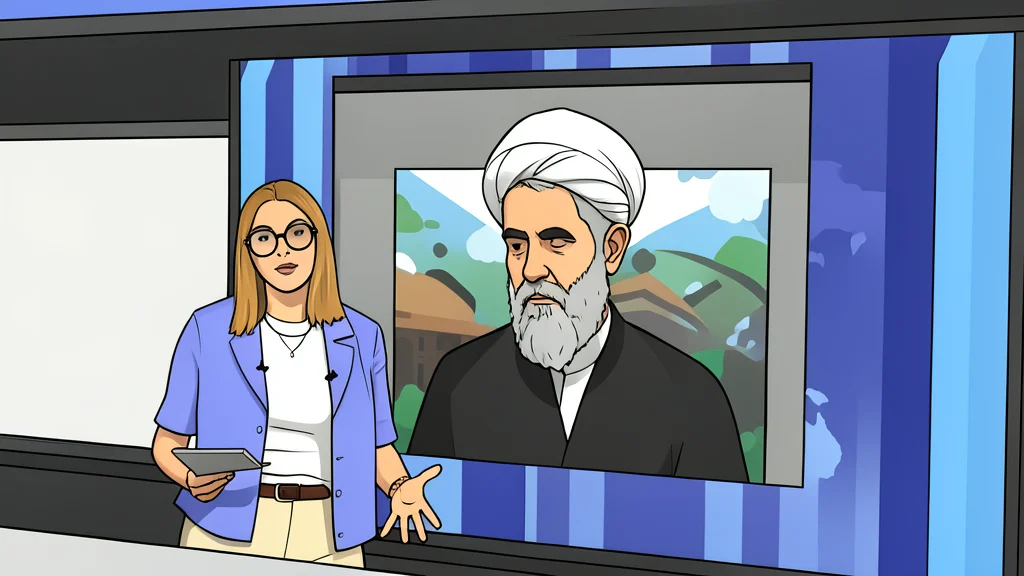
A recent report alleges that Iranian hardliners orchestrated attacks in the Strait of Hormuz to sabotage diplomatic efforts, pointing to a shadowy security figure who operates with significant autonomy.
The New York Times has reported that a clandestine campaign by Iranian hardliners significantly undermined recent peace negotiations with the United States. According to the publication, this faction initiated attacks on commercial vessels in the Strait of Hormuz in early July, actions that were not sanctioned by the country’s formal executive leadership. The report suggests a deepening rift between the official state apparatus and a powerful security establishment that operates with considerable independence.
Central to this narrative is Hossein Taeb, a senior cleric and security official whom the paper describes as an influential spymaster. The report indicates that Taeb has been a vocal opponent of the proposed peace framework, arguing that American demands are incompatible with Iran’s political stance. With the new Supreme Leader described by insiders as largely absent from public decision-making, Taeb’s influence appears to have grown in a vacuum of clear leadership, allowing him to shape security policy through behind-the-scenes maneuvering.
Strategic Ambiguity in Leadership
The situation is complicated by what France 24’s press review characterizes as a crisis of command. Three anonymous Iranian officials stated that the President, the General of the Revolutionary Guards, and the Supreme National Security Council were unaware of the maritime strikes. This lack of coordination highlights a structural fragility within the regime, where the authority of the Supreme Leader is currently being questioned even by the head of state. The result is a system where security decisions can be made by a small circle of loyalists without broader institutional oversight.
This internal disarray raises questions about the stability of Iran’s foreign policy. If key actors believe they can unilaterally derail diplomatic processes, the predictability of the state is compromised. The report notes that Taeb played a significant role in the selection of the current Supreme Leader, a fact that may bolster his position but also concentrates power in ways that could destabilize the broader political consensus. Observers are watching closely to see if this faction continues to act independently or if a consolidation of power occurs.
Global Context of Strategic Tensions
While the Iranian security crisis dominates the geopolitical landscape, other significant developments are unfolding in the technology sector. US President Donald Trump has recently dismissed concerns about artificial intelligence risks as exaggerated, attributing them to negative forces. However, a contrasting view is emerging from scientific and academic communities, where experts warn that AI capabilities are advancing faster than societal safeguards. This divergence between political rhetoric and technical reality underscores a broader global debate on the pace of technological adoption.
Critics argue that downplaying these risks ignores the potential for unintended consequences in critical infrastructure and personal data management. Reports highlight cases where AI-driven systems have already caused errors in real-world applications, prompting calls for a more measured approach to development. As nations grapple with the strategic implications of AI, the lack of a unified international framework remains a significant challenge. The interplay between state security and technological governance will likely define the next phase of global competition.
Watch for Leadership Consolidation
In the coming weeks, the focus will shift to whether Iran’s formal leadership can reassert control over the security establishment. Analysts are monitoring for signs of a crackdown on dissenting factions or, conversely, further evidence of a parallel power structure. The behavior of the Revolutionary Guards and the stance of the Supreme Leader’s office will be key indicators. If the hardliner faction continues to act independently, the prospects for a durable peace deal with the United States may remain elusive.