Poland Integrates K2 Tanks into Eastern Flank Defense Strategy
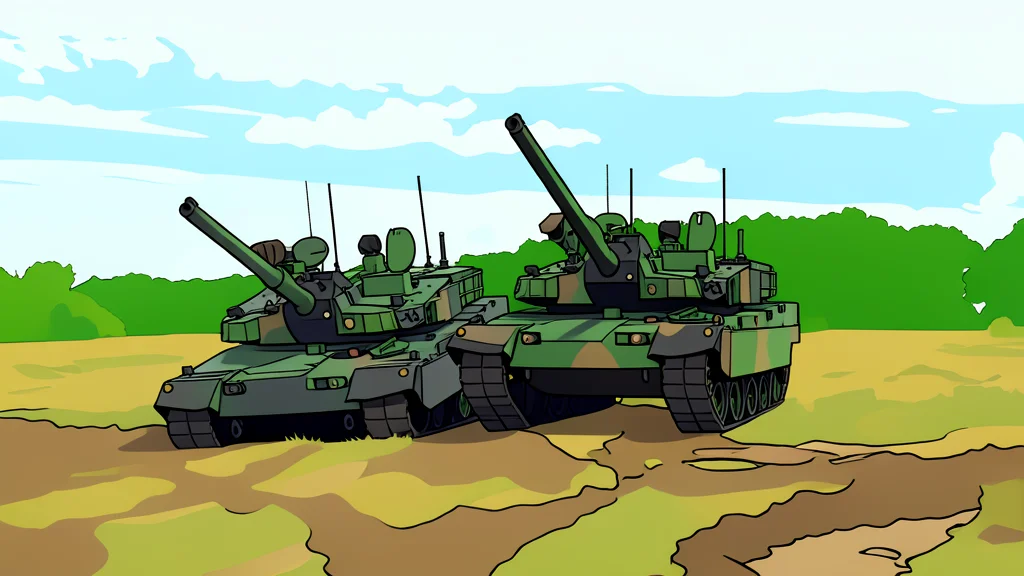
Newly delivered Korean-made K2 tanks are undergoing rigorous testing near the Russian border, emerging as a central component of Poland's long-term armored defense strategy.
On a muddy training field in Braniewo, two Hyundai Rotem K2 tanks demonstrated their mobility by raising and lowering their hulls to adjust firing angles. This exercise took place just kilometers from the Polish-Russian border, highlighting the strategic importance of the region. According to local commanders, these vehicles are increasingly viewed as a critical asset for NATO’s eastern flank, operating in an area that has historically been a focal point of military tension.
The deployment of these tanks represents a significant shift in Poland’s armored capabilities. With over 200 units now delivered, the K2 is being positioned not merely as a temporary reinforcement, but as a foundational element of the country's defense infrastructure. The proximity to the Kaliningrad exclave, which houses Russian naval and missile assets, underscores the geopolitical weight of this positioning.
Strategic Placement on Eastern Border
The choice of location for these operations is deliberate. Braniewo sits close to the Gronowo border checkpoint, a direct gateway to the Kaliningrad exclave. As noted by GN geopolitics/nato, this area serves as a frontline for NATO, with Belarus lying further east as a key ally to Russia. The presence of advanced armored units here signals a sustained commitment to defending the region against potential threats from the east.
Historical context further informs this deployment. The nearby city of Gdansk, where German shelling in 1939 marked the beginning of World War II, remains a symbol of the region's vulnerability. Today, the K2 tanks are stationed in this same geographic corridor, reflecting a continuity of defensive priorities. The integration of these modern systems into a historically sensitive area marks a new chapter in regional security architecture.
Operational Advantages and Local Maintenance
Local military personnel have cited specific technical advantages that distinguish the K2 from previous models like the PT-91. Lieutenant Mariusz, who commands a K2 unit, described the tank as a digital fighter jet on the ground, praising its ability to track and engage targets while moving across rough terrain. The vehicle’s high-powered engine allows it to maintain speed even in muddy conditions, a capability essential for rapid response in the region.
Sustaining this capability relies heavily on local maintenance infrastructure. Reports indicate that more than 90 percent of the fleet remains combat-ready, a figure attributed to localized support systems. Routine inspections, including checks on optical equipment and fire-control systems, are performed by local workers under the supervision of Hyundai Rotem employees. This collaboration ensures that minor issues, such as cable connections, are addressed promptly to maintain operational integrity.
Long-Term Vision for Armored Forces
The ultimate goal is to localize and upgrade the fleet to the K2PL standard. According to unit leadership, this process will transform the K2 into the long-term backbone of Poland’s armed forces for decades. The shift from imported systems to fully integrated national assets reduces logistical dependencies and enhances strategic autonomy. This long-term perspective aligns with broader NATO strategies to strengthen the durability of eastern defenses.
As deliveries continue under a second contract, the focus remains on deepening the integration of these tanks into the national defense framework. The next phase will likely involve further upgrades and expanded training exercises to test the limits of the fleet’s readiness. Observers will watch how Poland balances the need for rapid deployment with the long-term goal of establishing a self-sufficient, high-readiness armored force on its borders.