South Asia Bears Brunt of Middle East Conflict
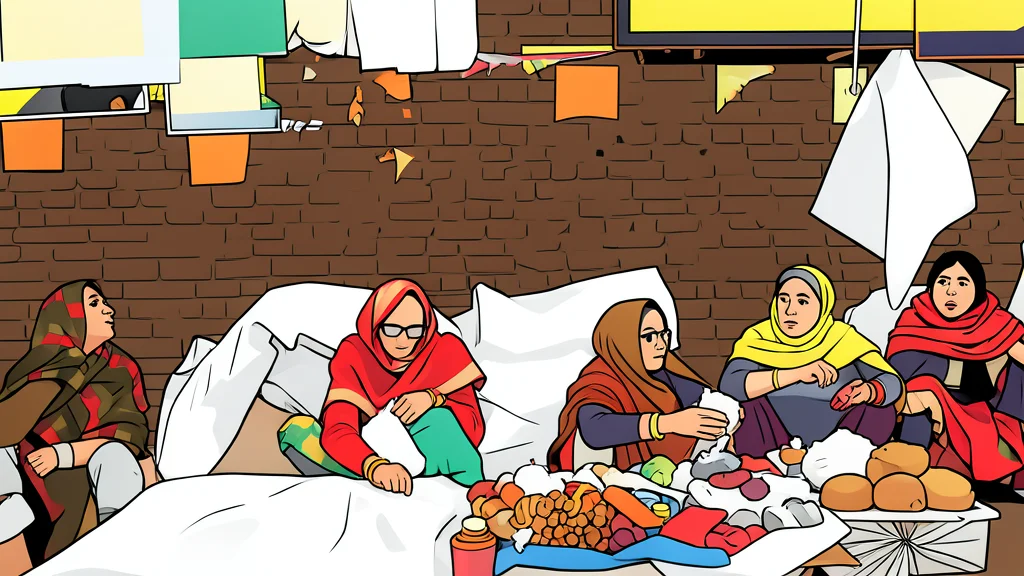
Nearly two billion people across South Asia face escalating energy costs as regional conflicts disrupt critical supply chains, forcing households to choose between food and education.
A quarter of the global population is currently navigating a deepening cost-of-living crisis driven by the expanding conflict in the Middle East. According to reporting from Al Jazeera English, the ripple effects are most acutely felt in South Asia, where India, Pakistan, Bangladesh, and Nepal are home to nearly two billion people. These nations have long relied on imported energy from Gulf states, creating a structural vulnerability that has been exacerbated by the recent war.
The disruption is not uniform across the region. While some countries have diversified their energy sources, others face direct shortages as supply routes through the Strait of Hormuz become increasingly precarious. The resulting price shocks are hitting the most economically vulnerable residents hardest, reshaping daily life from grocery shopping to household utility bills.
Divergent energy dependencies shape impact
India, the world’s third-largest crude importer, sources approximately 85 percent of its oil from abroad, with Gulf producers like Saudi Arabia and Iraq being key suppliers. However, it maintains a more diversified network, drawing from Russia, Africa, and the Americas. In contrast, Pakistan and Bangladesh have fewer alternatives for critical supplies. Pakistan relies heavily on Gulf crude and Qatari liquefied natural gas, while Bangladesh, despite domestic gas production, increasingly imports LNG to meet rising demand.
Nepal’s situation illustrates the complexity of regional interdependence. As a landlocked nation, it does not import directly from the Gulf but depends almost entirely on India for petroleum products. Consequently, any price hikes or supply interruptions in India feed directly into Nepal’s market, creating a secondary shockwave that complicates economic stability in the Himalayan region.
Household budgets face severe strain
For working-class families, the macroeconomic shifts manifest as immediate financial distress. In Karachi, Pakistan, a housekeeper named Sajida Jibran describes a situation where basic necessities have become unaffordable. Her monthly rent has surged significantly, and electricity and gas bills have tripled or quadrupled due to the shift from locally produced, now depleted, gas reserves to imported fuels.
The pressure has forced difficult choices regarding her children’s future. Jibran reports that she has had to stop paying school fees, prioritizing food over education. She describes feeling helpless as she watches her children unable to continue their studies, a sacrifice that reflects the broader erosion of social safety nets in the region.
Vulnerable populations absorb the shock
Experts note that the poor and economically vulnerable are bearing the brunt of this crisis. In New Delhi, security guards and other low-income workers report that rising prices are making everyday life increasingly difficult. The inability to hedge against global energy shocks means that household budgets in South Asia are absorbing the full force of the geopolitical instability.
As the conflict persists, the focus shifts to what happens next. Watch for further disruptions in shipping lanes and potential policy responses from South Asian governments aimed at subsidizing energy or securing alternative supply contracts. The sustainability of these measures will determine whether the current crisis remains a temporary shock or becomes a structural feature of the regional economy.