US and UN Coordinate on Sahara Path After Madrid Talks
Washington and the United Nations are aligning their diplomatic strategies to advance a political resolution for Western Sahara, citing Security Council Resolution 2797 as the central framework for upcoming negotiations.
The United States and the United Nations have reaffirmed their joint commitment to facilitating a lasting political solution to the Western Sahara dispute. According to GN geopolitics/un, this coordination is explicitly tied to the implementation of UN Security Council Resolution 2797, which was adopted in October 2025. The resolution endorses the Autonomy plan under Moroccan sovereignty and calls upon Algeria, Morocco, Mauritania, and the Polisario Front to engage in unconditional discussions. The primary objective is to reach a final, mutually acceptable political settlement that addresses the long-standing conflict in the region.
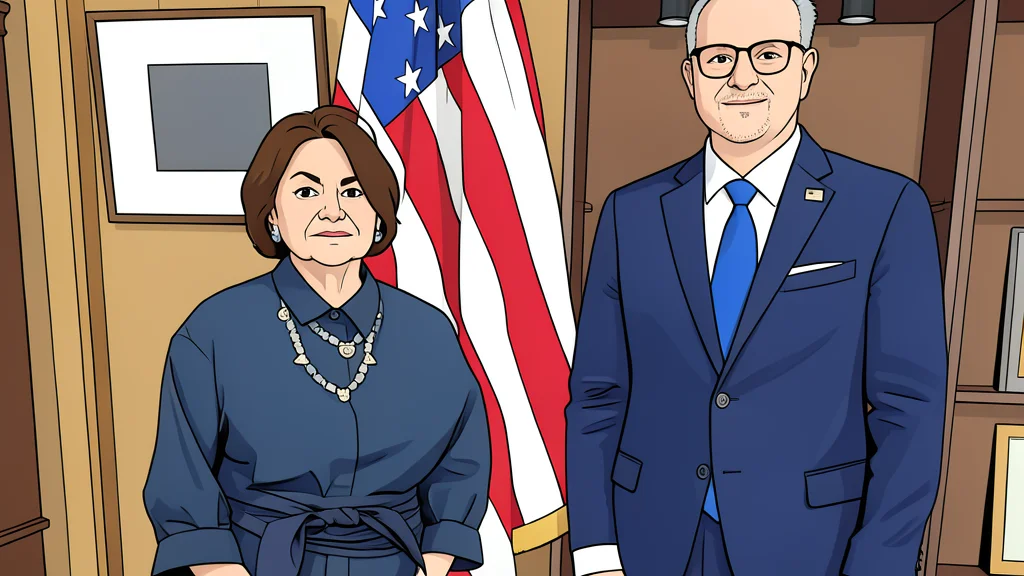
High-level diplomatic exchanges underscore the urgency of this process. U.S. Presidential advisor Massad Boulos recently conferred with Rosemary DiCarlo, the UN undersecretary-general for political and peacebuilding affairs. In a statement shared on social media, Boulos emphasized the necessity of advancing a resolution consistent with the Security Council’s mandate. These talks occur against a backdrop of recent diplomatic activity, including a telephone conversation between Boulos and Algerian President Abdelmajid Tebboune, signaling a continued effort to maintain open channels despite the complexity of the geopolitical landscape.
Quadripartite Meetings in Madrid and Washington
Diplomatic efforts have intensified in early 2026 with the convening of delegations from the four key parties to the conflict. In February, the United States hosted initial talks in Madrid, where U.S. Permanent Representative Mike Waltz and Boulos participated alongside the UN Sahara envoy, Staffan de Mistura. Shortly thereafter, a second quadpartite meeting was held in Washington on February 23 and 24. These sessions were designed to build momentum toward the implementation of the autonomy proposal, with de Mistura co-chairing the discussions to ensure the UN’s central role in the mediation process.
Despite these structured dialogues, the outcomes have remained ambiguous. Reports indicate that significant obstacles persist, particularly regarding the willingness of Algeria and the Polisario Front to fully align with the parameters set by Resolution 2797. This reluctance complicates the diplomatic landscape, as the resolution calls for engagement without preconditions. The uncertainty surrounding the acceptance of the autonomy plan by all parties remains a critical hurdle that Washington and New York are working to overcome ahead of further international scrutiny.
New Complications from Spanish Citizenship Move
The diplomatic calculus has been further complicated by recent actions from Spain, the former colonial power in the region. By granting citizenship to individuals born in Western Sahara under Spanish rule, Madrid has introduced a new variable into the political equation. According to GN geopolitics/un, this move is viewed as adding friction to the UN-backed Autonomy plan. It introduces a demographic and legal dimension that could influence the dynamics of the negotiations, potentially challenging the straightforward application of the resolution’s framework and requiring additional diplomatic navigation by the involved parties.
Looking Ahead to Security Council Review
As these developments unfold, attention turns to the upcoming UN Security Council meeting on the Sahara, scheduled for October 31, 2026. This session will serve as a critical juncture for assessing progress, or lack thereof, in implementing the resolutions adopted in late 2025. The interplay between bilateral U.S.-UN coordination, the reactions of the four parties to the conflict, and the external factors introduced by European powers will likely shape the outcome. Observers will be watching closely to see if the diplomatic pressure results in tangible concessions or if the deadlock persists, potentially prolonging the political stalemate in the region.