US Officials Signal Openness to Iran Talks at UN
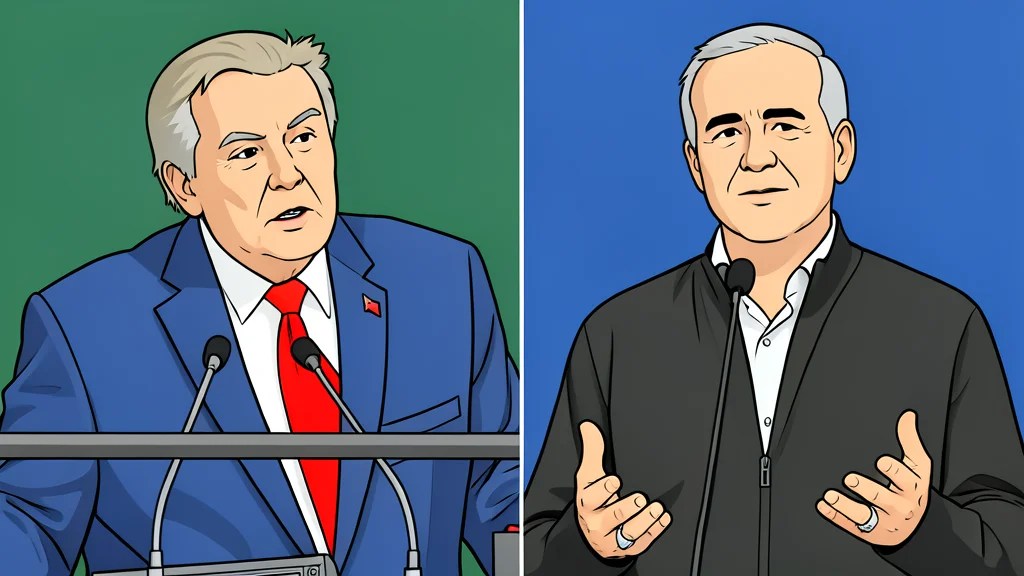
Washington indicates readiness for direct talks with Tehran on the sidelines of the UN General Assembly, though no meeting is confirmed.
Key points
- US officials say President Trump is open to meeting Iranian leaders at the UN, though no date is set.
- Washington insists any talks must ensure Iran never obtains nuclear weapons, a core US objective.
- Iran warns it will expand the scope and intensity of the conflict if new US attacks occur.
United States President Donald Trump has expressed interest in engaging with Iranian leadership during the 81st session of the United Nations General Assembly in New York. According to reports cited by The Times of India, the US President is reportedly open to such discussions, provided that the diplomatic conditions are favorable, even as no formal meeting has yet been scheduled.
The potential for direct contact arises against the backdrop of a nearly seven-month conflict between Washington and Tehran. While US Secretary of State Marco Rubio confirmed that the administration is receptive to the idea, he emphasized that any engagement must lead to positive outcomes, specifically ensuring that Iran never acquires nuclear weapons.
Diplomatic channels remain active
Internal discussions within the US administration are focused on determining whether a face-to-face encounter could help end the ongoing hostilities. A US official familiar with the matter told CNN that talks are under way regarding the possibility of a meeting on the sidelines of the UN General Assembly. The official noted that while the President is open to the idea, the logistics and political prerequisites are still being evaluated.
US Ambassador to the United Nations Mike Waltz reiterated that the President remains consistently open to discussions with Iranian representatives. However, he highlighted a persistent challenge regarding who holds the ultimate authority to make decisions for the Iranian regime. Waltz questioned whether the diplomats present in New York possess the full backing of Iran's Supreme Leader, a factor that complicates any direct negotiation.
Uncertainty over Iranian delegation mandate
Iran has sent a scaled-down delegation to the New York sessions, which includes Foreign Minister Abbas Araghchi and President Masoud Pezeshkian. It remains unclear whether these officials have the explicit authorization to negotiate directly with their US counterparts. This ambiguity creates a significant hurdle for any immediate breakthrough, as both sides remain cautious about the scope and intent of potential conversations.
Despite the diplomatic overtures, the tone from both capitals remains sharp. President Trump recently stated that he is in a deciding mode regarding the next steps for the US, issuing stark warnings to Iran. He suggested that Tehran faces limited options, ranging from economic collapse to severe military consequences, if they do not behave in a manner acceptable to Washington.
Escalation risks persist
In response to US rhetoric, Iranian officials have warned that any new military aggression would lead to a significant widening of the conflict. Hossein Mohebbi, a spokesperson for the Islamic Revolutionary Guard Corps, stated that Tehran would alter both the weapons used and the geographical scope of the war if Washington launched another attack. According to Iran's semi-official Fars news agency, this signals a readiness to escalate beyond current boundaries.
The UN General Assembly provides a rare venue where leaders from both nations are physically present in the same city. While neither Washington nor Tehran has confirmed that a summit will occur, the proximity of their delegations offers a unique window for de-escalation. The coming days will likely reveal whether these diplomatic openings translate into concrete actions or if the conflict continues to deepen.