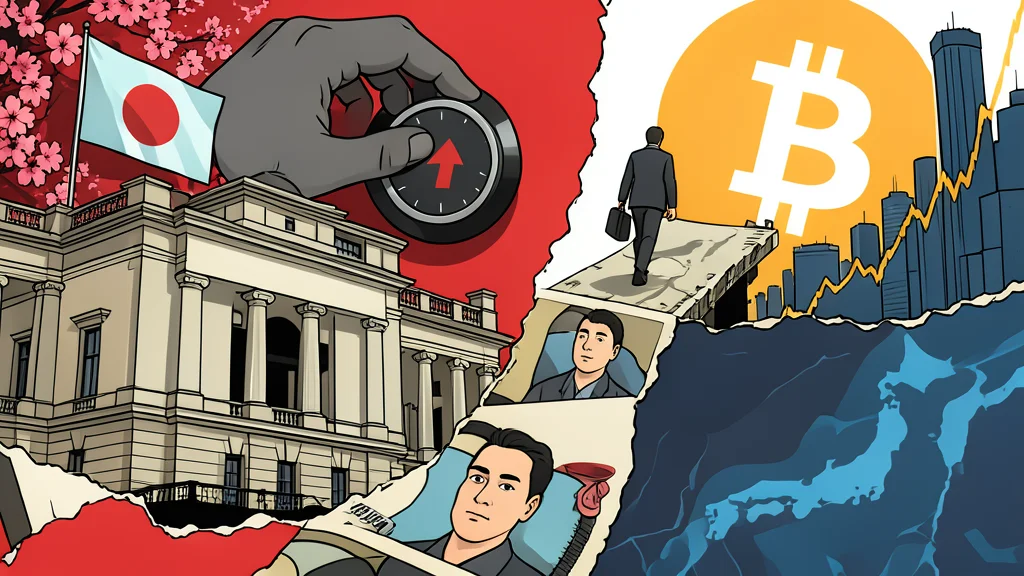
BoJ Rate Decision Threatens Global Crypto Markets

A Bank of Japan rate hike could trigger a massive unwind of yen carry trades, causing synchronized selling pressure across crypto, equities, and bonds.
A potential interest rate increase by the Bank of Japan poses a direct threat to global risk assets. The move could accelerate the unwinding of the yen carry trade. This strategy involves borrowing low-yield Japanese yen to buy higher-returning assets abroad. Investors hold positions in equities, bonds, and cryptocurrencies using this leverage.
If Japanese borrowing costs rise, the economics of these trades deteriorate. Investors may sell assets to repay yen-denominated debt. This action creates synchronized selling pressure across multiple market classes. The decline stems from funding conditions rather than asset-specific news.
Carry Trade Mechanics Drive Risk
The yen carry trade remains a key driver of global liquidity. Low interest rates in Japan encourage borrowing for investment elsewhere. A hike in rates makes repaying these loans more expensive. Traders exit positions to reduce exposure and manage debt costs.
This dynamic can cause broad market declines. Asset prices fall because capital is withdrawn from global markets. The trigger is the shifting cost of global funding. It is not a reaction to specific corporate or regulatory news within a single sector.
August 2024 Provides Historical Context
Market turmoil in August 2024 serves as a recent precedent. Stocks and cryptocurrencies fell sharply following a Bank of Japan policy shift. Many participants attributed the drop to crypto-specific factors at the time. The primary driver was actually the unwinding of carry trade positions.
Current market expectations already reflect a potential rate increase. A larger-than-expected hike could trigger a more severe reaction. A decision that is less hawkish than anticipated could ease pressure on risk assets. Traders must distinguish between macro moves and asset-specific events.
Global Liquidity Determines Asset Prices
Digital asset pricing remains dependent on global leverage. A change in Japanese funding costs reverberates beyond the domestic market. Traders should monitor global liquidity conditions closely. This includes watching for signals of faster tightening from Tokyo.
Investors are advised to set limit orders for potential pullbacks. Maintaining secure custody is essential during periods of high volatility. The upcoming Bank of Japan decision is a significant catalyst for global markets. It highlights the interconnectedness of local policy and global risk appetite.