US Food Inflation Lags Canada Despite Tariffs
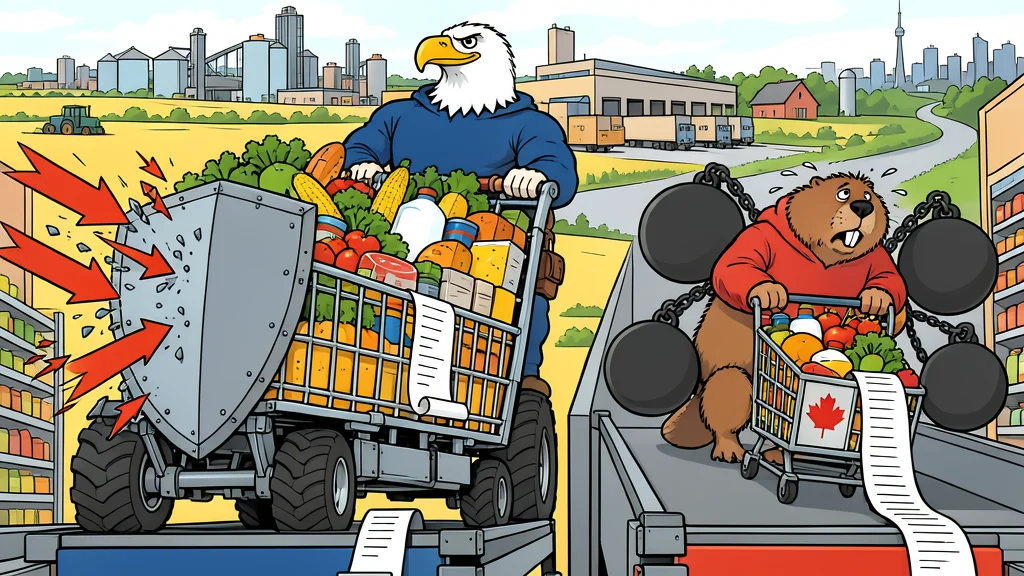
US grocery prices rose 3.4% while Canada saw a 5.8% increase. The gap stems from scale, not just trade barriers.
US grocery prices rose 3.4% between January 2025 and July 2026. Canada’s store-bought food prices increased 5.8% over the same period. This makes Canadian inflation roughly 70% faster. The US imposed tariffs on many trading partners. Yet American food prices remain lower than Canadian ones.
Total food price indices show an 8.5% rise in Canada versus 4.4% in the US. This figure includes restaurant meals. A temporary tax holiday in Canada distorted early 2025 data. The grocery-only comparison offers a clearer view of consumer costs. Canadian shoppers face higher price growth despite similar global pressures.
Domestic Production Absorbs Trade Shocks
The US agricultural base is vast and productive. It serves a market of 350 million consumers. Large production runs spread fixed costs across more units. Retailers have access to a deep pool of domestic suppliers. Processors can substitute ingredients easily when imports are restricted. This scale cushions the domestic market from border disruptions.
Canada’s food economy operates with thinner processing capacity. Many regions depend on imported ingredients and equipment. A weaker Canadian dollar raises the cost of international inputs. The Bank of Canada cites import costs as a key driver of inflation. Weather-related shortages also affected specific products like coffee and cocoa.
Retaliation Paradox Benefits US Consumers
Foreign governments restrict US agricultural exports in retaliation. This traps more American production inside the US. Domestic farm prices can fall as supply remains local. Imported inputs become more expensive for US manufacturers. US consumers may benefit from cheaper domestic goods. Farmers lose export opportunities in this scenario.
Tariff effects do not reach consumers immediately. Food companies use inventories and hedging strategies. The Bank of Canada notes a six-month lag for cost pressures. Some US tariff impacts may still be emerging. Canadian counter-tariffs on inputs hit domestic importers directly. This creates a dual burden on Canadian food producers.
Scale Determines Inflation Resilience
The data shows large economies absorb trade shocks better. A competitive food system buffers consumers from price spikes. Canada faces higher costs due to structural dependencies. The US benefits from domestic substitution possibilities. This outcome does not validate tariff policy. It highlights the importance of production scale and market depth.
Ottawa should avoid taxing essential inputs. Canadian manufacturers cannot easily source these domestically. American tariffs are paid by US importers first. Canadian counter-tariffs are paid by Canadian importers. This double hit raises production costs. The US food system remains more insulated from external trade friction. The gap in food inflation persists due to these structural differences.