India Allocates 507 Billion Rupees for Floating Solar Expansion
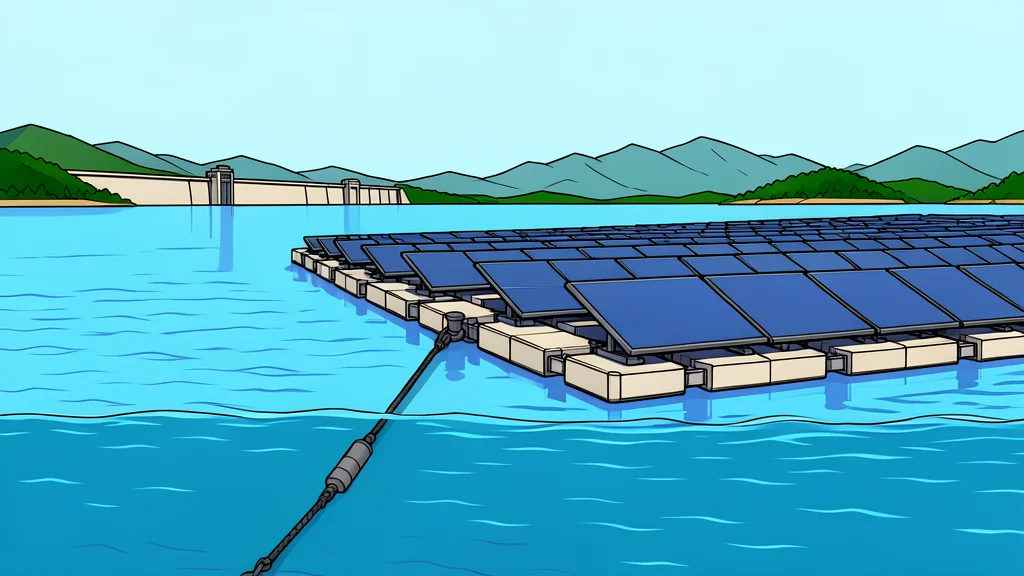
India has approved a 507 billion rupee scheme to build 5 GW of floating solar capacity, betting that water-based installations will offset higher construction and maintenance costs.
The Indian Union Cabinet approved the Pradhan Mantri Surya Sarovar Yojana in July 2026. The scheme allocates 5,070 crore rupees to support the development of 5 GW of floating solar projects. Each project must include energy storage with a minimum capacity of two hours. This initiative aims to expand a sector where India currently holds only 0.7 GW of installed capacity.
Floating solar costs more than ground-mounted alternatives. The premium covers complex engineering and higher maintenance requirements. Developers must use specialized materials to withstand constant water exposure. The government views this as a strategic move to bypass land constraints. It also reuses existing grid infrastructure and reduces water evaporation from reservoirs.
Engineering challenges of water-based installations
Floating panels require specific buoyant structures. High-density polyethylene makes up 90% of these support systems. This plastic material is durable and resistant to degradation. Engineers must anchor these floating islands to the reservoir bed. The anchoring systems must withstand waves, currents, and fluctuating water levels. Cables require additional protection against moisture and constant movement.
Panel angles remain below 15 degrees on water. This reduces wind load on the floating structure. Ground-mounted panels typically operate between 15 and 35 degrees. Construction involves assembling sections onshore before pushing them into the water. Maintenance requires boats and sometimes human divers. NTPC’s 100 MW Ramagundam project used 40 distinct floating blocks. Each block contained 11,200 modules on a separate platform.
India’s solar capacity landscape
India reached 168 GW of total solar capacity by August 2026. Utility-scale projects account for 124 GW of this total. Rooftop solar contributes approximately 33 GW. The country has technical potential for 102 GW of floating solar. The new scheme could increase current floating capacity eightfold. This expansion targets reservoirs and other large water bodies.
The National Institute of Solar Energy identifies significant untapped potential. Developers face higher operational risks compared to land-based projects. Humidity and corrosion present ongoing technical hazards. Electrical systems require specialized design for aquatic environments. The government accepts these risks for strategic benefits. Water conservation is a key driver for the policy shift.
Economic rationale for the premium
Floating solar avoids land acquisition costs. It utilizes existing water bodies for power generation. This approach reduces the need for new grid transmission lines. Projects can connect directly to nearby substations. Water evaporation decreases when panels cover the surface. These factors partially offset the higher initial capital expenditure. The long-term operational savings are still being evaluated.
Market analysts note the complexity of aquatic maintenance. Repair costs are higher than for ground-mounted systems. Accessing the panels requires specialized equipment. Labor costs increase due to the need for trained divers. The 507 billion rupee fund supports these additional expenses. The scheme mandates energy storage to stabilize output. This ensures a reliable power supply to the grid.