Strait Risks Drive Oil Price Divergence
Basrah Medium trades at a $43.06 discount to Murban as route risk premiums emerge. Brent hits a three-month high while Gulf grades face heavy sanctions.
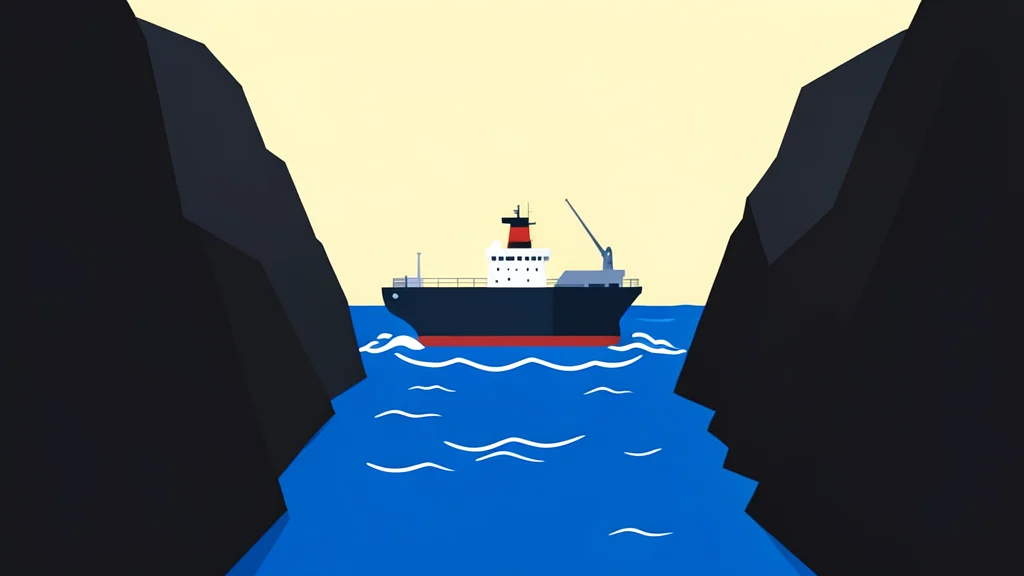
Iraqi Basrah Medium crude is trading at a discount of $43.06 per barrel to Murban. This gap reflects the risk premium for transiting the Strait of Hormuz. Brent crude futures reached a three-month high of $109.97 on September 11. The price stands 57% above the July 2 low of $70.14. The conflict in the Middle East has split the market into two distinct price tiers. One tier includes crude constrained by chokepoints. The other includes crude that moves freely to market.
Yemen’s Houthi forces are nearing full control of the Bab el-Mandeb Strait. Saudi Arabia halted pipeline operations to the Red Sea after an attack from Iraqi territory. These events have decoupled physical crude prices from financial benchmarks. Brent futures are loaded in Europe or the United States. These deliveries do not face direct Middle East chokepoint risks. Gulf crude must pass through the Strait of Hormuz. Traders price in significant transit risk for these barrels.
Gulf Crude Faces Deep Discounts
October cargoes of Basrah Medium are offered at a $43.06 discount to Murban. Basrah Medium is loaded free-on-board at an Iraqi port. Murban prices apply to crude in Fujairah. Fujairah is located at the end of a pipeline bypassing the Strait of Hormuz. Qatar’s Al-Shaheen crude also requires Strait transit. It trades at a discount of $24.92 per barrel to Murban. These grades face the highest physical delivery risks.
Approximately 10 million barrels per day still pass through the Strait of Hormuz. This volume is roughly half of pre-conflict levels. Crude that successfully exits the strait commands premiums. October cargoes of Upper Zakum sold at a $7 premium to the Dubai benchmark. November cargoes reached a $13.25 premium. Transportation costs now form a major component of final prices for Asian refiners.
Non-Middle East Grades Command Premiums
Crude produced outside the Middle East is becoming more expensive. Proximity to Asian consumers drives higher prices. Pyrenees crude from Australia’s northwest coast is the most expensive grade in Argus assessments. On September 11, Pyrenees was valued at $138.04 per barrel. This price sits $33.43 above Brent futures at $104.61. On February 27, Pyrenees cost $70.59 per barrel. It was then $1.89 below Brent at $72.48.
Pyrenees prices have risen 96% since the conflict began. Brent futures have gained 44% over the same period. Angolan Cabinda crude shows a similar trend. Its price stood at $118.46 on September 11. This is 62% above its February 27 level of $73.08. Cabinda has not risen as sharply as Pyrenees. Tankers face higher bunker fuel costs for Cabinda. Routes are longer as participants avoid disruption zones.
Market Split Defined by Route
The value of a barrel now depends on its route. Quality is no longer the sole pricing factor. Strategic chokepoints create unexpected winners and losers in global trade. Crude constrained by chokepoints sells at huge discounts. Crude that transports freely commands significant premiums. The disparity is intensifying with the escalating Middle East conflict. GN auto markets/energy data confirms this structural shift. Physical delivery risk is now the primary driver of price divergence.