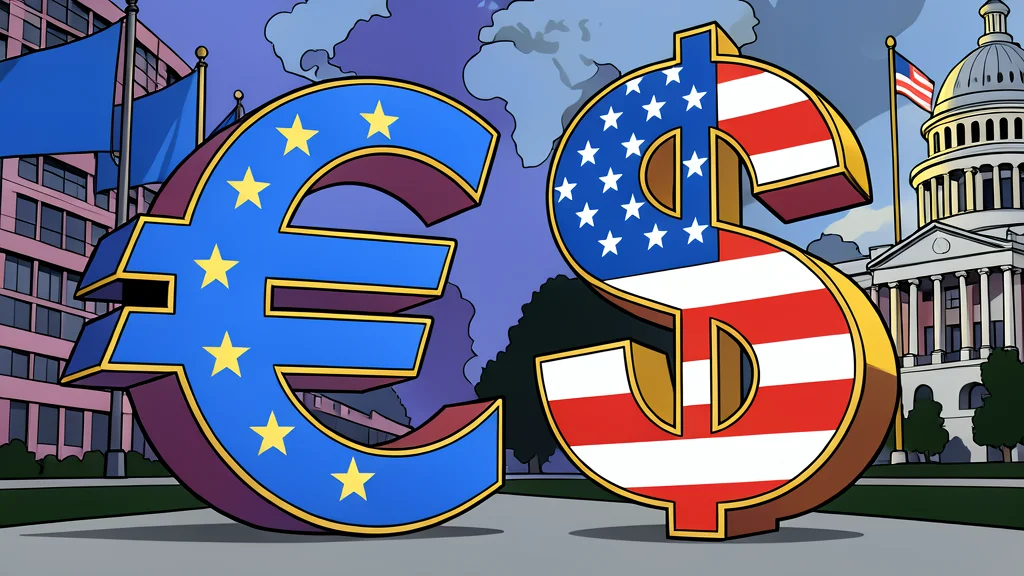
EUR/USD Stabilizes at 1.1450 as Dollar Strength Persists

The euro pair holds support while U.S. yields near 5% and European energy risks loom.
EUR/USD is trading at 1.1450. This level has become a key support zone. The pair is attempting to stabilize after a recent selloff. The dollar remains the stronger currency in the pair. The Federal Reserve’s recent policy shift drives this dynamic. U.S. yields are rising. This increases the appeal of the dollar for investors. The euro faces headwinds from these macro factors.
Traders are watching the 1.1450 level closely. It previously acted as resistance. It now serves as a floor for buying activity. Technical indicators show the stochastic oscillator is oversold. Moving averages are crossing. These signals suggest a short-term bounce is possible. However, the broader trend favors the dollar. The interest rate differential supports the greenback. Capital continues to flow toward U.S. assets.
Federal Reserve Policy Drives Dollar Strength
The Federal Reserve raised interest rates recently. It also signaled potential further tightening. This hawkish stance pushed U.S. yields higher. Higher returns attract global capital to the dollar. The U.S. 10-year yield is near 5%. This level creates a significant headwind for the euro. As long as yields remain elevated, the dollar maintains underlying support. The market expects the Fed to keep rates high for a longer period.
European Energy Risks Limit Recovery
Europe faces ongoing energy supply challenges. Reports indicate Saudi Aramco may withhold petroleum supplies. This affects European refiners in September and October. Ukraine’s strike on a Russian refinery adds uncertainty. An energy shortage would damage EU economic activity. Recent U.S. data shows a stronger American economy. This contrast makes the euro more vulnerable. Any rally in EUR/USD is likely to face selling pressure. Fundamental improvements in Europe are not yet evident.
Market Watch Points for Traders
The dollar benefits from its safe-haven status. Geopolitical tensions in the Middle East support this role. Traders should monitor U.S. and German interest rates. European energy headlines remain critical. Overall risk appetite influences currency flows. GN auto markets/forex: euro dollar data reflects these shifts. The pair may bounce from current levels. The broader bias remains in favor of the dollar. A sustained recovery for the euro requires a change in the fundamental picture. Current evidence does not support such a shift.