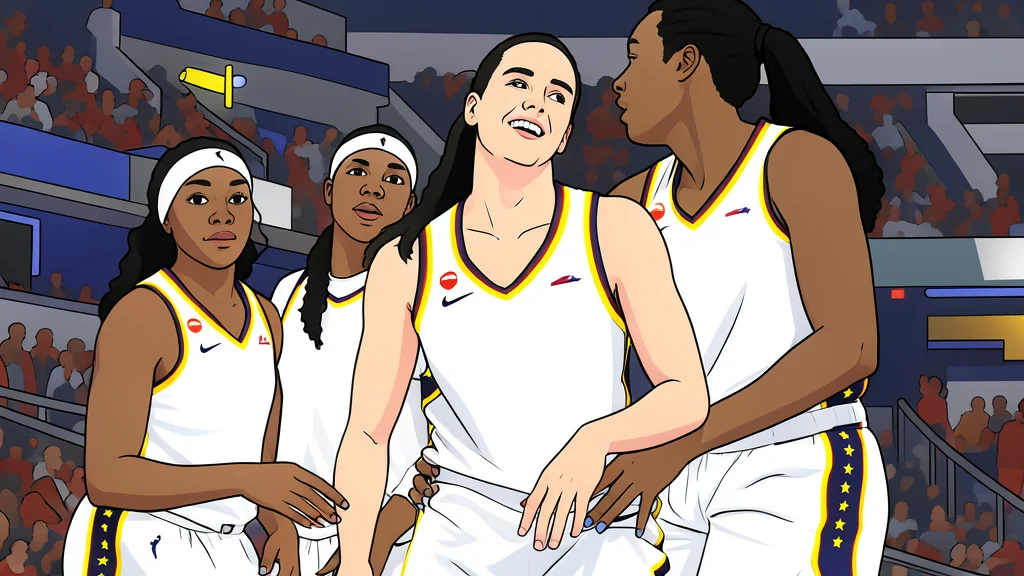
Bucher Urges Team USA to Trust Clark over Gray in 2028

A gold medal hangs heavy, but the question of who holds the ball in 2028 looms larger.
The Berlin arena still hums with the echo of the fifth consecutive gold medal, a metallic gleam that masks a deeper tension. In the shadows of that victory, a quiet debate stirs among analysts and fans alike. It is not about the past, but the looming shadow of Los Angeles 2028, where the choice of point guard could define the nation’s legacy.
Caitlin Clark sat on the bench for every minute of the World Cup, her hands resting on her knees, watching Chelsea Gray orchestrate the offense from the starting slot. The Indiana Fever star played a supporting role, her energy contained, her talent banked for a future that feels closer than anyone admits.
Warning From the Podcast Booth
On Thursday, Ric Bucher, a Fox Sports NBA analyst, leaned into the microphone on the United WeCast Network’s "On The Ball" podcast. His voice carried a sharp edge, cutting through the celebratory noise. He warned that sticking with Gray over Clark is a risk Team USA cannot afford in the not-too-distant future.
Bucher noted that Breanna Stewart was forced to initiate the offense, a burden that drained her energy while A’ja Wilson was sidelined with back issues. Giving Clark more minutes, he argued, would have been an easy solution. It didn’t cost them the gold, he conceded, but it could cost them the next title.
Numbers That Defy the Hierarchy
The statistics on the court tell a different story than the lineup sheet. Clark, coming off the bench, outproduced Gray in scoring, rebounding, and assists. She averaged 7.8 points, 2.2 rebounds, and 5.3 assists in six games. Gray, the veteran, posted 5.7 points, 1.7 rebounds, and 2.7 assists.
Both guards averaged 19.3 minutes, yet the impact diverged. Coach Kara Lawson trusted Gray’s experience, valuing her ball-handling reliability. Gray averaged only 1.3 turnovers, while Clark logged 2.2. But for a team aiming for dominance, the raw offensive firepower of Clark seems like an asset left on the table.
Popularity and Performance in Balance
Bucher pushed back against the idea that popularity should dictate playing time. He is not a conspiracy theorist, he stated, but he sees a disconnect. The WNBA, he argued, is not fully leveraging Clark’s massive following to promote the game. The national program, meanwhile, is not maximizing her talent.
This was Clark’s first senior World Cup, following her debut in Puerto Rico. Despite the bench role, she embraced the responsibility, helping the USA maintain its iron grip on international basketball. The debate, however, has only just begun. As reported by Yahoo Sports, the conversation will likely intensify as the 2028 cycle approaches.