Cunningham Defends Her Absence from Team USA Gold Medal Game
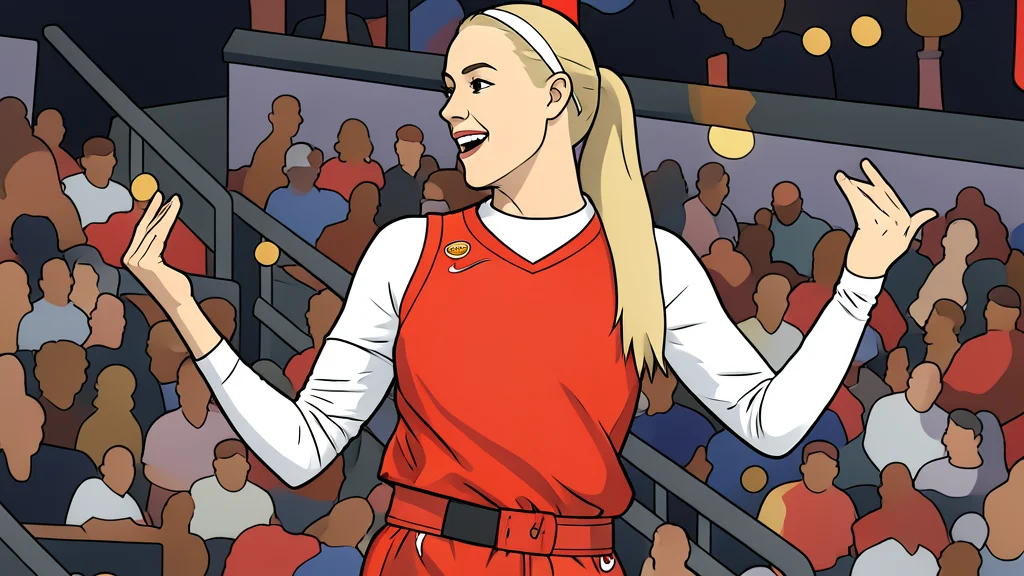
Sophie Cunningham rejected the narrative of apathy, calling critics 'dumb' for missing her quiet investment in Team USA's historic victory.
The arena hummed with the electric charge of a historic victory, the air thick with the scent of polished wood and collective relief. Team USA had just locked down its fifth consecutive FIBA World Cup gold, sealing the win against France with a performance that left little room for doubt. On the court, the celebration was a chaotic symphony of embraces and roars, a moment etched in the league’s history. Yet, in the stands, a conspicuous silence marked the absence of Indiana Fever star Sophie Cunningham, a void that quickly filled with digital noise and public scrutiny.
When asked about her whereabouts during the decisive minutes, Cunningham offered a single, blunt word: busy. That answer, stripped of context, struck a nerve among fans who expected the Fever’s leading scorer to stand alongside her national teammates. The reaction was immediate and sharp, a wave of criticism that framed her absence as a lack of support for Caitlin Clark, Aliyah Boston, and the rest of the squad. The narrative hardened quickly, turning a simple scheduling conflict into a test of loyalty.
A Frustrated Response To Public Misunderstanding
Cunningham did not leave the criticism to fizzle out. She took to her podcast, No Hesitation, to dismantle the assumption that her presence was a prerequisite for her pride. Her voice carried a raw, unfiltered edge, cutting through the polite ambiguity usually found in media interviews. She made it clear that the idea she was indifferent to the outcome was not just wrong, but insulting to her understanding of the game. The frustration in her tone was palpable, a direct rejection of the caricature being drawn in the comments sections.
"You don't think that I'm not invested in it," she stated, her words sharp and deliberate. She emphasized that her connection to the national team transcends physical attendance. Her coach was in the building, and two of her teammates were on the floor fighting for the title. For Cunningham, that was enough to feel fully engaged in the struggle. The disconnect between her internal reality and the public’s perception became the central point of her argument, a clash of intent versus interpretation.
Prioritizing Off-Court Commitments During The Break
During the WNBA break, Cunningham had chosen to channel her energy into other professional and personal endeavors. These commitments occupied her time and mental space, leading to the
busy
label that sparked the controversy. Fans, viewing the situation through a lens of team loyalty, jumped to the conclusion that her absence was a deliberate snub. They saw a player who had opted out of the collective moment, failing to recognize the complex logistics of a professional athlete’s life. The gap between her actions and their expectations created a friction that neither side could easily resolve.
The Persistence Of Fan Scrutiny
Despite Cunningham’s clear explanation, the discourse has not fully subsided. Some fans remain unconvinced, holding onto the initial narrative that her busyness was an excuse for disinterest. As reported by Yahoo Sports, this persistent criticism highlights a deeper tension in how players are held accountable for their public personas. The incident serves as a reminder that in the digital age, absence is often interpreted as indictment, regardless of the athlete’s actual level of involvement or support.