Larry Bird's Reluctant Farewell to the Dream Team
At 35, the Boston legend viewed the Olympic roster as a stage for the next generation, yet he ultimately laced up his shoes for one final, aching performance in Barcelona.
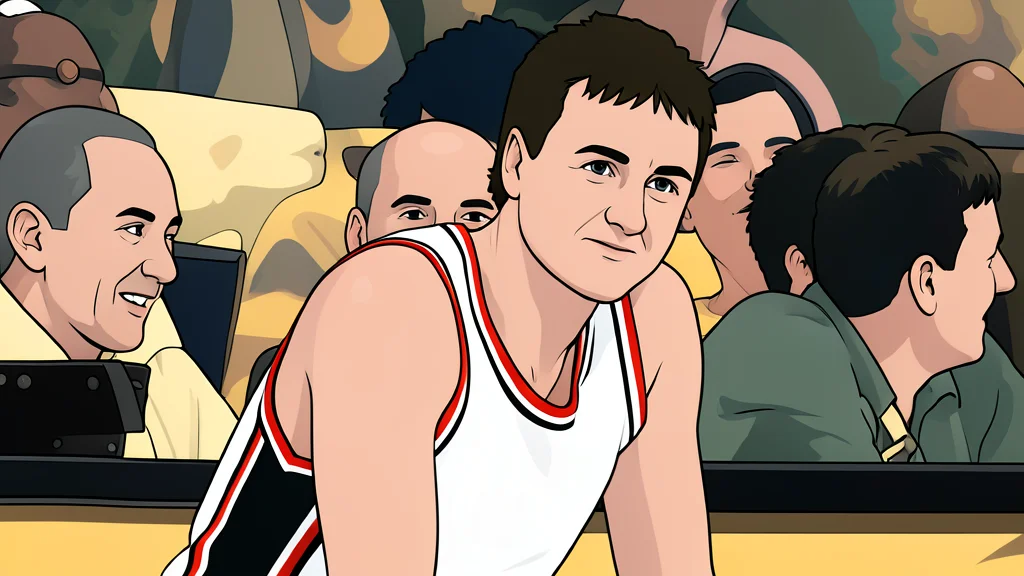
The hardwood of the Barcelona arena gleamed under the bright lights, a stark contrast to the aching joints in Larry Bird’s body. He lay on the sidelines, watching a spectacle that felt less like a competition and more like a parade. The air hummed with the electric anticipation of a global audience, yet for the veteran from Massachusetts, the atmosphere carried a heavy, quiet weight. It was not the roar of a crowd cheering for his every move, but the distant applause for a team that belonged to the future. He had seen the game change, and he knew he was no longer part of the engine driving it.
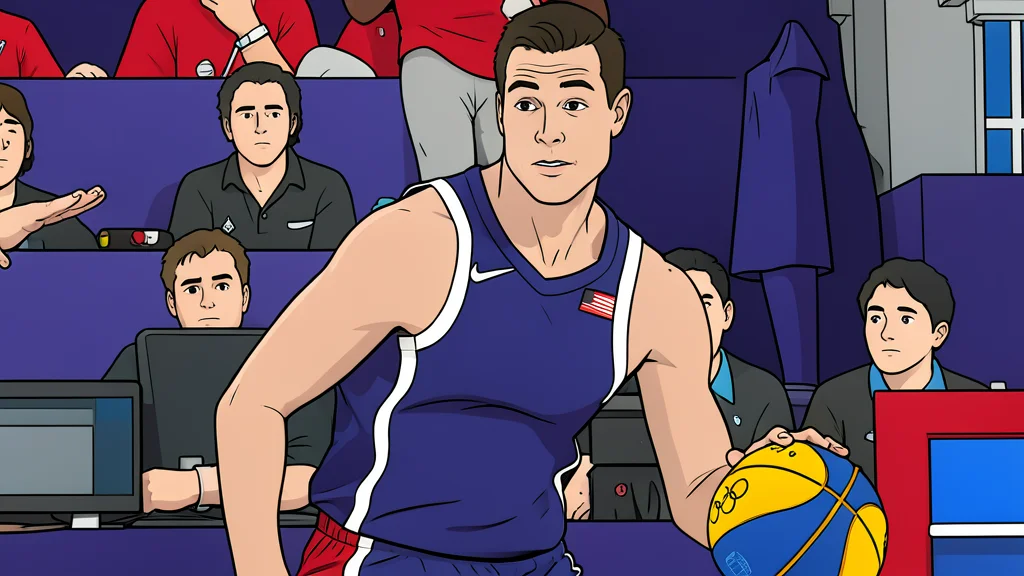
Michael Jordan, Magic Johnson, and Charles Barkley moved with a fluidity that seemed to defy gravity, their energy sharp and unburdened. They played with the reckless confidence of youth, treating the opposition with a casual disdain that only the untouchable can afford. Bird watched them dance, his knees stiff, his back a constant reminder of the miles he had logged. The gap between their effortless brilliance and his calculated, painful movements was vast. He felt the timeline of his career slipping through his fingers like sand, each grain a lost step, a missed jump, a fading spark.
A Reluctant Addition to the Roster
Dave Gavitt, the president of Team USA, had knocked on Bird’s door in Massachusetts with a proposition that felt increasingly anachronistic. The previous Olympic squad had settled for bronze in Seoul, a result that stung, but the new vision required a different kind of dominance. Gavitt spoke of history, of legacy, of the need for every icon to stand together. But Bird’s response was not one of pride or ambition. It was a quiet resignation, a acknowledgment that his era had closed its books. "I'm past history," he said, his voice devoid of the usual swagger. "It's for the young guys."
The medical realities of the early 1990s offered no cure for the wear and tear of a thirteen-year career. Bird had played in only forty-five games the previous season, a testament to the physical toll that had accumulated. In an age before advanced rehabilitation and pain management, the body’s limits were absolute. Bird felt those limits pressing in, a constant ache that whispered he was finished. Yet the gravitational pull of the Dream Team was strong, and the narrative demanded his presence. He was not just a player; he was a symbol, a bridge between the old guard and the new dynasty. To leave him out would have been to break the myth.
The Final Dance in Spain
When the first wave of names was announced in September 1991, Bird’s inclusion was a nod to reverence rather than current form. Russ Granik, the USA Basketball liaison, acknowledged the truth quietly. Bird was nowhere near his peak, his movements slower, his jumps lower. But in a team assembled to define an era, his absence would have been a glaring omission. It was a historic gathering, and history required its witnesses. The decision to include him was less about what he could contribute on the court and more about what he represented off it. He was the anchor, the veteran who had paved the way for the stars now shining above him.
In Barcelona, Bird played five games, his contributions modest by his former standards. Ten points, three and a half rebounds per game. The numbers were cold, but the moments were warm. In one game, he found a spark, draining three-pointers with a flick of the wrist, blocking shots with a reach that still stretched the limits of the paint. For brief intervals, the old Larry Bird emerged, a ghost of the player who had once dominated the Eastern Conference. But those flashes were fleeting, interrupted by the persistent pain in his back and the growing realization that his time was up. The gold medal hung around his neck, a heavy, cold weight that signaled the end of an era.
A Legacy Beyond the Court
The Dream Team’s victory in Barcelona did more than win a medal; it reshaped the global landscape of basketball. The sight of these American superstars playing with such ease and dominance ignited a fire in players around the world. From China to Canada to Germany, young athletes watched in awe, dreaming of a day they could join the league. Yao Ming, Dirk Nowitzki, and Steve Nash would eventually cross that bridge, their careers fueled by the inspiration of the 1992 squad. Bird’s presence, even in his diminished state, was part of that inspiration. He was the last link to the previous generation, the one who had fought and bled to open the doors that the young players now walked through.
As the team returned to the United States, the celebrations were loud, but Bird’s departure was silent. He announced his retirement in August, a quiet exit that matched his final games. The legacy of the Dream Team would endure, a shining star in the history of sports, but for Bird, it was a closing chapter. He had given everything he had, and in the end, he let go. The court was no longer his, but the game he helped build would live on, carried forward by the next generation of players who looked to him, and the stars he played alongside, as their guiding light.