South Korea Ignites Path to Asian Games Basketball Gold
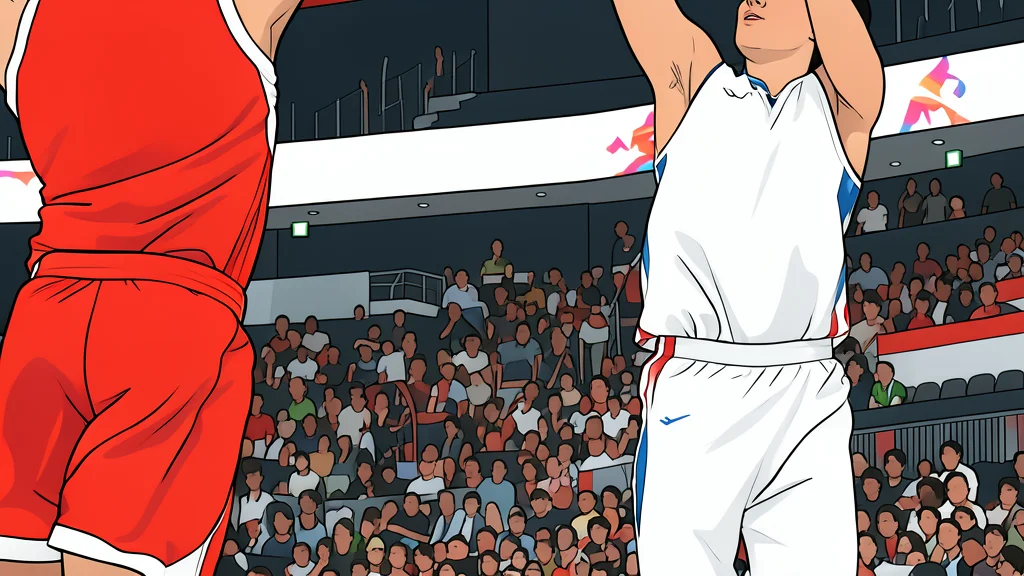
Under the bright arena lights in Nagoya, South Korea’s men’s basketball team silenced the crowd with a 77-51 victory over Iran, securing their place in the 2026 Aichi-Nagoya Asian Games final after a twelve-year wait.
The hardwood of the Aichi International Arena still hums with the energy of a decisive blow. Lee Hyun-jung stands in the mixed zone, his breathing steady, the sweat of a grueling semifinal drying on his skin. He does not celebrate with wild abandon. Instead, he offers a quiet, piercing declaration: "It's not over yet." For the South Korean squad, this phrase is not mere humility; it is the tactical blueprint for the final against the winner of Japan and China. The twelve-year drought for an Asian Games medal in this division has broken, but the pursuit of gold remains the only acceptable outcome.
The victory was forged in the fire of Lee’s individual brilliance. He poured in 26 points, draining seven three-pointers with a rhythm that seemed to defy the physical constraints of the game. His shooting percentage reached 54%, a statistical anomaly that left the Iranian defense paralyzed. But the story was not just about the ball leaving his fingertips. He anchored the paint with 14 rebounds, securing a double-double by halftime. The rim felt larger in his hands, a sensory shift he acknowledged with a faint smile, knowing that once the shots start falling, the game’s momentum shifts irrevocably.
A Symphony of Collective Defense
Lee Hyun-jung deflects the spotlight, insisting that the explosion of three-pointers was a team-wide phenomenon. The credit belongs to the unsung labor in the paint, where teammates like Woo-seok and the wing players fought for every loose ball. This defensive grit created the clean looks for shooters. "The other players did all the dirty work," Lee explains. The strategy is clear: exploit the transition weaknesses of taller teams, dominate the rebounding battle, and trust the offensive flow. It is a system built on trust, not individual heroics.
The stakes were heightened by a recent history of six consecutive losses to Iran. Yet, Lee remained detached from that narrative. He was not on the team during those defeats, and he refused to let the past dictate the present. For him, the focus was on the immediate task: reading the game, creating opportunities for teammates when heavily guarded, and taking shots when the chance arose. The mental clarity required for such a performance is as critical as the physical conditioning.
Comfort in the Final Stretch
Behind the scenes, the team’s living conditions underwent a significant change ahead of the semifinal. Previously housed in a cramped container village where players could barely stretch their legs, the squad was moved to more suitable accommodations. Lee Hyun-jung expressed deep gratitude for this adjustment, noting that while he could sleep anywhere, the improved environment allowed the players to remain focused and composed. This logistical support from the Sports Council and the association provided a psychological boost, ensuring the team entered the arena in peak condition.
One Step From the Medal
With the final scheduled for the 20th at 7:40 p.m., the team turns its attention to recovery and analysis. Lee Hyun-jung’s mindset is singular: whether he scores zero points or twenty, his role is to play the game within the system. The path to gold is narrow, demanding calm, trust, and the disciplined execution of a plan that has already proven its worth in the semifinal. The court awaits.