George Chuvalo: A Titan Falls on His 89th Birthday
In a quiet Toronto room, the clock strikes noon on September 12, 2026. George Chuvalo, the man who never fell, closes his eyes on his 89th birthday, leaving behind a legacy of unyielding spirit.
The air in the Toronto care facility is still, holding the weight of a century’s echoes. George Chuvalo, the Canadian heavyweight who defied gravity and pain, has passed away on his 89th birthday. The date, September 12, 2026, marks the end of a life defined by a singular, stubborn refusal to yield. No official cause has been released, but those who knew him recall the slow fade of dementia, a fog that eventually obscured the sharp, intelligent mind that once analyzed opponents with the precision of a scholar. He was a man who took blows from the giants of his era and stood up, time and again, until the body simply could not answer the call.
His record reads 73-18-2, with 64 knockouts, but the numbers miss the point. What mattered was the canvas, which never claimed him in 93 professional bouts. He was a five-time Canadian champion, a fighter who held the national title for decades and climbed to the second spot in the world rankings. He traded blows with Jerry Quarry, Cleveland Williams, and Yvon Durelle, emerging with scars but with his head high. As reported by Boxing News 24, his durability was not just a trait; it was his identity. He was the rock against which the waves of the heavyweight division broke, unbroken and unyielding.
The Ali Connection and Maple Leaf Glory
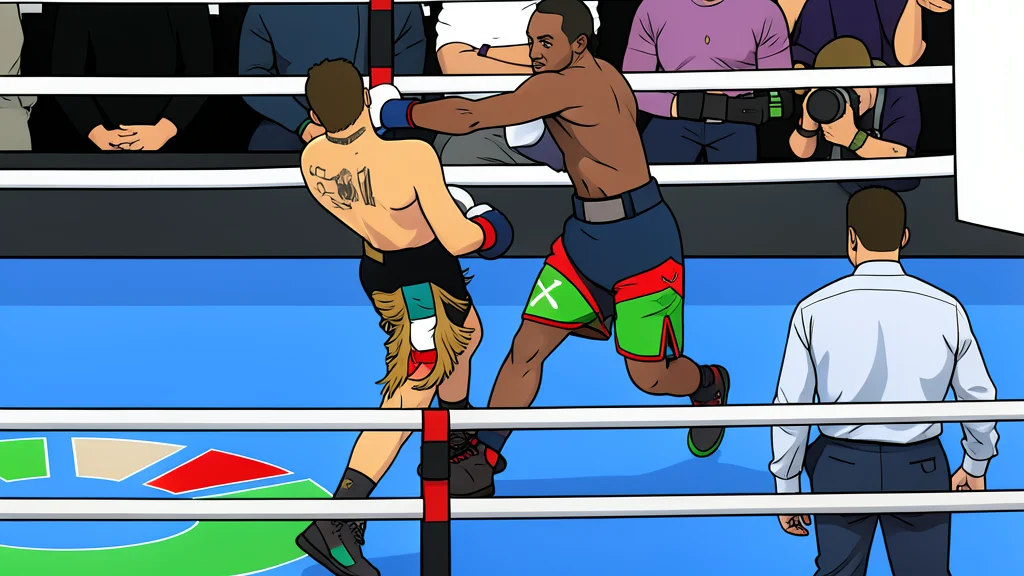
History will forever bind his name to Muhammad Ali. In March 1966, Chuvalo accepted a challenge on a mere 17 days’ notice. The arena was Maple Leaf Gardens, the air thick with anticipation and the scent of leather. Ali won the 15-round unanimous decision, but he could not stop the Canadian. Chuvalo absorbed the punishment, moved with a gritty efficiency, and remained standing when the final bell rang. It was a testament to a different kind of strength, one rooted in endurance rather than flash.
He met Ali again in Vancouver in 1972, lasting the 12-round distance once more. The rivalry was not one of domination, but of mutual respect forged in the fire of competition. He shared the ring with Joe Frazier and George Foreman, two men who stopped him but never put him on the canvas. Frazier’s relentless pressure and Foreman’s devastating power were the only things to end his bouts, yet even in defeat, Chuvalo’s spine remained straight. He fought Floyd Patterson, Ernie Terrell, and Buster Mathis, leaving a trail of respect across the globe.
Retiring with Seven Straight Victories
Chuvalo’s final chapter was written in 1978, at the age of 41. He retired with a streak of seven consecutive wins, a fitting end to a career that spanned decades. His last fight was a second-round stoppage of George Jerome, a victory that cemented his status as a fighter who could still perform when others had long since hung up their gloves. He transitioned into films, television, and commercials, bringing his physical presence and quiet dignity to the screen. But his most significant work came after the ropes, as he traveled across Canada to speak to young people about the dangers of substance abuse.
The pain he carried was not from the ring. He lost three sons and his first wife to drugs and suicide, a tragedy that reshaped his purpose. He became a voice for prevention, using his platform to warn families of the destruction that addiction can bring. His autobiography, Chuvalo: A Fighter’s Life, published in 2013, offers a glimpse into the man behind the mask, a thoughtful and intelligent individual who saw the world with a professor’s eye. He was inducted into Canada’s Sports Hall of Fame in 1990 and the World Boxing Hall of Fame in 1997, receiving the Order of Canada in 1998. His legacy is not just in the fights he won, but in the life he lived and the words he left behind.