Sarkisian's Sideline Walk-Off Draws Sharp Fire from ESPN Veterans
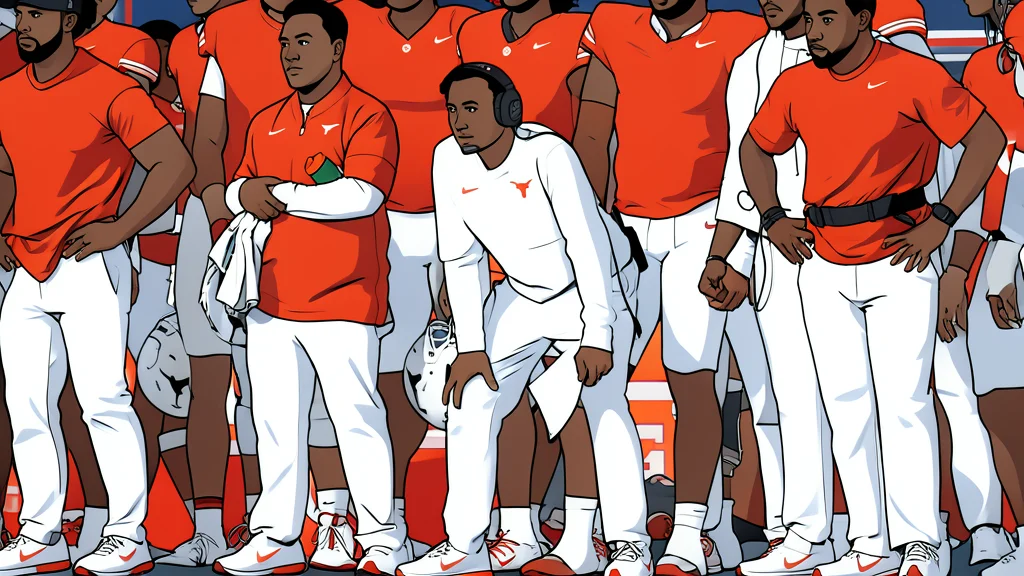
The confetti had barely settled on the Texas field when the temperature spiked. Steve Sarkisian, still vibrating from the historic comeback, turned his back on Holly Rowe. Two ESPN legends didn't let the moment slide.
The air in Austin still hummed with the electric shock of Texas’ 20-point comeback against Ohio State. Under the stadium lights, the Longhorns had erased a deficit that had felt insurmountable just minutes earlier, silencing the doubters and settling a score left open from last season’s College Football Playoff humiliation. It was the kind of night that cements a program’s legacy, a physical manifestation of grit and tactical precision. Yet, in the chaotic minutes following the final whistle, the focus shifted from the scoreboard to a single, deliberate movement.
ESPN’s Holly Rowe, microphone in hand, moved toward the Texas sideline to capture the coach’s immediate reaction. Steve Sarkisian, the architect of that stunning victory, did not stop. He walked past her. The gesture was brief but unmistakable, a rejection of the standard postgame ritual that immediately drew the eyes of the broadcast booth and the national sports desk. According to Yahoo Sports, this snubbing ignited a firestorm of criticism from the very analysts who had been watching the game unfold.
Smith Slams the Coach's Lack of Respect
Stephen A. Smith did not mince words on First Take, his voice cutting through the celebratory noise. For Smith, the issue was not about the content of the questions but the fundamental breach of professional etiquette. He framed it as a matter of basic accountability, pointing out that a player would have been publicly shamed for such behavior. The expectation for a head coach is higher, Smith argued, demanding that Sarkisian act with the maturity of the role he occupies rather than the adrenaline of the moment.
The critique was sharp and personal. Smith insisted that the reporter deserved better, labeling the treatment as dismissive. He urged Sarkisian to recognize that his position as the face of a historic program carries a weight that transcends individual emotion. The message was clear: do the interview, or face the consequences of being seen as a man who cannot manage his own professionalism when the spotlight is brightest.
Finebaum Defends the Reporter's Legacy
Paul Finebaum took the defense of Rowe to a deeper level, invoking her historical impact on the sport. He did not just criticize Sarkisian’s action; he contextualized it against Rowe’s decades of service to college football. Finebaum’s tone was firm, drawing a line between a fleeting moment of coach frustration and the enduring legacy of a veteran journalist. He asserted that Rowe’s contributions outweighed the coach’s current standing in the hierarchy.
By framing the incident this way, Finebaum elevated the stakes beyond a simple news cycle story. It became a test of character for the Texas coaching staff. The implication was that dismissing a figure of Rowe’s stature was not just rude; it was a misjudgment of the ecosystem in which the sport operates. The analysts’ unified front signaled that this was not a partisan dispute but a shared standard of conduct within the industry.
Professionalism Tested on a National Stage
Context matters, and the intensity of the Ohio State game provides a reasonable explanation for Sarkisian’s heightened state. Erasing a double-digit deficit against a national champion is a monumental achievement, one that leaves coaches emotionally raw. Yet, the analysts’ reaction highlights a critical distinction: emotion does not excuse dismissal. The head coach of a major program is a public figure, and his actions are subject to immediate, national scrutiny.
While it was not the infamous