Harmanpreet Kaur Trusts Steady Hands for Asia Cup Final
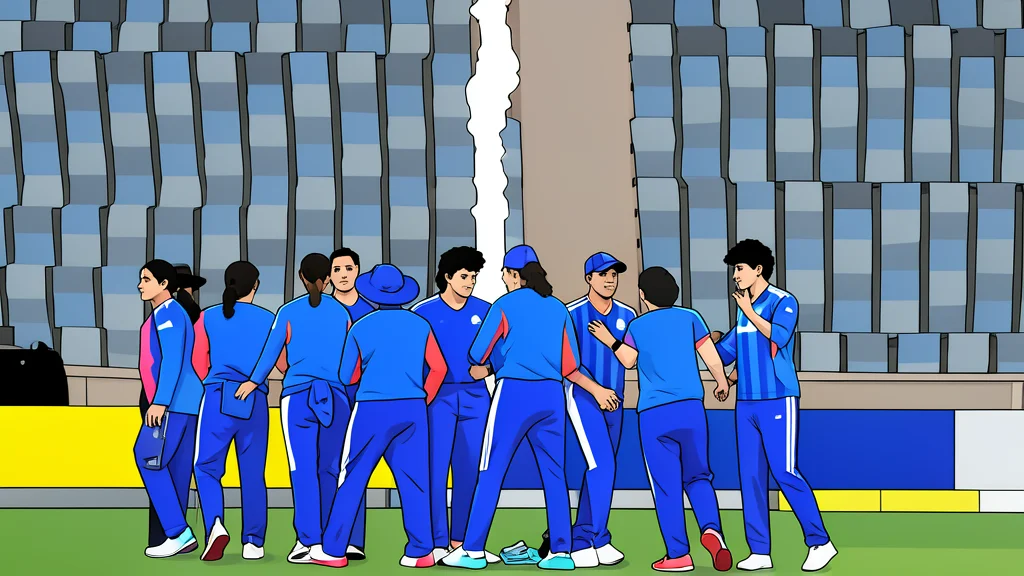
The Dubai heat presses down on the International Stadium as India prepares to defend its continental crown against Sri Lanka.
The air in Dubai hangs heavy and still, a thick blanket of humidity that clings to the skin and damps the breath. Inside the International Stadium, the green pitch gleams under the artificial lights, a smooth, manicured stage for a contest that has simmered for weeks. India arrives at this final unbeaten, carrying the weight of a title they lost last year and the quiet confidence of a side that has found its rhythm in the heat. There is no frantic energy here, no last-minute panic. Instead, there is a settled calm, a sense of readiness that radiates from the core of the squad.
Captain Harmanpreet Kaur speaks with a measured pace, her words stripping away the drama often attached to such high-stakes encounters. She does not see a grand spectacle waiting behind the boundary ropes; she sees a continuation of the work already done. The narrative of this tournament is not one of sudden bursts of brilliance, but of steady, day-by-day refinement. The team has absorbed the conditions, the pace, and the pressure, transforming the unfamiliar into the familiar. As Yahoo Sports reports, this internal stability is the foundation upon which they intend to build their victory.
Steady improvement defines the campaign
Every match has served as a calibration tool, allowing the batters to find the right angle of attack and the bowlers to locate the precise line that troubles the opposition. Harmanpreet highlights a tangible shift in quality, noting that the batting, bowling, and fielding units have all grown sharper as the weeks have passed. It is not a revolution, but an evolution. The players have stopped fighting the conditions and started using them. The ball skids off the pitch with a predictable bounce, and the team has learned to read that bounce, to anticipate the movement, and to strike with increasing precision.
This adaptation is the result of repeated exposure to the specific challenges of the Dubai environment. The humidity affects the grip of the ball, the heat tests the stamina of the runners, and the light can play tricks on the eyes of the fielders. India has navigated these hurdles without losing composure. Each day has brought a small victory, a better catch, a wicket taken with economy, a boundary struck with perfect timing. These incremental gains have compounded into a formidable performance, one that has kept them at the top of the table and in the final.
Experience anchors the squad
Beneath the surface of the current form lies a deep well of experience. Harmanpreet’s own journey through the tournament has reached a significant milestone, with her 150th match as captain marking a landmark in her career. Alongside her, Smriti Mandhana has continued to accumulate runs, her presence at the crease a steady anchor for the batting order. These veterans do not just play the game; they understand the texture of it, the subtle shifts in momentum, the psychological weight of a final.
This depth of experience provides a psychological cushion for the younger players in the squad. When the pressure rises, when the stakes feel overwhelming, the veterans are there to ground the team. They know how to manage the nerves, how to keep the focus sharp, and how to convert opportunity into certainty. Harmanpreet draws confidence from this collective wisdom, knowing that she is leading a side that has seen it all before. The milestones they celebrate each day are not just personal achievements; they are markers of a team that has endured and emerged stronger.
Fielding precision remains the test
Yet, for all the confidence, there is a lingering concern that could tip the balance. India’s fielding, while generally solid, has shown cracks under pressure. Nine dropped catches across four matches is a statistic that hangs over the team like a shadow. In a format as fast and unpredictable as T20 cricket, a single dropped catch can unravel the most carefully constructed plan. It is a vulnerability that Sri Lanka, with their proven ability to fight back from difficult positions, will be keen to exploit.
Sri Lanka’s semifinal performance against Pakistan demonstrated their resilience, as they recovered from a precarious 33 for four to chase down a target of 131. That ability to stay in the game, to find hope in the darkest moments, is a dangerous trait in a final. India must eliminate the errors that allow such comebacks to happen. The mantra of 'nothing new, nothing different' applies here too; the plan is to stay focused, to trust the fundamentals, and to ensure that no chance is wasted. The trophy is within reach, but it demands perfection in the details.