Mumbai Commuter Becomes Japan's Asian Games Coach
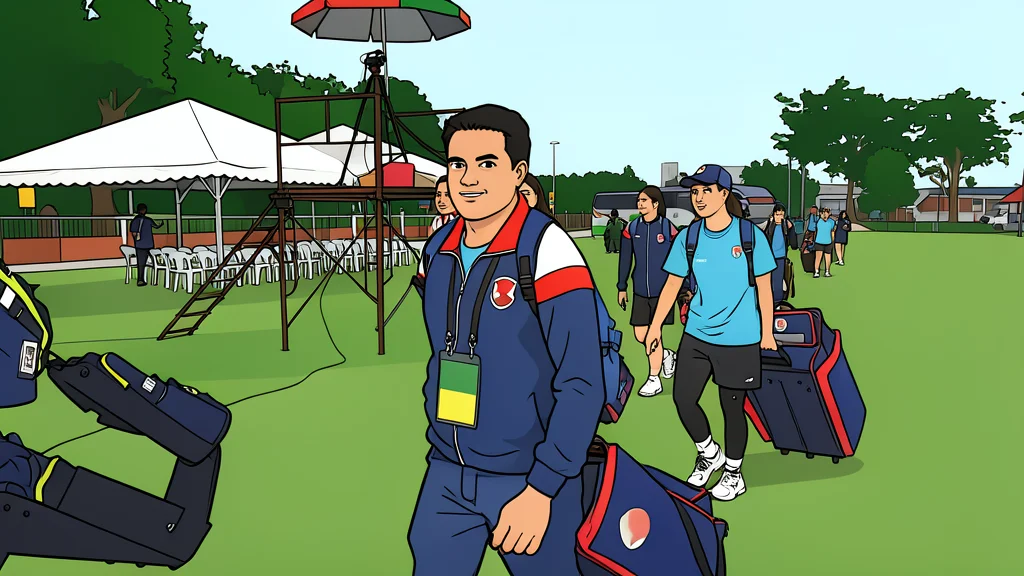
Vinay Iyer stands on the other side of the boundary rope, facing India with a team he built from scratch in Tokyo.
The morning air in Aichi carries a crispness that contrasts sharply with the humid haze of Mumbai’s Charni Road. Vinay Iyer, 41, stands near the boundary rope, his eyes fixed on the pitch where India will face Japan. For decades, his life was measured by the 5:15 AM bus ride to Thane railway station, a routine so ingrained it felt like a second heartbeat. Now, the commute has ended, replaced by a different kind of distance. He is no longer the player arriving at 7:15 sharp for practice at the Police Gymkhana; he is the coach, tasked with preparing a squad to challenge the world’s premier women’s cricket team.
The transition from club cricketer to national coach feels surreal, even to him. Iyer recalls the goosebumps that rise when he thinks about the upcoming match against India. He tries to hide his nervousness from his players, but the weight of the moment is palpable. It is a far cry from his childhood days at Thane’s Central Maidan under coach Shekhar Dhuri, or those electric moments fielding at point at the Wankhede, watching Cheteshwar Pujara up close. The journey from those maidans to the Asian Games is a long, winding path that few would predict for a man who once chose a corporate job over a playing contract.
From Thane Commutes to Tokyo Diamonds
Iyer’s life took a detour that led him across the ocean. His childhood coach, Ashok Mankad, had pushed him toward Ranji opportunities, but family pressure to earn a stable income pulled him in another direction. Mankad suggested a role at Rosy Blue, a diamond trading company that played in the Times Shield. Faced with the choice between a playing contract and a job, Iyer picked the job. "That day I started working. I’m still in the same company," he says. This decision did not end his cricket journey; it merely sent it on a long, unexpected route.
Rosy Blue sent him to Japan for three months in 2009. He survived the 2011 Tokyo earthquake, initially refusing to return but eventually coming back to discover a budding cricket culture. He joined the Max CC club in Tokyo and began traveling two hours to Sano for matches. In 2015, he topped the league’s run charts and was named Player of the Year. Just as a national team spot seemed within reach, the Japan Cricket Association changed its rules to bar foreigners. Rather than walk away, Iyer formed the Kawasaki Knight Riders, building youth teams from the ground up.
Building a Team from the Grass
Coaching his own under-12, under-15, and under-19 players became his new identity. He found a purpose in nurturing talent, a role that felt more natural than the rigid corporate structure he had embraced. After the pandemic, Japan changed its eligibility rules again. In 2021, Iyer made his international debut, a personal triumph that was soon cut short by a shoulder injury. Yet, his connection to the game remained unbroken. He continued to guide the next generation, laying the groundwork for what would eventually become the national team's strength.
Now, at the Aichi-Nagoya Asian Games, the fruits of that labor are on display. Iyer’s players are excited, energized by the prospect of facing India. He, too, was caught up in that initial excitement when the draw was announced. Then the reality of the job began to sink in. "I started thinking, 'What’s happening?'", he admits. He had to apply for leave from work to be here, a small but significant detail that underscores the scale of this achievement. He is telling bowlers to target Smriti Mandhana, a task that would have been unimaginable a few years ago.
A Personal Duel on the Field
The match on Friday is not just a sporting event; it is a convergence of two lives. Iyer’s players are driven by a coach who knows the cost of ambition, who has traded one commute for another, and who has built a team from the grass. The Indian Express reported on this unique story, highlighting how a Mumbai club cricketer became the architect of Japan’s cricketing rise. As the sun sets over the field, the boundary rope seems less like a limit and more like a starting line. Iyer is ready, his nervousness tucked away, his focus sharp. The game is about to begin.