Guo Li Claims Asian Games Road Cycling Gold in Tight Sprint
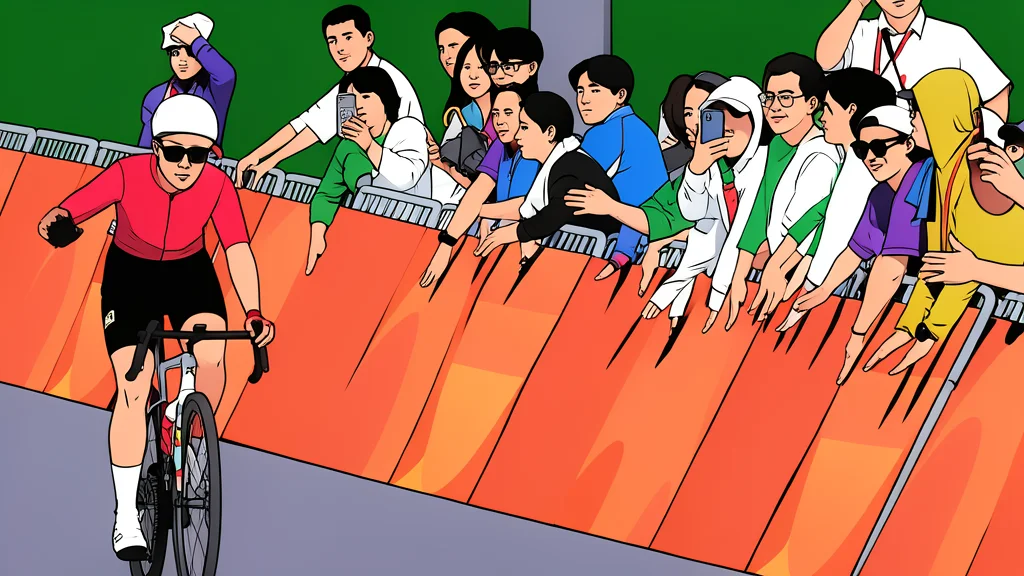
Guo Li edged out Fariba Hashimi by a hair's breadth to win the women's road race in Nagoya, securing her first major international gold.
Key points
- Guo Li won the women's road race in 2 hours, 50 minutes, and 5 seconds, edging out Fariba Hashimi in a photo-finish sprint.
- Leung Wing Yee of Hong Kong, China, claimed bronze after overcoming a recent illness and a training accident that disrupted her preparation.
- Guo Li aims to use this Asian Games gold as a stepping stone to qualify for the 2028 Los Angeles Olympics.
The final stretch of the Shinshiro Cycling Road Course stretched out like a taut wire, the air thick with the hum of wheels and the strain of forty riders. Guo Li, eyes locked on the back of the peloton, felt the rhythm of the road beneath her tires. She had conserved her strength on the climbs, waiting for the decisive moment to strike.
With three hundred meters left, the gap between first and second was invisible to the naked eye. Guo accelerated, her shoulders burning, and crossed the line in two hours, 50 minutes, and five seconds. Behind her, Fariba Hashimi touched the tape at the exact same instant. The finish line did not separate them; it merely recorded the fact that one had been a fraction of a second faster.
A calculated final push
The race was a study in patience. Guo had failed to break away on the earlier ascents, a tactical choice that left her energy reserves intact for the flat run-in. As the field thinned, she read Hashimi's pace with the precision of a metronome. There was no room for hesitation. She launched her sprint from behind, a sudden burst of power that carried her across the threshold before the Afghan rider could respond.
"I wasn't sure if I could outsprint her," Guo admitted afterward, her voice steady. The uncertainty hung in the air, a testament to her relative inexperience at this level. Yet, the execution was flawless. Leung Wing Yee of Hong Kong, China, followed forty-one seconds later to claim bronze, completing the podium with a performance that defied the odds of her recent physical setbacks.
Tears at the finish line
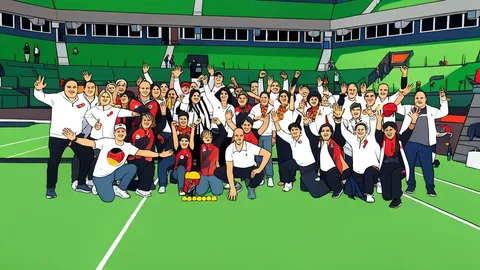
The victory was not a solitary triumph. When Zhang Hao, the time trial silver medalist, arrived at the finish, the two teammates collided in an embrace that dissolved the tension of the race. Tears streamed down Guo's face, mixing with the sweat and the dust of the course. "We did it. We succeeded," she said, the words heavy with the weight of a collective effort.
For Hashimi, the silver medal carried a different resonance. Mechanical failures had plagued her in the time trial, stealing a potential gold. This result, however, was pure grit. She stood on the podium, the Afghan flag draped over her shoulder, a symbol of resilience forged in the crucible of competition. Her silver was not a consolation; it was a statement of endurance.
Looking toward Los Angeles
The gold medal sat heavy in Guo's pocket, a tangible proof of her calm mindset. She had approached the Asian Games debut with a clarity that belied her youth. Now, her gaze shifts to the horizon, toward the 2028 Los Angeles Olympics. "I hope to learn something from every race," she said. The road ahead is long, but the foundation is laid in the dust of Nagoya.