Reusser's World Champion Bike Pushes UCI Limits
Canyon engineer Lukas Schuchnigg reveals how the new Speedmax CFR defied regulations to secure Marlen Reusser's title.
Key points
- Marlen Reusser won the Women's Elite ITT by 40 seconds on the unreleased Canyon Speedmax CFR.
- The bike features a distinctive double crown fork design that pushes against new UCI width limits.
- Engineer Lukas Schuchnigg states the design maximizes airflow control around the rider's legs.
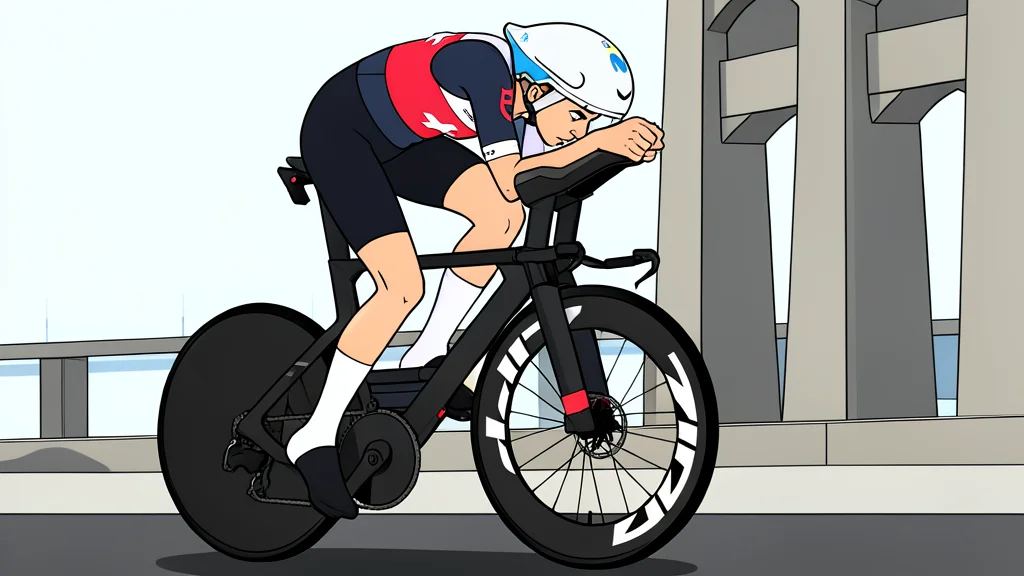
The air in the wind tunnel feels thick, pressing against the carbon fiber frame as Marlen Reusser holds her position. On Sunday, this machine carried her to a 40-second victory over Zoe Backstedt in the Women’s Elite Individual Time Trial World Championship. The bike, an unreleased Canyon Speedmax CFR, did not just win; it announced a new era of design.
The front end breaks the visual code of traditional time trial cycling. A wide-legged double crown fork rises past the headtube, a silhouette that echoes the Hope HB.T track bike. It is a radical choice, engineered to sculpt the airflow around the rider’s legs, turning the most exposed part of the human body into a streamlined surface.
Engineering On The Regulatory Edge
Lukas Schuchnigg, the engineer behind the Speedmax CFR track machine, spoke exclusively to Cyclingnews about the tightrope walk required to build this frame. He explains that the team hit a performance ceiling with conventional designs, forcing them to look elsewhere for speed. The solution was not just a new shape, but a negotiation with the rulebook.
For two years, the team widened the fork legs to capture more airflow, pushing the dimensions to the absolute limit. A new UCI rule introduced this year capped the inner width, halting their initial expansion plans. Schuchnigg notes that the bike now butts up against several regulations, operating in the narrow space where innovation meets compliance.
Subtle Changes, Massive Gains
Beyond the dramatic fork, the bike hides other aerodynamic secrets. A deeper headtube and a narrower top tube work together to manage pressure differentials. The chainstays and dropout shapes have been re-engineered, and a blind dropout removes drag points that were once standard. Every millimeter has been accounted for.
The new 'Aerofuel TT' bottle sits flush with the frame, its squared-off design distinct from Canyon’s current magnetic offer. This component, like the integrated timing chip mount on the fork legs, is part of a holistic approach. Two new patents have been registered for the fork leg design, securing the intellectual property behind the radical front end.
A Two-Year Development Odyssey
The development timeline stretched across two and a half years, a period of relentless testing and refinement. Schuchnigg recalls the early experiments where they found that aligning the fork legs and spacer setup created significant aerodynamic improvements. This insight, gained almost two years ago, became the foundation of the final design.
As Reusser crossed the line in first place, with Franziska Koch finishing third, the Speedmax CFR proved its worth. It is not just a faster bike; it is a statement that the limits of time trial technology are still being drawn. The wind tunnel has spoken, and the verdict is clear: the edge is where the speed lives.