Silence in the Berchtesgaden Forest: The End of Max Riese
The heavy breathing of a descent into the Bavarian woods ends in a collision with the wild, claiming the life of one of cycling's most relentless endurance champions.
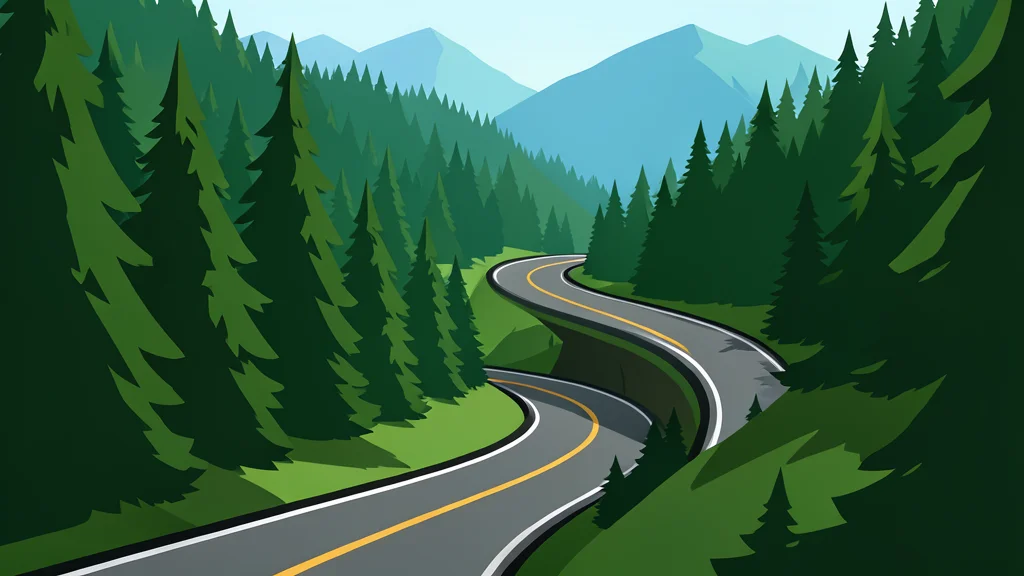
The air in the Berchtesgaden valley was thick with the scent of pine and wet earth on Tuesday evening. Max Riese, the 36-year-old German ultra-cyclist, was carving through the darkening forest on the Rossfeld-Panoramastrasse. The road winds steeply, a ribbon of asphalt snaking between dense trees where visibility drops to a narrow slice of headlight beam. Riese was descending, his body low over the handlebars, chasing the momentum that had defined his career. Then, the silence broke.
A car driver found him moments later, heavily injured on the verge. She called for help, but the rescue teams arrived too late to pull him back from the brink. Police investigators found animal hair clinging to his jersey, a grim clue pointing to a violent collision with a wild animal. While a hunter swept the surrounding woods for a deer, the exact species remains unconfirmed. A forensic expert is now tasked with reconstructing the precise moment the metal frame met the forest floor.
A Career Measured in Vertical Meters
Riese was not merely a participant in the ultra-cycling world; he was a benchmark. In May, he conquered the Hellenic Mountain Race in Greece, a grueling 900-kilometer journey that climbed 30,000 vertical meters. His legs burned, his mind focused, and he crossed the finish line first. Later that year, he placed second in the Silk Road Mountain Race in Kyrgyzstan, enduring the harsh high-altitude winds and dust. His physicality was legendary, a testament to a man who viewed exhaustion as a starting point rather than an ending.
His most unusual feat occurred last year on the Gaisberg in Salzburg. Riese attempted a triple Everest, a grueling test of will where he climbed and descended the mountain 95 times. For 37 hours, he pedaled up and down the same switchbacks, accumulating nearly 26,500 meters of elevation. The monotony was the enemy, and Riese defeated it with sheer, unyielding determination. He was a figure of immense magnetism in a niche sport that demands both mental fortitude and physical endurance.
The Danger of Wild Encounters
The Rossfeld-Panoramastrasse is a favorite among road cyclists for its challenging gradients and sharp curves. However, the beauty of the route masks a latent danger. Wildlife, particularly deer, often roam these forested sections, especially during twilight hours when their vision is poor and their movement erratic. A cyclist descending at speed has little time to react to an obstacle emerging from the undergrowth. The impact of such a collision is catastrophic, as the rigid frame offers no cushion against the sudden stop.
As the investigation continues, the cycling community mourns a loss that feels disproportionate to the scale of the event. Riese’s co-founded company, GravGrav, released a statement describing him as leaving an
A Gap in the Community
Riese’s influence extended beyond his race results. He was a central figure in the ultra-cycling scene, known for his approachability and his drive to push the boundaries of the sport. His death has cast a long shadow over the community, prompting a somber reflection on the risks inherent in extreme sports. The roads he loved are now silent, the echoes of his chainrings replaced by the quiet rustle of leaves in the Bavarian forest. As reported by GN sports/cycling (de), the tragedy has united a scattered group of athletes in shared grief, marking a definitive end to one of the sport’s brightest eras.