Swiss Time Trial Crew Loses Gold by 20 Seconds After Handlebar Failure
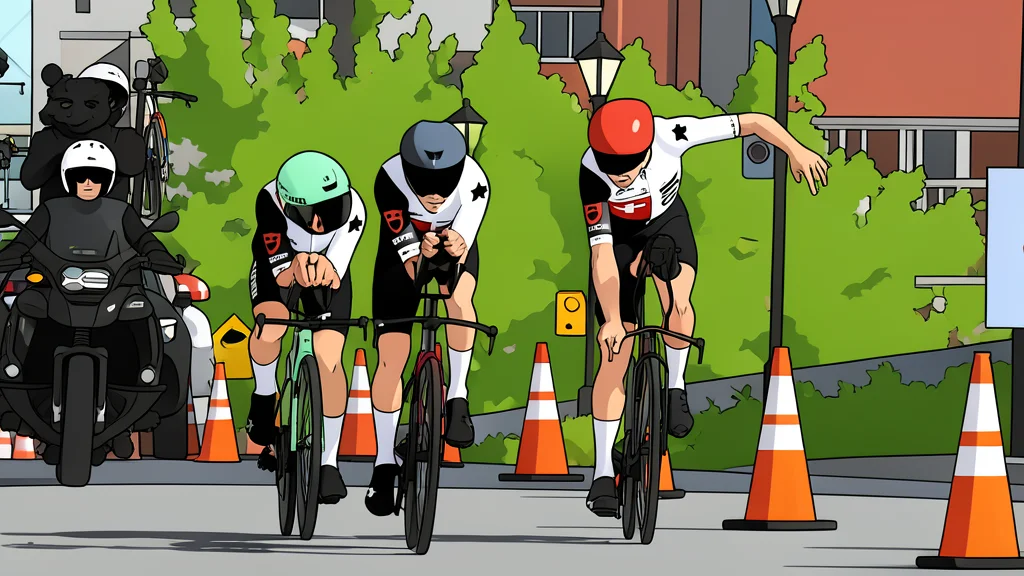
Stefan Küng's broken handlebar forced a chaotic solo push, leaving the Swiss team 20 seconds shy of world gold.
Key points
- Swiss mixed time trial team lost gold by 20 seconds after Stefan Küng's handlebar broke four kilometers in.
- Marlen Reusser and teammates secured bronze despite a rough road surface that injured Reusser's hand.
- Mauro Schmid and Stefan Bissegger raced solo after Küng's mechanical failure, facing a severe headwind disadvantage.
The asphalt in Montreal bites back. Potholes ripple across the surface like cracked skin, sending shockwaves up through carbon fiber and into bone. For the Swiss mixed team, the road itself became an adversary, compounding a mechanical tragedy that unfolded just four kilometers into the race. The finish line arrived with a 20-second gap, a narrow chasm that separated world champions from the bronze medalists.
Stefan Küng stood apart, his face a mask of frustration. He had to abandon his bike, the handlebar snapped clean off, leaving his teammates to chase a ghost. Mauro Schmid and Stefan Bissegger, bound by pre-race strategy, did not wait. They peeled off, two against the wind, fighting a battle that had already been lost to physics and bad luck. The silence of the empty bike lane behind them was louder than the crowd's roar.
Mechanical failure reshapes race
Küng’s exit was a rupture. He refused to detail the exact moment of failure, but the physical evidence was undeniable. Schmid, speaking to Eurosport, confirmed the break. The loss of their third rider transformed a controlled team effort into a desperate, solitary grind. The headwind, a constant invisible hand, pressed against their backs with renewed force. Without the drafting benefit of a trio, every watt of power felt heavier, every second stretched thin.
Bissegger acknowledged the shift in dynamics. The team had trained for three, not two. The absence of Küng’s pace meant Schmid and Bissegger had to hold a higher average speed to remain competitive. It was a brutal test of endurance. They pushed to the limit, muscles burning in the cool air, knowing that the margin for error had vanished with their teammate. The finish line was a blur of effort and exhaustion.
Women’s chase defies odds
Marlen Reusser, Noemi Rüegg, and Jasmin Liechti knew the men’s plight before they even crossed the start line. They did not hesitate. Reusser, a two-time time trial world champion, set the tone. They took over from the men’s sixth-best split, but they did not settle. They attacked. The flat sections became their playground, Liechti driving the pace while Rüegg held firm in the final kilometers. Their chase was relentless, a testament to their preparation and nerve.
The women’s performance lifted the team from a potential fourth to a solid third. Reusser praised her teammates, noting Rüegg’s fierce fight to the finish and Liechti’s crucial early tempo. It was a display of resilience. They took what they could, turning a compromised race into a respectable podium finish. The bronze medal gleamed, a symbol of their hard work despite the earlier setback.
Road surface causes injury
The damage extended beyond the clock. Reusser described the road surface as a catastrophe. The numerous potholes, visible in the harsh light, had become a physical hazard. The vibrations traveled up her arms, settling in a bone of her hand. The pain was acute, a sharp reminder of the road’s roughness. She wrapped her hand in bandages after the race, the injury a silent witness to the track’s poor condition.
The Swiss team now faces a short recovery window. The road race for the women is scheduled for Saturday, followed by the men’s final chances on Sunday. Reusser, though injured, remains focused. The team will regroup, tending to their bodies and their spirits. The 20-second gap remains a stinging memory, but the bronze is a testament to their strength in the face of adversity. The road may have been rough, but their resolve was unbroken.