Riyadh Locks in 2027 and 2028 CS2 Dates
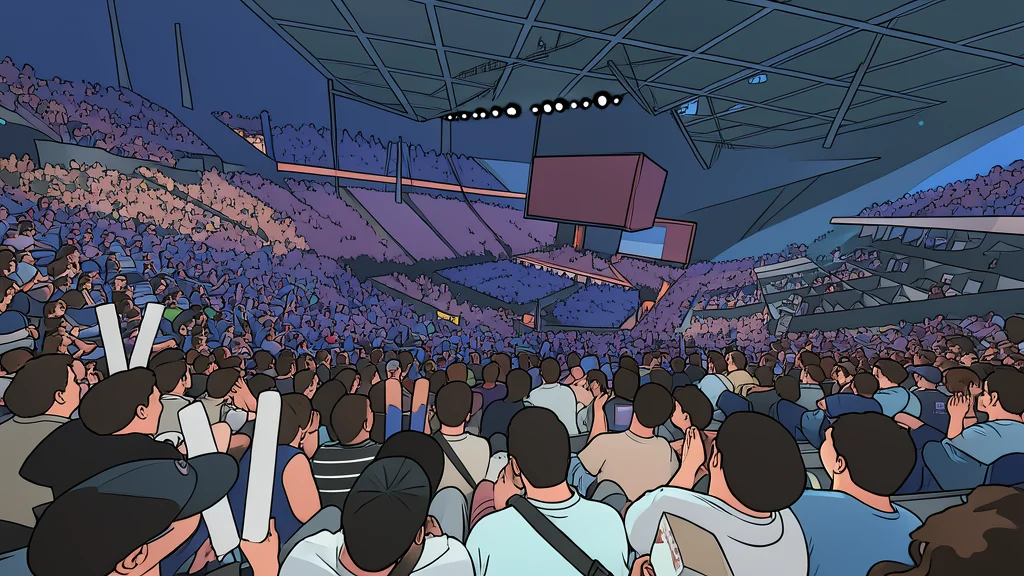
Thirty-two teams will converge on the Esports Boulevard in July 2027, chasing a $2 million prize pool in a format that demands precision, presence, and pure skill.
The lights hum to life over the Esports Boulevard, casting long, sharp shadows across rows of empty gaming stations. The air is still, waiting for the friction of keyboards and the roar of a crowd that has not yet arrived. In two years, this silence will break. Thirty-two of the world’s most elite Counter-Strike 2 squads will descend on Riyadh, their eyes fixed on a single, gleaming objective: a $2 million prize pool and the weight of a global title. The organizers have laid out the blueprint, turning vague anticipation into concrete dates and rigid structures.
This is not just another tournament on a crowded calendar. It is the culmination of an expanded structure that prioritizes physical presence and competitive purity. Every detail, from the qualification pathways to the final series, has been nailed down. For clubs chasing the crown, the fog has lifted. They know exactly what stands between them and the trophy. The stage is set, the stakes are high, and the clock is ticking toward a summer that will define the next era of the game.
Riyadh Hosts a Physical Showcase
The action will anchor itself in the heart of the Saudi capital, specifically at the Esports Boulevard. Teams begin their arrival on July 18, 2027, settling into the rhythm of the venue before Media Day kicks off on the 19th. The main tournament engine roars to life on July 20 and does not stop until August 1. Departures are scheduled for the final two days, allowing players to exhale after a grueling two weeks of competition.
Crucially, every stage of the event, including the Open Qualifier, will be played entirely in person on LAN. There is no remote participation, no digital shortcuts. The physicality of the arena, the tangible connection between players and their hardware, is central to the vision. This commitment to a unified, local environment ensures that the competitive integrity of the matches remains uncompromised, fostering a genuine atmosphere of shared struggle and triumph.
Strict Paths to the Main Event
Access to the main stage is governed by a rigorous, data-driven system. Invitations are tied to the first available monthly VRS publication of June 2027, while seeding relies on the July metrics. This creates a clear, objective hierarchy. The Main Event roster consists of 20 Global VRS invites, supplemented by two each from North America, South America, and Asia. Two wildcard slots offer a final chance for unexpected contenders, while the last four seats are reserved for the victors of the Riyadh Open Qualifier.
The qualification process is unforgiving. A separate $100,000 prize pool fuels the Open Qualifier, which runs from July 16 to 18. This non-BYOC LAN event demands that all participating teams register in advance and perform under pressure. The top four teams earn direct passage to the Main Event, securing their place in the larger battle. Those who fall short in fifth through eighth place still walk away with $9,500, while ninth through sixteenth place receive $7,750. It is a meritocracy where every match counts.
Double Elimination Drives the Format
The tournament structure is designed to test consistency and resilience. Stage 1 splits the 32 teams into four groups of eight, competing in a double-elimination format. This allows for redemption, giving teams a second chance to prove their worth. The top four from each group advance to Stage 2, where the field narrows to 16 elite squads.
From here, the intensity escalates. The playoffs are played entirely on LAN, with all matches decided in best-of-three series. The journey continues until the Grand Final, which takes the pressure to a new level. The championship match is decided in a best-of-five series, a format that demands not just skill, but mental fortitude. The $2 million prize pool is distributed based on final placement, with the champion claiming $700,000. Second place earns $300,000, while third and fourth take home $150,000 and $90,000, respectively. The distribution continues down the field, ensuring that even teams finishing outside the top four receive significant compensation for their efforts.