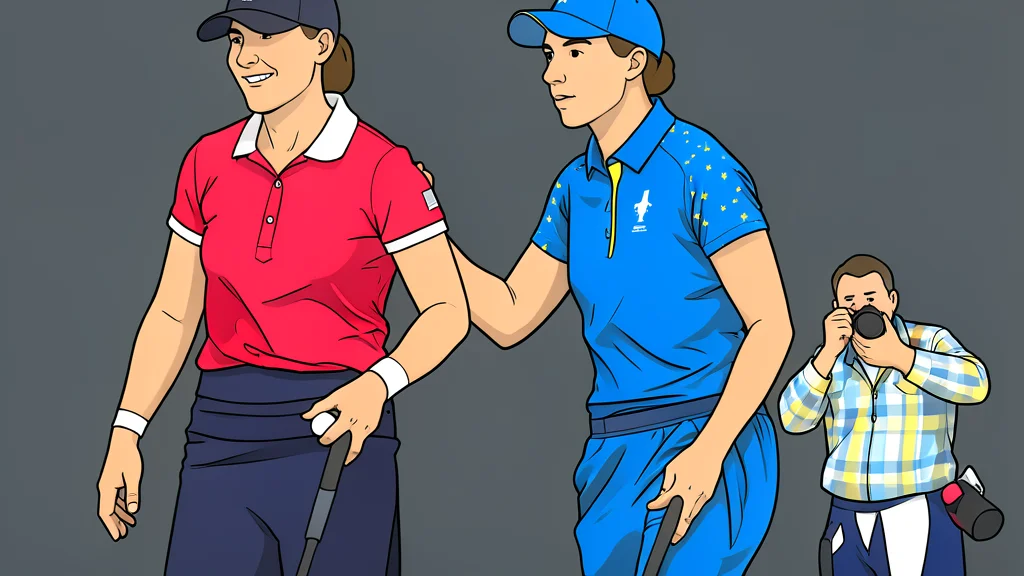
Korda Challenges Officials over Ciganda's Slow Pace
At Bernardus, Nelly Korda broke from the match to confront a rules official, demanding a penalty for Carlota Ciganda’s deliberate approach.
The air at Bernardus Golf Club hangs thick with the weight of Friday evening. Nelly Korda does not linger. She drops her bag, turns, and walks with a rigid purpose toward the rules official’s office. The turf crunches under her spikes, a sharp, rhythmic sound in the quiet tension. She is not there to chat. She is there to demand an answer about Carlota Ciganda’s pace of play, a clock that seems to tick slower than the rest of the course.
The confrontation follows a match that defied the script. Ciganda, known for her methodical rhythm, delivered a final putt that saved half a point for Europe. It was a shot of pure nerve, a par that denied Korda and Lauren Coughlin a full victory. But the win felt tainted by the minutes that stretched between swings, a delay that left Korda’s team watching their hands, frustrated by a lack of movement.
A Demand for Immediate Penalty
Korda’s frustration is not abstract. It is rooted in the slow-motion nature of Ciganda’s routine. The Spaniard is a familiar figure in pace-of-play controversies, having faced disqualification in 2023 for refusing a penalty and signing a wrong scorecard. On Friday, the pattern repeated. Chris Solomon, observing the action, noted the palpable irritation among players not in the match. They stood with hands on their faces, watching the clock on the 17th hole crawl past the minute mark. The caddies, too, felt the pressure, their voices rising in quiet protest as the silence stretched.
The official’s response was a cold, procedural fact. Without being out of position, players are not subject to the clock. No penalty could be issued. Korda left the office with her point intact but her spirit bruised. The rules, as they stand, protect the slow player from the clock, a technicality that leaves the faster player with no recourse but to wait.
Mental Weight Behind the Swing
Ciganda has spoken before about the invisible burden of the game. In 2024, after a $4,000 fine at The Annika, she explained that golf is mentally tougher than the casual observer assumes. It is not just about the swing. It is about the storm of thoughts that precedes it. She sees the slow pace not as a delay, but as a necessary processing time, a way to steady the mind before the ball meets the clubface. For her, the time is not wasted. It is essential.
This internal struggle clashes with the external reality of a team competition. In match play, momentum is everything. A long pause can break the rhythm of the opponent, creating a psychological gap that is as dangerous as a bad lie. Korda’s anger is not just about time. It is about the disruption of flow, the sense that the game is being held hostage by a process that feels opaque to those playing at a different speed.
Tension as a Competitive Force
The Solheim Cup thrives on these moments. The pause, the wait, the build-up of pressure. These are not just delays. They are part of the drama. As Yahoo Sports notes, the event benefits from the tension that builds when the pace slows. Spectators bite their nails. The atmosphere thickens. The wait becomes a weapon, a way to wear down the opponent’s focus. While Korda wants the game to move, the event itself may rely on the very slowness she resents to create its most memorable moments.