Silence Falls on the Court as Anthems Are Suspended
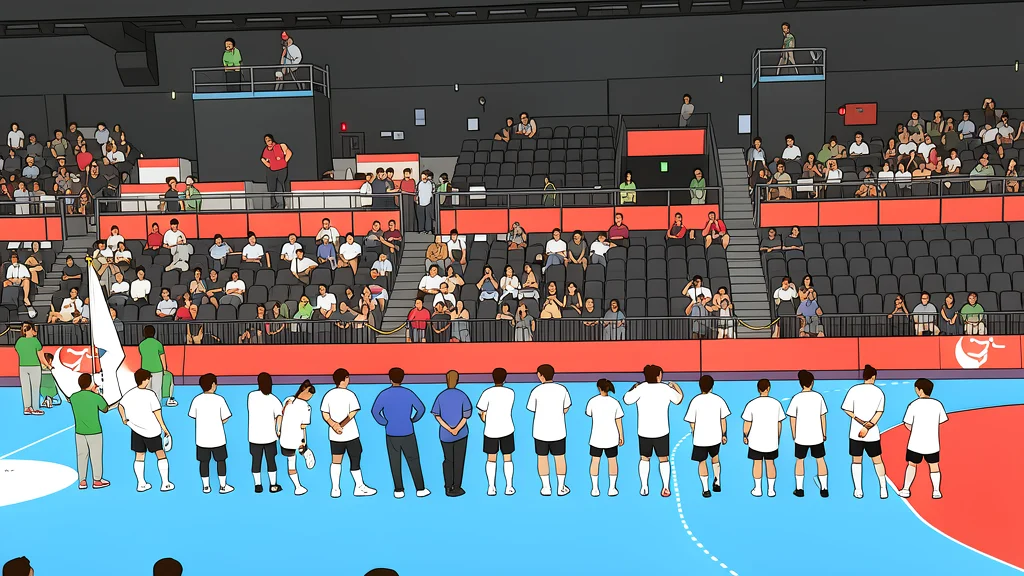
The Inazawa Entrio arena holds its breath. No music swells, no flags rise. Just the squeak of rubber on polished wood and the sudden, heavy quiet where the anthem should be.
The air in Inazawa Entrio hangs thick with anticipation, a tension that has nothing to do with the scoreline. The players shuffle into position, their breath visible in the cool gymnasium air, but the ceremonial moment never arrives. There is no rising melody, no collective bow of heads. The whistle blows, sharp and solitary, cutting through the silence like a blade. It is a void where tradition should stand, leaving the athletes standing in a strange, suspended pause.
This is not a technical glitch or a forgotten cue. It is a deliberate erasure. The Olympic Council of Asia has issued a temporary halt to national anthems across all disciplines at the Aichi Nagoya Asian Games. The directive arrived that morning, cold and absolute, following a chaotic diplomatic stumble on the hockey pitch the day before. Now, the handball court reflects that broader freeze, a silent protest written in the absence of sound.
A Diplomatic Stumble Spreads
The trigger was a misfire in men’s hockey. During the match between South Korea and Bangladesh, the North Korean anthem sounded from the speakers, a glaring error that rippled outward. The organizing committee, faced with the diplomatic minefield, chose the path of least resistance: silence. Rather than risk another mistake, they pulled the plug entirely. The decision was not limited to handball; it was a blanket suspension, a procedural reset that prioritized operational safety over ceremonial pride.
The Korea Handball Federation confirmed the move, noting that the OCA deemed a review of protocols necessary. The morning’s directive was swift. By the time the South Korean and Hong Kong teams stepped onto the court, the sequence was already stripped from the script. The players were introduced, the ball was tapped, and the game began. The anthem, a mandatory element under OCA regulations, simply did not exist in that moment.
Confusion in the Huddle
Coach Lee Gye-cheong watched the proceedings with a furrowed brow, his expression a mask of bewildered pragmatism. He had seen many international arenas, many flags raised, many anthems played. He had never seen this. The absence was not subtle; it was a physical weight in the room. The players, trained to stand at attention, found themselves shifting uncomfortably, unsure whether to wait for a cue that would never come. The confusion was mutual, a shared disorientation between the two teams who expected a ritual and received only a void.
The silence was not unique to this match. Officials whispered that the men’s handball game between Kuwait and Iran had suffered the same fate. The suspension was a global pause, a collective holding of breath by the organizing committee. It was a pragmatic, if jarring, solution to a problem that had no clean answer. The court remained the same, the goals remained the same, but the soul of the opening ceremony had been temporarily amputated.
The Cost of Silence
As the first shot rang out, the echo in the arena felt hollow. The game proceeded with mechanical precision, the players focused on the ball, on the space, on the immediate task. But the background noise of national pride had been muted. The OCA’s decision to suspend anthems was a temporary measure, a pause in the narrative of the games. It was a reminder that beneath the athleticism and the competition, the machinery of diplomacy is fragile, prone to breaking under the slightest pressure. The silence was not empty; it was full of unspoken words, of flags that did not fly, of songs that did not sing.
According to GN sports/handball (en-US), the incident marks a rare disruption in the ceremonial flow of the Asian Games. It is a stark reminder of how quickly the stage can shift from celebration to confusion. The players will forget the silence, perhaps, or they will carry it with them. The anthem will return, likely, when the dust settles and the protocols are reviewed. But for now, the court is quiet, and the game is all that matters.