Passmore Targets LA28 After Paris Defensive Lessons
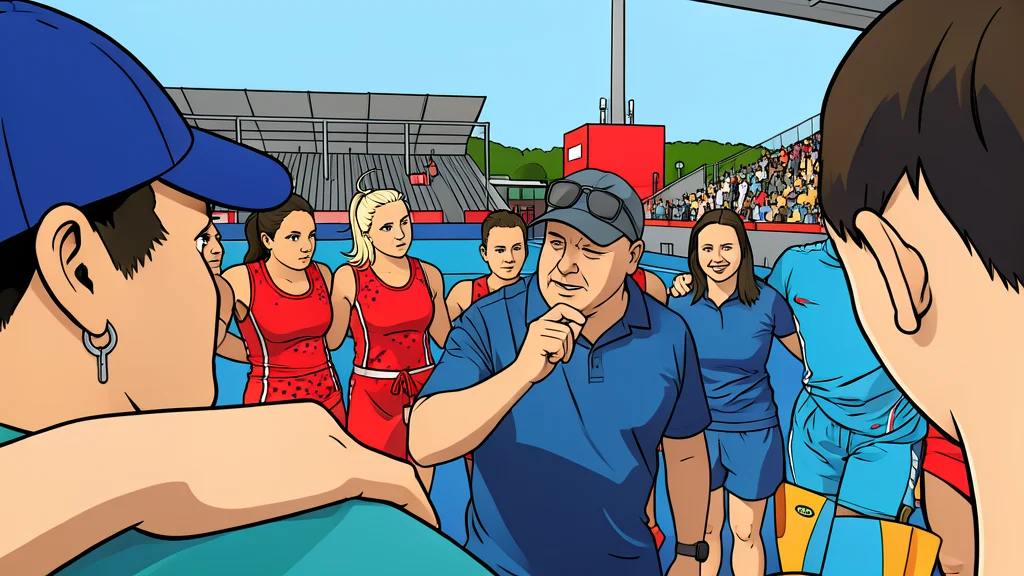
USA Field Hockey coach David Passmore identifies defensive lapses in Paris as key hurdles to overcome before the Los Angeles 2028 Olympics.
Key points
- David Passmore identifies the defensive lapse against Spain in Paris as a critical lesson for the 2028 cycle.
- The coaching staff aims to adapt to the intense noise of American crowds without losing tactical discipline.
- Tactical development focuses on broadening player fluency beyond North American styles to include European and Asian influences.
The air in Los Angeles hangs heavy with anticipation as the countdown to the 2028 Olympic Games begins. For David Passmore, head coach of the USWNT, the reality of hosting the world’s most prestigious sporting event is no longer abstract. It is a physical distance of five hours, a scale that defies the familiar rhythms of European high-performance setups. The stadium structures stand like concrete giants, their sheer magnitude striking a chord that resonates deep into the team’s collective consciousness.
Yet this excitement is tempered by the sharp sting of recent memory. The Paris 2024 campaign revealed a young squad capable of unsettling traditional powerhouses with dynamic speed and defensive grit, yet ultimately undone by razor-thin margins. The exit was not a failure of talent but a failure of detail, a lesson etched into the team’s psyche that now drives the strategic roadmap toward the American West Coast.
Defensive Discipline Defines The Path
The pivotal moment against Spain remains the clearest example of how tiny margins dictate outcomes. Leading 1-0, the team conceded a goal they had worked tirelessly to prevent, a lapse in defensive setup that cost them a quarterfinal berth. Passmore has not let that moment fade. The morning after the elimination, the squad spent over two hours formally logging every key takeaway, creating a document he still reviews regularly. This ritual of reflection ensures that the distractions of the Olympic magnitude do not erode the routine, a principle reinforced by their team psychologist who brings Olympic experience from Great Britain.
Navigating The Crowd's Emotional Weight
The presence of American fans in Paris was a revelation, offering a preview of the noise and enthusiasm that will define the home Games. Passmore acknowledges that the volume in Los Angeles will be three or four times greater, creating a sensory environment that can easily disrupt focus. Human nature dictates that rising noise often triggers a rush to play, but the coaching staff is instilling the discipline to slow the game down. This adaptation is crucial; the team must learn to channel the energy of the crowd without being swallowed by it, maintaining tactical clarity amidst the roar.
Expanding Tactical Fluency Beyond Borders
To prepare for this unique challenge, the staff is pushing players to understand the distinct styles of European, Asian, and Oceania hockey. The college game, while dominant in the U.S., offers a particular style that must be broadened through competitions like the FIH Hockey Nations Cup. The focus is sharpening defensive structures, utilizing midfield speed, and transforming the penalty corner unit into a lethal, world-class setup. This tactical evolution is not just about winning medals; it is a generational opportunity to elevate the sport in a market where the platform of a home Games can reshape the landscape of field hockey.