The 2022 Draft: A Missed Dynasty for the Devils
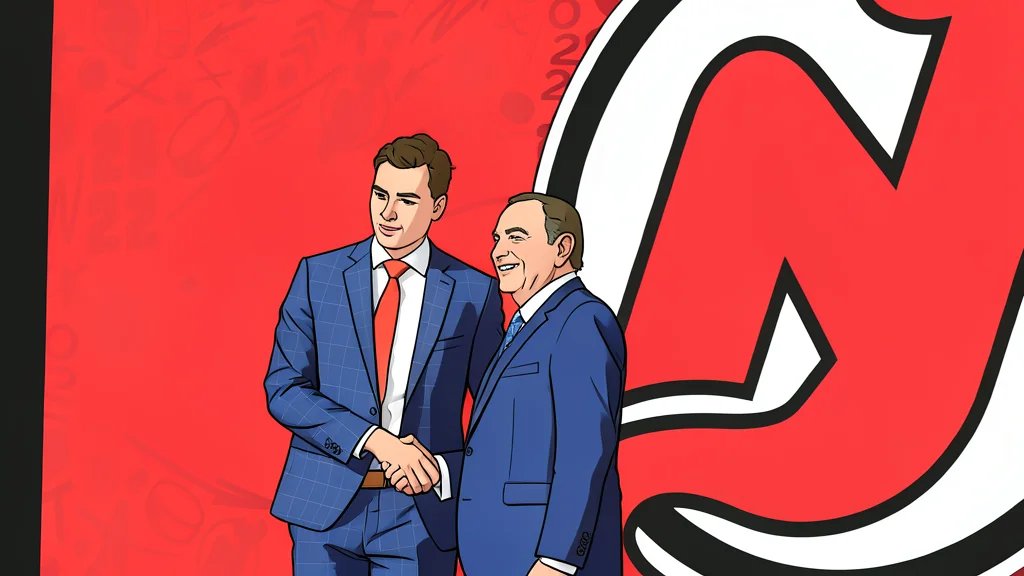
Years later, the rearview mirror reveals a path not taken. The 2022 draft remains a pivotal moment in Tom Fitzgerald’s tenure, where a good team could have become a dynasty.
The ice is white and silent, a blank canvas waiting for the first skate to carve a line. It takes three or more seasons for the dust to settle, for the prospects to mature, and for the true weight of a draft pick to become visible. Day-after grades are often a comedy of errors, but the 2022 class has now aged into clarity. For the New Jersey Devils, this was not just a selection; it was a fork in the road. They had the chance to build a foundation that could have echoed through the next decade. Instead, they missed big, leaving a void that hindsight makes painfully obvious.
The moment arrived with the second overall pick. Montreal had just claimed Juraj Slafkovsky, a high-upside unknown. The board was open. Shane Wright, Logan Cooley, and Cutter Gauthier were all still available. General Manager Tom Fitzgerald faced the eternal dilemma: take the best player available or address the most acute need. The Flyers chose talent, building a core that lacks a top-line center. The Sharks chose excitement, leaving a void at number-one defense. Fitzgerald chose structure. He chose to fix the defense, a decision that defined the rest of his time in the building.
The Architect of the Blue Line
Simon Nemec was the choice. He was not merely the best defenseman in the room; he was the specific piece required to complete the puzzle. Luke Hughes, taken the year before, was an offensive artist, a skater who thrived on speed and creativity. Nemec was the counterweight. He was bigger, more physical, yet possessed a scoring touch that made him dangerous in his own right. The vision was clear: a pair that could cover the ice, protect the net, and generate offense from the back end. It was a logical, structural move to round out a young core.
In the long game, Nemec proved to be a superior player to David Jiricek or Pavel Mintyukov. He had the tools, the size, and the instinct. Yet, the fit never materialized. The chemistry did not click, or perhaps the system did not suit his evolution. This offseason, he was traded to the Calgary Flames, a parting that feels like a final chapter closing on a book that was never fully read. The potential was there, tangible and bright. It just never found its place in New Jersey.
The Center Who Never Arrived
The sliding door remains Logan Cooley. He entered the draft as the top center from the USA development program, a playmaker with elite vision. The plan, had he been selected, would have been patient. He would have started on the third line, behind the established Jack Hughes and Nico Hischier. But Cooley was not a depth piece. He was a catalyst. His ability to elevate the skaters around him, to make Hughes faster and Bratt more dangerous, was his defining trait. The Utah Mammoth are now reaping the benefits of his rise, but the Devils are left wondering what that synergy would have looked like.
There is a risk in drafting for need. It is a gamble that a player will fit the mold you have built for them. Cooley was a different kind of asset. He was a creator, not just a defender. The Devils had the stars, but they lacked the glue. By passing on Cooley, they missed the chance to have a center who could dictate the pace of the game. That void has persisted, a constant reminder of the path not taken.
Doubling Down on Defense
The commitment to the blue line did not end with Nemec. With the 46th pick, the Devils selected Seamus Casey. It was a doubling down, a statement that the defense was the priority. Casey was the mirror image of Nemec in size and role, but a contrast in style. He was smaller, more offensive-minded, a product of the same USA development system that produced Cooley. The strategy was to build a deep, versatile defensive corps. It was a safe bet, a bet on consistency and structure.
Looking back, the 2022 draft was a study in risk and reward. The Devils chose the known quantity, the structural fit. They avoided the high-variance talent that could have changed the trajectory of the team. The result is a team that is solid but not spectacular, a team that is good but not great. The rearview mirror is clear now. The ice has dried, the lines are set, and the echoes of that draft night still ring in the empty arena.