Atlas Identifies Defensive Flaw in Steveson's UFC Upset Loss
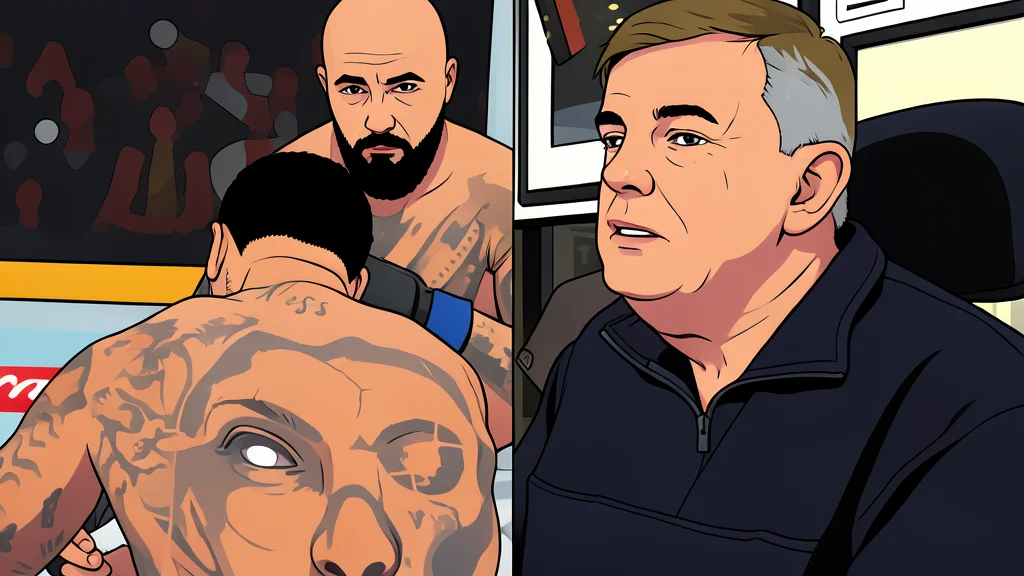
A left hook ended the fight in twelve seconds, but the veteran trainer sees the real culprit in the movement before the impact.
The air in the Octagon still hums with the shock of the impact. Sean Sharaf’s left hook did not just land; it detonated. In the span of twelve seconds, Gable Steveson’s undefeated record dissolved into the canvas dust. The referee’s hand waved through the smoky haze, signaling the end of a career that seemed untouchable just moments prior. For the fans packed in the stands, the knockout was a thunderclap, a sudden and violent erasure of the expected dominance.
However, the story does not end with the bell. It begins with the feet. Teddy Atlas, the legendary boxing trainer, watched the replay with the cold precision of a surgeon. He saw not just power, but a structural failure in the defense. To Atlas, the loss was not a mystery of strength but a textbook error of positioning. The narrative shifts from a tale of brute force to a study of technical breakdown, dissecting the precise moment where a champion’s guard crumbled.
The Mechanics of a Sudden Fall
Steveson, the Olympic gold medalist and wrestler, entered the cage with a reputation built on iron discipline. At twenty-six, he carried the weight of high expectations, a fresh UFC debut victory, and a record that read four wins and zero losses. His opponent, Sharaf, carried a record of four wins and two losses, fresh from two technical knockouts. On paper, the odds were stacked in favor of the younger man. The crowd expected a takedown, a grind, a controlled submission. Instead, they received a flash of light and silence.
The sequence was brief, almost too fast to process. Steveson extended a jab, a probing strike meant to measure distance. As he retracted his arm, his body shifted. That subtle pull-back opened a corridor. Sharaf, planted firmly with his feet set for delivery, did not chase. He waited. The left hook traveled through the gap left by the retreating jab, connecting with a force that snapped Steveson’s head sideways. The impact was not a push; it was a severing.
Atlas Dissects the Defensive Error
In a post shared on his official X handle, Atlas stripped away the spectacle to reveal the flaw. He pointed to the moment Steveson reached with the jab and then pulled back from the right side. This motion, Atlas argued, pulled the fighter directly into the danger zone. It was a defensive violation, a moment of hesitation that turned a defensive posture into an offensive target. The veteran trainer emphasized that the power of the blow was secondary to the availability of the target.
"It’s power but as I say it’s made possible by defensive flaws," Atlas wrote. He noted that Sharaf was set with his feet to deliver the blow, a stance that telegraphed intent without sacrificing balance. The analysis suggests that the knockout was not an act of luck but a consequence of technical bad form. Steveson’s movement created the opening; Sharaf’s timing capitalized on it. The lesson is clear: in the ring, a half-step back can be as fatal as a full strike forward.
Rumors of Premature UFC Debut
The aftermath has sparked a debate about Steveson’s readiness. Many fans question whether he was rushed into the UFC too early. His debut in July saw him knock out Elisha Ellison, a victory that cemented his status as a prospect. But the Sharaf fight was his second outing, and the loss has raised alarms among observers. Some argue that the psychological weight of such a sudden defeat could linger, questioning the resilience of a fighter who had never truly been tested at this level.
Despite the criticism, Steveson remains a top young fighter with immense potential. A pupil of Jon Jones, he has the pedigree to bounce back. The community is split, with some rallying in support and others criticizing the loss of a favorite. The incident, as reported by GN sports/boxing (en-US), serves as a stark reminder that potential does not guarantee protection. In combat sports, the margin between glory and defeat is often measured in the space between a retreating jab and a planted foot.