Formula 1's 305km Rule and the 2027 Distance Shift
F1 races are capped at two hours, but the 305km minimum distance rule is set to change starting next year.
Key points
- Formula 1 races must exceed 305km, with Monaco as the sole exception at 260km.
- A two-hour limit applies to racing time, extendable to three hours if suspended.
- The 2027 regulations will reduce the minimum required race distance.
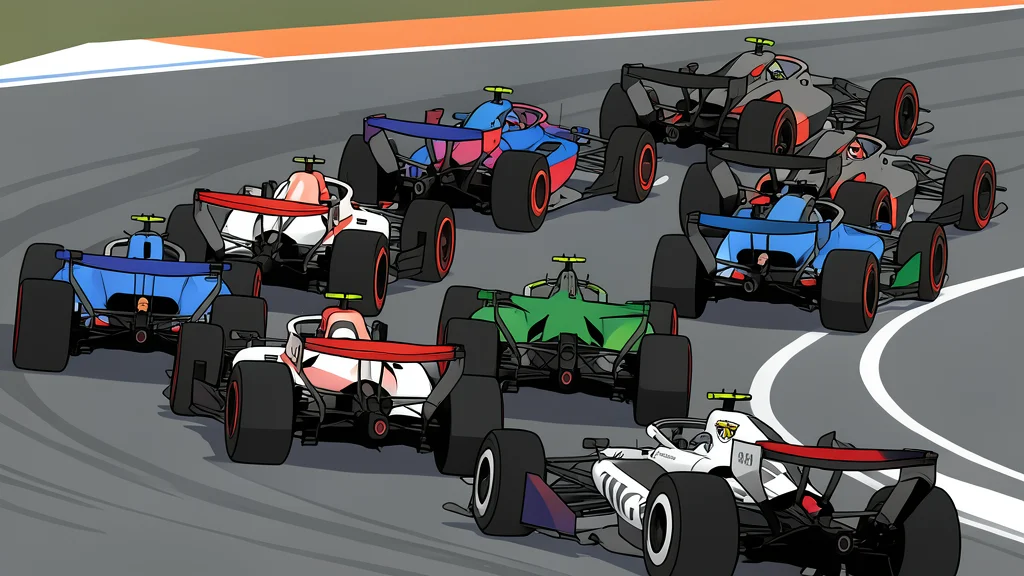
The asphalt shimmers under the midday sun as the grid settles into a low hum. Engines idle like sleeping beasts, their vibration a physical pulse against the tires. This is the moment before the chaos, a stillness that holds the weight of nearly 305 kilometers of impending speed. The rules are precise, a mathematical cage built around the raw power of the machines.
For decades, the governing body has dictated that a Grand Prix must exceed this specific threshold. It is not a suggestion but a hard line drawn in the regulations. The driver’s task is clear: complete the minimum number of laps to cross that mark, all within a strict two-hour window. If the race is suspended, the clock stretches, but it never breaks the three-hour barrier. This is the modern architecture of F1 endurance.
Early chaos in the 1950s
It was not always this tidy. In the championship’s infancy, local organizers held the pen. Distances varied wildly, a patchwork of local pride and logistical whim. At Silverstone, the inaugural race saw Nino Farina push his car for 70 laps, covering 325 kilometers in over two hours. The finish line felt like a distant horizon.
Monza, by contrast, demanded more. Farina wrestled with the wheel for 80 laps, a grueling 504 kilometers that consumed nearly three hours of his life. The Indianapolis 500, which joined the championship during this era, pushed the envelope further. At 200 laps and 805 kilometers, it remains the longest and most lap-heavy event in World Championship history. The sheer scale of that distance is almost impossible to visualize today.
Standardization arrives in 1989
The 1958 regulations began to tighten the screws, capping durations at two hours. By 1971, the maximum distance had dropped to roughly 322 kilometers. The Nürburgring Nordschleife became a unique anomaly that year. Its 23-kilometer length meant a race lasted only 12 laps. It stands as the lowest lap count for a completed World Championship race, a testament to the circuit’s raw, unyielding length.
The final piece of the puzzle fell into place in 1989. The 305-kilometer minimum became the global standard. The goal was simple: ensure every race could conclude within two hours. Today, this dictates the rhythm of the season. At Spa-Francorchamps, 44 laps are required. In Baku, it is 51. The mathematics are cold, but the result is a predictable, fair contest of endurance.
Monaco and the 2027 change
Monaco remains the outlier. The street circuit is a narrow, twisting ribbon of tarmac, just 3.337 kilometers long. Average speeds here are significantly lower than at any other venue. To force 305 kilometers would risk a marathon that no one can sustain. Thus, the minimum drops to 260 kilometers. It is a pragmatic concession to the physics of the track.
Even this stability is temporary. As reported by Motorsport.com, the regulations are poised for a shift. In 2027, the required distance will be reduced. The two-hour cap remains, but the kilometer count will dip. The sport is constantly recalibrating, balancing tradition with the evolving demands of modern machinery. The grid waits, the engines breathe, and the clock is ready to start.