Hamlin Cites Off-Track Disrespect as Core Issue with Hocevar
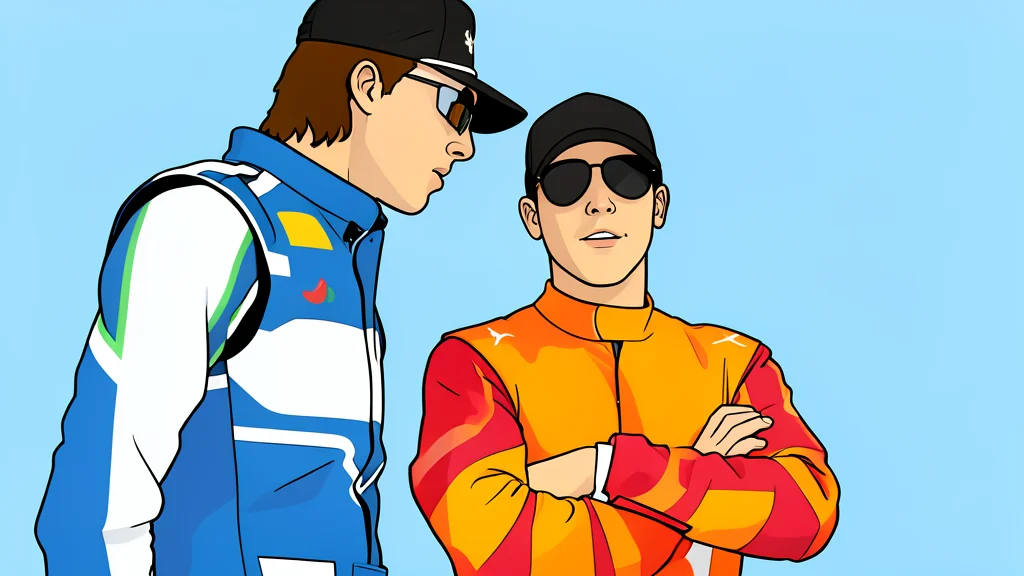
Denny Hamlin argues that Carson Hocevar's casual post-incident merch discounts, not just his driving, fuel tension in the NASCAR garage.
Key points
- Denny Hamlin states that Carson Hocevar's off-track disrespect, not just driving, causes tension.
- Hocevar offered 6% and 12% merch discounts shortly after crashing Keselowski and Blaney.
- Hamlin notes a gap between Hocevar's public indifference and his private receptiveness.
The air in the garage does not stay neutral when a car slides into another. Denny Hamlin, speaking on Ryan Blaney’s podcast, cut through the noise of aggressive racing to pinpoint a sharper frustration: the attitude. It is not the metal crunching that stings, but the silence that follows, or worse, the immediate pivot to a sales pitch.
Hamlin described a disconnect between the drivers’ visceral reaction to contact and the public’s perception of Hocevar as a fan favorite. For the competitors, the incident is an indictment of their entire weekend’s labor. For Hocevar, according to Hamlin, it seems to be a moment to engage a different audience entirely.
Discount codes after collisions
The evidence, as Hamlin sees it, is digital and immediate. After wrecking Brad Keselowski at Darlington, Hocevar launched a six-hour, six percent discount on merchandise. At Bristol, following a clash with Blaney, the offer expanded to twelve hours and twelve percent. These are not subtle acknowledgments of a mistake; they are calculated moves that Hamlin finds deeply problematic.
"It’s the off-track stuff of like, hey another 6% off or another 12% off," Hamlin said. To him, this behavior trivializes the physical and mental toll of competition. He noted that if a driver crashed him and then immediately ran a discount code, the offense would feel as severe as the on-track contact itself.
Private conversations differ from public persona
There is a layer of performance in Hocevar’s public image that Hamlin questions. The younger driver has projected a 'don't give a damn' attitude, claiming he has no friends in the garage. Yet, Hamlin has spoken with Hocevar privately and found a receptive ear. The private individual listens; the public figure performs indifference.
Hamlin struggles to reconcile these two versions. He argues that young athletes, regardless of sport, are always seeking information and validation from those who have walked the path before them. The public dismissal of senior drivers’ advice seems, to Hamlin, like a role rather than a belief.
Respect as a competitive necessity
For Hamlin, the issue is not hatred but a clash of values. He acknowledges Hocevar’s value to the sport’s fan base, yet insists that the competitor’s perspective is often ignored. The disrespect, as reported by Motorsport.com, is the friction point that keeps the garage simmering.
The stakes are high for every driver in the field. When a competitor treats the race as a game and the aftermath as a marketing opportunity, it erodes the shared understanding of effort and consequence. Hamlin’s critique is a call for a deeper recognition of the weight carried by those who put their bodies on the line.