Hinchcliffe Claims Antonelli Will Feel the Sting of Norris Pace
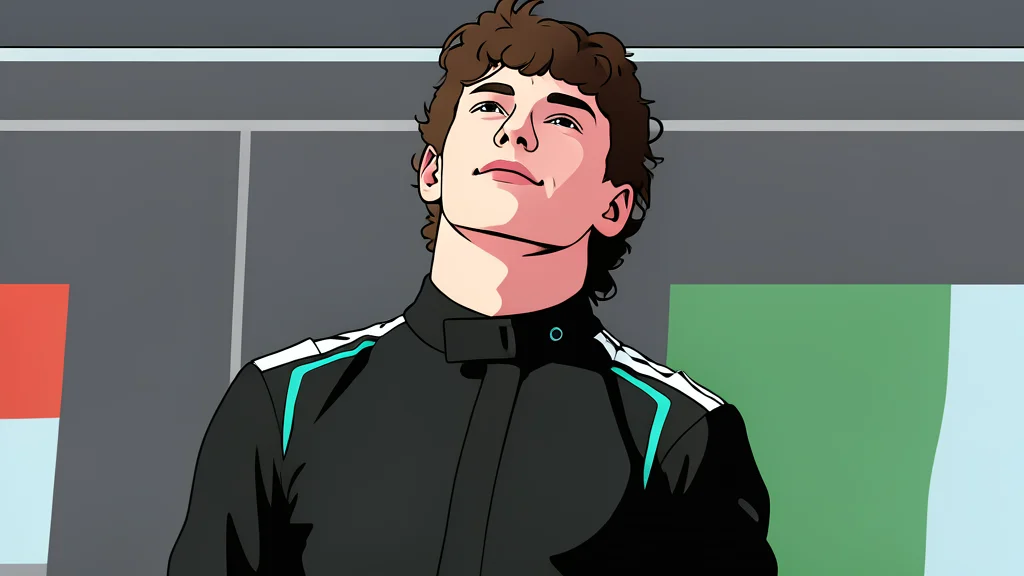
The trophy is cold, the champagne is warm, but the memory of Lando Norris’s speed lingers in Kimi Antonelli’s mind.
The dust from the Madring circuit has settled, leaving a haze of rubber screech hanging in the air. Kimi Antonelli stood atop the podium, the weight of the trophy solid in his hands, his eighth victory of the 2026 season sealed under the Spanish sun. Yet, beneath the celebration, a sharper edge cuts through the joy. It is not the noise of the crowd or the flash of cameras, but the quiet, gnawing knowledge that he did not outdrive the man in front of him.
James Hinchcliffe, watching from the broadcast booth, sees that internal conflict clearly. The former IndyCar driver and F1 TV analyst argues that the victory will leave a mark on the twenty-year-old. Antonelli may lead the championship by eighty-one points over George Russell, but the path to that point was paved with timing, not pure supremacy. The sting comes from knowing that Lando Norris held the faster car, a fact that no amount of podium champagne can wash away.
A Victory Built on Timing
The race unfolded with a brutal precision. Norris, starting from pole, carved a strong advantage into the opening stint, his McLaren slicing through the air with undeniable pace. The turning point arrived in a split second. As the virtual safety car was deployed just after the McLaren driver passed the pit lane entry, Antonelli made his move. He executed a cheaper stop, emerging ahead as the virtual safety car ended. Norris, forced to pit under yellow, suffered a four-second halt that erased his lead.
It was a masterclass in race strategy, but Hinchcliffe sees the underlying truth. The Woking squad’s pace was undeniable. Antonelli’s win relied on a perfectly timed intervention, a stroke of luck that allowed him to capitalize on a moment of chaos. The Italian drove a complete race, doing exactly what was required to secure the job. But in the hierarchy of racing, where pace is the ultimate currency, the gap between the two cars remains a painful reminder.
The Burden of Knowing
“I don't want to say it's better to be lucky than good, but sometimes it's good to be both because we know he's good,” Hinchcliffe noted during the post-race broadcast. He recalled Antonelli’s own admission in the interview, a simple, “Yeah, we'll take it.” That phrase, according to Hinchcliffe, reveals the driver’s awareness of the alternative. He accepted the result because he knew the effort, but he also knew the limitation.
The analyst paints a vivid picture of the driver’s psyche. Even in victory, the knowledge that someone else was faster creates a burn. “You want to be the best driver on the day,” Hinchcliffe said. “And I don't think we can say that he was.” For a young driver with such a prolific start to the season, this specific type of frustration is a crucial lesson. It is not about the points on the board, but about the respect earned through raw speed.
Respect for the Fastest
As reported by Motorsport.com, this dynamic adds a layer of complexity to the championship battle. Antonelli’s lead is substantial, but the perception of who holds the superior car will shape the narrative. Hinchcliffe’s analysis suggests that while the win is a fact, the respect for Norris’s pace is an equal fact. The twenty-year-old will carry this duality forward, knowing that success is not just about crossing the line first, but about being undeniable in the process.