Madrid's Asphalt Silence: A Statistical Low Point
The checkered flag fell in Madrid, but the silence on the track was deafening. With only four overtakes after the first lap, the new circuit has rewritten the definition of a processional race.
The asphalt of the MADRING Sur circuit stretched out under the Spanish sun, a long, unbroken ribbon of grey that promised speed but delivered only stillness. As Kimi Antonelli crossed the line, his engine note fading into the distance, the reality of the weekend settled over the grandstands. It was not a spectacle of wheel-to-wheel combat, but a quiet procession through a modern urban landscape. The air hummed with the low-frequency vibration of engines that never had to fight for position, a stark contrast to the chaos fans had expected from a newly built venue.
Drivers had warned of this outcome before the lights went out. They spoke of a layout that strangled aggression, a design choice that prioritized safety and flow over the raw, messy battles that define the sport. Now, with the dust settling on the final lap, the data confirms their fears. The track did not just limit passing; it erased it. The Madrid Grand Prix stands as a statistical anomaly, a race where the action was so scarce it felt like an absence rather than a feature.
A Four-Move Race in a Fast Season
The numbers tell a story of dramatic decline. According to data shared by Yahoo Sports, the Madrid event produced exactly four on-track overtakes after the first lap. This figure is not merely low; it is an outlier in a season defined by high-engagement racing. The pre-Madrid average for the 2026 calendar stood at 61 passes, a baseline that reflects the competitive depth of the grid. To drop from 61 to 4 is to lose 94% of the expected action, a drop so steep it defies simple explanation.
The comparison to other venues underscores the severity of the issue. In China, the grid exchanged 101 positions, a chaotic and thrilling display of skill. Miami saw 88, Japan 85, and Italy 78. These are tracks where drivers push the limits, where mistakes happen, and where strategy is tested by the sheer density of contact. Madrid, by contrast, offered a sterile environment. Even the tight, narrow streets of Monaco, often criticized for being a parade, managed to register 10 overtakes. Madrid, a purpose-built circuit designed for the modern era, produced less than half that number.
The Hangar Backdrop and Fan Backlash
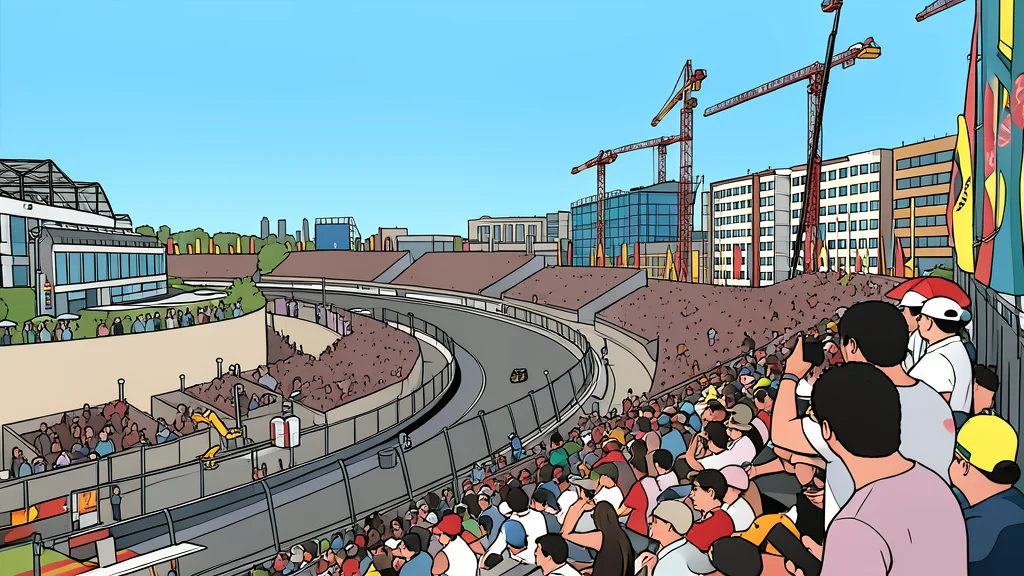
The reaction from the community was immediate and sharp. Fans who had traveled to the capital for the inaugural event found themselves staring at a scene that lacked the soul of traditional racing. The backdrop was not a historic harbor or a mountain pass, but the stark, geometric lines of the IFEMA exhibition center. The visual contrast was jarring. Where Monaco offers a glimpse of the Mediterranean and centuries of history, Madrid offered a view of a logistics hub. The aesthetic was functional, clean, and utterly devoid of the romantic chaos that makes racing compelling.
Criticism extended beyond the lack of passing to the logistics of the event. Trackside marshals noted the absence of heavy machinery needed to quickly clear stranded cars. In Monaco, cranes are positioned with surgical precision to lift vehicles from the narrow streets. In Madrid, the infrastructure seemed less equipped for the unpredictable nature of high-speed racing. The result was a weekend where the machinery of the event itself struggled to keep pace with the demands of the sport. The silence of the track was matched by the frustration of the crowd, who felt the event had failed to deliver the core promise of the championship.
A Decade Locked Into Stillness
The most troubling aspect of the Madrid Grand Prix is not the single disappointing weekend, but the long-term implications. Formula 1 management has signed a ten-year contract to race at this venue. This commitment locks in the current layout for the foreseeable future. While minor tweaks are possible, the fundamental spatial constraints and the heavy use of combined braking zones are baked into the circuit's DNA. Fixing the core problem of overtaking is not a matter of simple adjustment; it is a structural challenge that may prove insurmountable.
For now, the MADRING Sur holds the title of the most static race of the 2026 season. It is a reminder that in Formula 1, the track is not just a surface for tires, but a character in the story. When that character is silent, the drama dies. Madrid may be a modern marvel of engineering, but it has failed to capture the wild, unpredictable spirit of the sport. The data is cold, the numbers are clear, and the verdict is in: the road was straight, but the race was flat.