Szafnauer: Cadillac's Split Structure Is Suboptimal for Titles
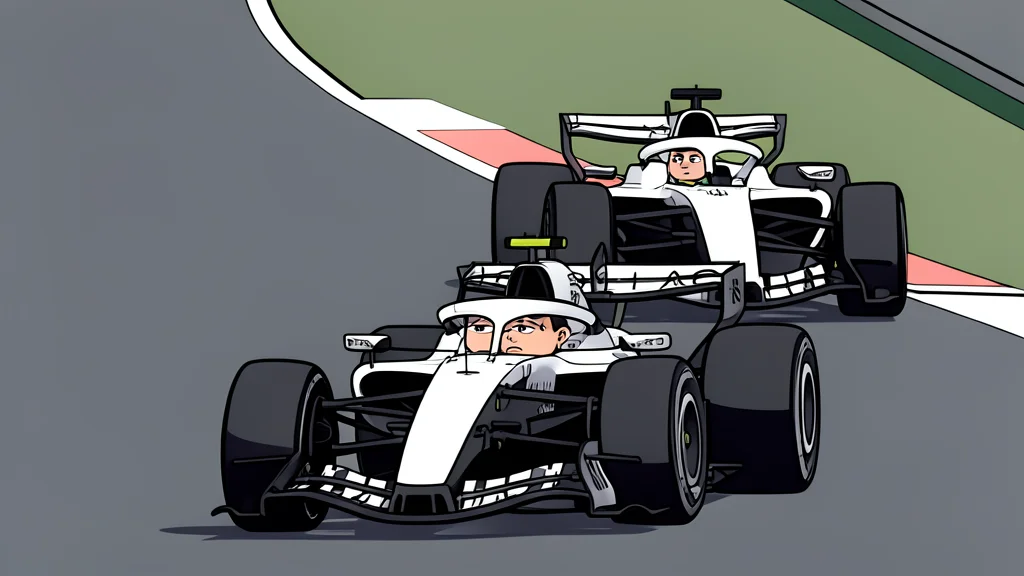
Former Alpine chief argues that Cadillac's divided US-UK engineering setup hinders its ability to compete for world championships.
Key points
- Otmar Szafnauer warns that Cadillac's split US-UK structure hinders its ability to win championships.
- The team's design and simulation work is divided between Silverstone, Indianapolis, and South Carolina.
- Cadillac currently sits 11th in the constructors' standings with zero points after joining the grid in 2026.
Otmar Szafnauer does not mince words when assessing the new entrant on the grid. Speaking with Jake Humphrey, the former Alpine team principal argues that Cadillac’s operational architecture is fundamentally misaligned with the singular goal of winning. The argument rests on a stark geometric reality: talent and power are equal, but geography is not.
The former chief points to the physical distance between the team’s hubs as a critical handicap. While the European facility in Silverstone taps into traditional motorsport talent, the heavy lifting for design and simulation occurs across the Atlantic in Indianapolis and South Carolina. For Szafnauer, this fragmentation creates a latency that rivals do not face, turning a competitive advantage into a logistical hurdle.
Geography as a performance limiter
Szafnauer illustrates his point with a hypothetical scenario shared during a recent flight with Pat Symonds, Cadillac’s executive engineering consultant. He posits a situation where Cadillac matches Mercedes in driver quality, power unit performance, and aerodynamic understanding. In this theoretical race, the only variable is location. One team keeps its aerodynamics and design teams close; the other splits them across continents.
The verdict is immediate. Szafnauer asserts that the unified team wins, regardless of the other variables. He argues that the separation of design, aerodynamics, and simulation teams dilutes the feedback loop necessary for peak performance. It is a structural inefficiency that no amount of raw engineering talent can fully offset in the high-speed iteration cycle of Formula 1.
Defining the objective clearly
The core of the critique lies in the team's stated intent. Szafnauer contends that if the primary goal is to establish an American identity, the current split makes sense. However, if the ambition is to capture the world championship, the current setup is, in his words, "ain't it." He suggests that winning requires a singular, concentrated effort, not a distributed one.
Symonds’ response, as recalled by Szafnauer, was blunt: the structure is only suboptimal if winning is the priority. This exchange highlights a strategic tension for General Motors. The team is balancing its heritage and local presence against the ruthless efficiency demanded by F1’s top tier. The stakes are clear, and the margin for error is slim.
Early struggles on the grid
Theoretical concerns have already taken shape in reality. Since joining the grid as the 11th team for the 2026 season, Cadillac has faced a steep learning curve. The car has struggled with reliability, and the results reflect the difficulty of adapting to the championship's pace. Currently, the team sits at the bottom of the constructors' standings, having scored zero points.
As Motorsport.com notes, the team is in a phase of adaptation, battling to find consistency while managing the complexities of its split operations. The pressure is mounting to translate the massive investment in the US-UK structure into tangible track performance. The question remains whether the logistical distance will be a permanent ceiling or a temporary growing pain.