Verstappen on the Edge of Retirement

The four-time world champion admits he was closer to hanging up his helmet than signing with a rival, choosing instinct over legacy in a career defined by speed.
The asphalt at Barcelona glistens under the midday sun, a mirror of heat and anticipation. Max Verstappen sits in the cockpit, the carbon fiber frame absorbing the ambient noise of the pit lane. He is not just another driver waiting for lights out; he is a man who recently stood at the precipice of ending his relationship with the sport. The decision to extend his contract with Red Bull Racing until 2030 was not a formality, but a deliberate act of will, chosen after a period of intense internal debate. As the grid forms, the weight of that choice hangs in the air, heavier than the downforce pressing his car to the tarmac.
In a recent interview with BILD, the Dutchman stripped away the polished exterior of a champion to reveal the raw uncertainty beneath. "Ultimately, I was closer to stopping in Formula 1 than signing with another team," he confessed. The admission cuts through the noise of speculation and rivalry. He did not merely consider changing seats; he seriously contemplated walking away from the grid entirely. For a driver whose name is synonymous with dominance, the pull of quitting was a real, tangible force, stronger than the allure of a new challenge elsewhere.
Champion’s Calm After the Storm
Verstappen’s mindset has shifted from a hunger to prove himself to a quiet satisfaction with what has already been achieved. "I have nothing left to prove to myself," he stated, his voice steady. The four world championship titles are not just trophies on a shelf; they represent a chapter fully written. He has reached the heights he once dreamed of, and the drive now comes from a different source. It is no longer about erasing doubt or securing a legacy in the history books. The motivation is immediate, personal, and tied to the people who matter most in the paddock.
He drives for himself, for the team, and for the fans. This triad forms the core of his current philosophy. There is no external pressure demanding victory, only an internal compass guiding his actions. This clarity allowed him to make a decision rooted in gut feeling, a method he has relied on throughout his career without regret. The extension to 2030 is not a safety net, but a declaration that he still finds joy in the race. He remains at the wheel because the act of driving still brings him happiness, a feeling that has survived the scrutiny of a career at the highest level.
Beyond the Silverstone Limits
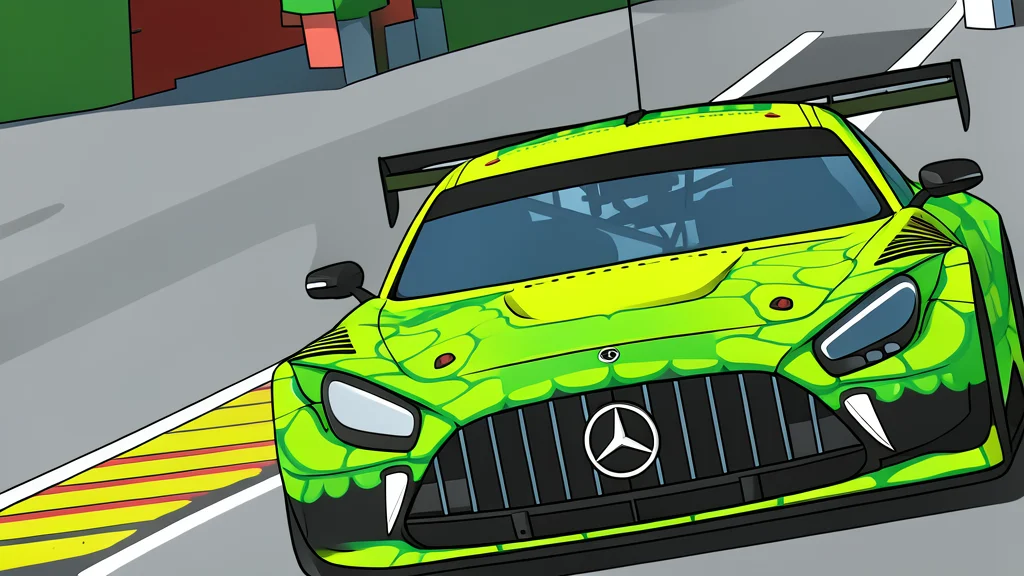
While his future in single-seaters is secure, Verstappen’s eyes are set on horizons beyond the standard circuit. The 24-hour endurance race at the Nürburgring has sparked a new interest, one that aligns with his desire for variety. He speaks openly about the appeal of Le Mans and Daytona, seeing them as natural extensions of his racing life. Red Bull supports this diversification, providing the platform for him to compete in different categories. However, he is clear about his terms. He will participate in these events only on his own conditions, ensuring that the experience remains a source of excitement rather than an obligation.
Rallying, conversely, remains off the table. The danger inherent in that discipline feels too great, especially with a growing family to consider. The risk-reward calculation is different now, shaped by personal priorities that did not exist when he was a young prodigy. For Verstappen, the future is a balance of commitment and choice. He will continue in Formula 1 as long as the racing brings him joy, a simple criterion that cuts through the complexity of contract negotiations and media expectations. The road ahead is long, but he is driving it on his own terms.
Instinct Guides the Dutch Driver
The decision to stay was not made in a boardroom, but in the quiet moments between races. It was a gut decision, one that felt right in the moment. This instinct has been a reliable guide throughout his career, leading him to victories and titles. It is the same instinct that will guide him through the next five years. As he prepares for the Spanish Grand Prix, starting from third on the grid, the focus returns to the track. The doubts of the past are behind him, replaced by the immediate challenge of the race. He is ready to compete, not out of necessity, but out of a deep, enduring love for the sport.