Aichi-Nagoya’s First All-Out Assault on Indian Sport

The opening ceremony fades as the clock strikes five. Nine sports ignite across the Aichi-Nagoya venues, marking the moment India’s campaign shifts from preliminary skirmishes to full-scale war.
The air in Aichi-Nagoya cools as the sun rises, but the tension in the Indian camp does not. September 20 marks the end of the quiet buildup and the beginning of the crunch. The campaign, which started with isolated contests in teqball and soft tennis, now bursts into a dense cluster of nine different sports. From the first light of dawn until the evening shadows lengthen, Indian athletes are scattered across the venues, their movements synchronized by a single, relentless clock.
This is no longer a preliminary act. It is the main production. The schedule, as reported by GN sports/cricket (en-US), is a gauntlet. Medals are on the line, campaigns are at stake, and the rhythm of the Games has shifted from ceremonial grace to competitive ferocity. The stakes have never been higher, and the margin for error has never been thinner.
Dawn breaks with martial precision
At 5:10 am, the silence of the morning is broken by the strike of the gong. Suchika Tariyal steps into the ring, her stance low and wide, facing Mongolia’s Altanchimeg Baigalmaa in the Traditional 60kg mixed martial arts quarterfinal. The sweat is already visible on her brow before the first exchange. Twenty minutes later, the focus shifts to the fluid geometry of wushu, where Suraj Singh Mayanglambam executes the men’s Changquan final. His movements are a blur of controlled power, seeking the early podium that would set the tone for the day.
The precision required by martial arts is mirrored in the stillness of the shooting range. At 6:15 am, Elavenil Valarivan, Sonam Maskar, and Vidarsa Vinod lower themselves into the firing positions for the women’s 10m air rifle qualification. The world narrows to a single point of focus. The air rifle is a test of breath and bone, a silent contest against the human heart’s own rhythm.
Teqball’s bronze bid ignites
In a sport that did not exist on the Asian Games map until this edition, Quimcy Dsouza finds herself on the brink of history. The 24-year-old carries the weight of a narrow semifinal loss to Indonesia’s Ima Sumaya, a match that ended in three sets after she had taken the opening. Now, at 6:30 am, she faces Japan’s Yuina Sakamoto in the bronze-medal contest. The ball curves through the air, a white arc against the blue of the arena, demanding a response that is both instinctive and calculated.
There is no rest. Thirty minutes later, Dsouza is back on the court, this time alongside Mohamed Anas Beg for the mixed doubles bronze. Their opponents, Vietnam’s Hoang Minh Tan Nguyen and Gia Nghi Trinh, are familiar foes. The quarterfinal loss is still fresh in memory, but the repechage victory over the Philippines has earned them a second chance. The court is a small, intense stage where every touch of the ball echoes with the possibility of a historic medal.
Hockey and cricket collide
The turf is wet with morning dew as the women’s hockey team takes the field against Uzbekistan at 7:30 am. The sticks strike the ground, a rhythmic percussion that signals the start of their Pool B campaign. Four hours later, the men’s team faces Indonesia, their movement a complex choreography of speed and space. The ball moves faster than the eye can track, a blur of motion across the grass.
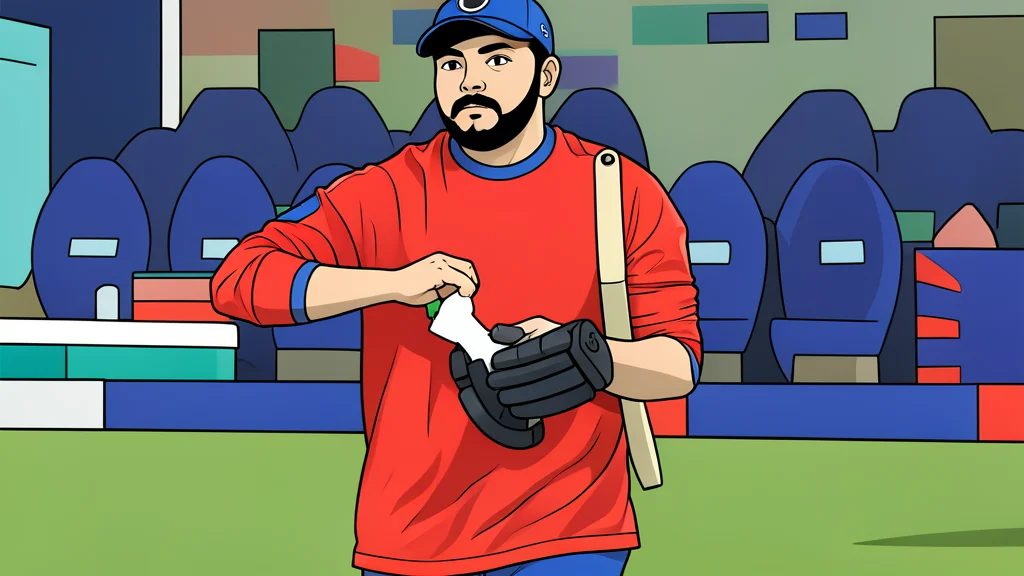
At 10:30 am, the attention of the nation turns to the cricket pitch. India, the defending champions, face Bangladesh in a semifinal that decides who advances to the final. The atmosphere is thick with anticipation. The bat meets the ball, a sharp crack that reverberates through the stadium. This is the moment where the campaign’s fate is sealed, where the preliminary act ends and the final battle begins. The day has moved from the quiet precision of the shooting range to the thunderous energy of the cricket field, a testament to the sheer scale of India’s Asian Games challenge.