The Invisible Rule that Vanished in the AFC Clash
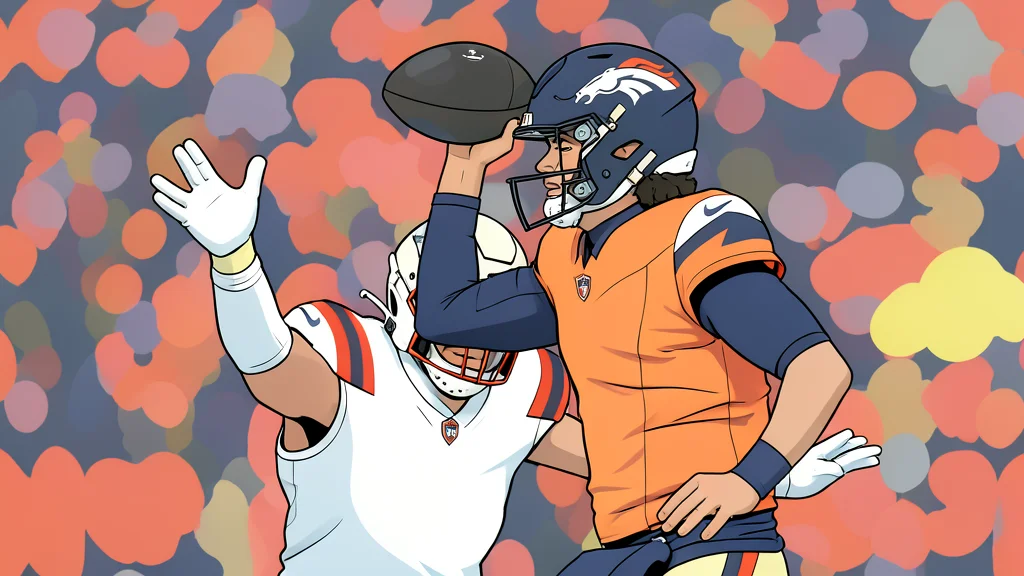
A split-second collision at the line of scrimmage erased a touchdown, but the real story is the rule that should have saved it.
The stadium air hung heavy with the smell of cut grass and anticipation. With 2:59 left in the first half, the Broncos stood at their own 33-yard line, the scoreboard glowing red against the night sky. Jarrett Stidham dropped back, eyes scanning for a screen pass, while Christian Ellis surged forward like a wave crashing against a reef. The contact was sudden, violent, and brief. The ball left Stidham’s hand, tumbling backward through the chaos, only to be scooped up by New England. The whistle blew, but not for the touchdown. The play was dead. The crowd’s roar died into a confused murmur, a collective hold of breath that never released.
Referee Alex Kemp later admitted the initial call was wrong, yet the final ruling stood. The Patriots gained possession without advancing, their momentum halted by a technicality buried in the rulebook. It was a ghost rule, one that had likely never been applied in years. The controversy was not just about the call, but about the silence surrounding a specific quirk: a backward pass thrown after a quarterback has begun his throwing motion is deemed forward. No one mentioned it. No one explained it. The play remained a backward pass, and the touchdown vanished into the fog of an unspoken regulation.
A Ghost Rule in the Rulebook
The rulebook contains a clause that turns a backward pass into a forward one if the passer has already initiated his throwing motion. In the AFC Championship, this clause was invisible. Stidham’s motion and Ellis’s contact were close enough in timing that the ruling could have gone either way. Yet, the officials treated it as a simple backward pass, denying the Patriots the advance they might have deserved. It was a technical dead end, a path that led nowhere because no one looked down it. The rule remained dormant, a sleeping giant that no one dared to wake.
The silence was deafening. During the game, no one spoke of the quirk. After the game, the reports focused on the ruling, not the reasoning. The rule that saved the Lions from a defensive scoop and score in Week 1 was the same rule that could have saved the Patriots in the AFC Championship. But it was never mentioned, never discussed, never applied. The rulebook’s get-out-of-backward-pass-free card was folded away, hidden in the stacks of regulations that most fans never read. The controversy was not about the play, but about the rule that should have been there, missing from the conversation like a word left out of a sentence.
The Echo of a Week 1 Call
In Week 1, the Saints and Lions faced a similar situation. A strange rule, one no one seemed to know about, had a major impact on the game. The Lions were saved from a defensive scoop and score by the Saints, thanks to the same quirk that was ignored in the AFC Championship. The rule was so obscure that it had not been applied in years, if ever. It was a rule that existed in the margins, a footnote that no one read. But in that Week 1 game, it mattered. It changed the outcome, saved the Lions, and left the Saints with a bitter taste. The rule was a ghost, haunting the game without being seen.
The connection between the two games was never made public. The AFC Championship officials did not reference the Week 1 call. The rule remained a secret, a hidden thread that tied the two games together. The controversy in the AFC Championship was not just about the ruling, but about the rule that was never mentioned. It was a rule that could have changed the game, but it was never discussed. The rulebook’s quirk was a ghost, and it haunted the game without being acknowledged. The silence was the loudest part of the story.
Silence in the Stadium
The aftermath was quiet. No one spoke of the rule. The controversy faded, replaced by the next game, the next week, the next season. But the rule remained, a ghost in the machine, a quirk in the rulebook that no one knew. The AFC Championship was a story of silence, of unspoken rules, of hidden connections. The rule that saved the Lions in Week 1 was the same rule that could have saved the Patriots in the AFC Championship. But it was never mentioned, never discussed, never applied. The rule was a ghost, and it haunted the game without being seen.