Carrying Trash and Covering Ink: The Silent Code of Asian Games 2026

Indian athletes preparing for the Aichi-Nagoya Asian Games are receiving detailed briefings on Japanese civic norms, transforming everyday etiquette into a core part of their competitive preparation.
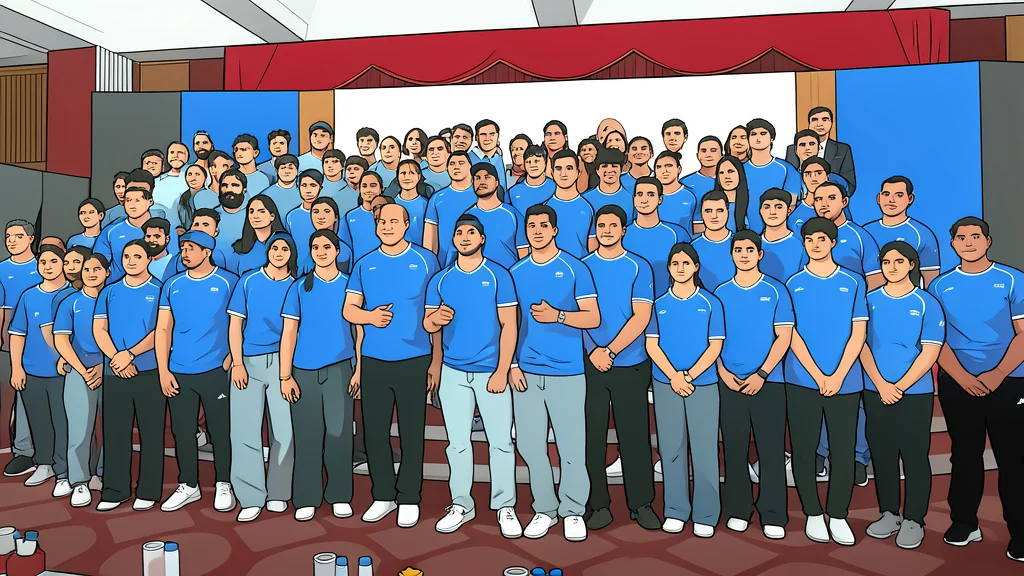
The air in Aichi-Nagoya is already thick with anticipation for the 20th Asian Games, scheduled to run from September 19 to October 4, 2026. But for the Indian contingent, the training does not stop at the gym floor or the pool deck. It extends into the quiet, unscripted moments of daily life in Japan, where a simple act of holding a small trash bag until a bin appears carries the same weight as a sprint time. The Sports Authority of India has issued a comprehensive guide, emphasizing that athletes are not just competitors but visible ambassadors, their behavior a direct reflection on the nation they represent.
This shift in focus highlights a subtle but critical dimension of international sport. It is not merely about winning medals, but about navigating a society that values collective harmony over individual impulse. The guidance provided by GN auto sports/multisport: Asian Games sources underscores a reality that many visitors overlook: in Japan, public spaces are shared resources, and the expectation is that every person contributes to their cleanliness and tranquility. For the 503 Indian athletes, many of whom are first-time participants in this global event, this cultural calibration is as vital as their physical conditioning.
Silent Discipline in Public Spaces
The specific instructions are precise and grounded in local custom. Athletes are advised to carry their own waste, as public dustbins are scarce, and to dispose of it only when a bin is found. This is not a suggestion but a behavioral standard. Similarly, the use of loud music or video in public areas is discouraged; earphones are the preferred method for audio consumption, ensuring that the silence of a train car or a park remains undisturbed for everyone else. The queue, too, is a sacred structure. Pushing, crowding, or cutting in line is viewed as a violation of social order, requiring athletes to wait their turn with patience and respect for the flow of strangers.
Physical boundaries are another area of strict adherence. The brief specifically warns against unnecessary touching, hugging, or kissing strangers, actions that might be casual in other cultures but are intrusive in Japan. This respect for personal space extends to visible body art. While tattoos are a form of personal expression for many, the guidance advises covering them in public spaces where restrictions exist. This is not a judgment on the art itself, but an acknowledgment of local sensitivities and regulations that govern public decency. The message is clear: adapt your appearance to the context to avoid causing discomfort or confusion.
Psychology of Civic Consideration
Behind these rules lies a deeper psychological framework, one that psychotherapist Delnna Rrajesh describes as emotional intelligence applied to public life. It is the capacity to consider another person’s experience even when there is no personal relationship. Not playing loud music is an act of empathy, recognizing that someone nearby may be tired, working, or simply entitled to quiet. Carrying trash is a choice to tolerate minor personal inconvenience rather than transferring that burden to the community. These actions, Rrajesh argues, are not just about following rules, but about understanding that one’s behavior creates an experience for those around them.
This perspective reframes etiquette as a form of social awareness. It is not about cultural superiority, but about recognizing how a specific society experiences respect. When an Indian athlete covers a tattoo or lowers their voice, they are engaging in an act of respect for the host culture’s norms. This is a nuanced form of diplomacy, where the body and its actions become the language of interaction. In a global event like the Asian Games, these small, consistent behaviors build a bridge of mutual understanding that transcends the sporting competition itself.
Representation Beyond the Arena
The lesson extends far beyond the immediate context of the Games. Representation does not end when the athlete leaves the stadium. The way an individual treats public spaces, workers, and shared resources communicates a volume about their character and their country. Civic sense, as Rrajesh notes, is what happens when personal responsibility continues even after nobody is watching. For the Indian contingent, this briefing is a reminder that their impact is measured not just by their performance, but by their presence. In the calm stream of daily life in Aichi-Nagoya, their conduct will be as visible as their victories.