China's Late Surge Ends North Korea's Asian Games Dream
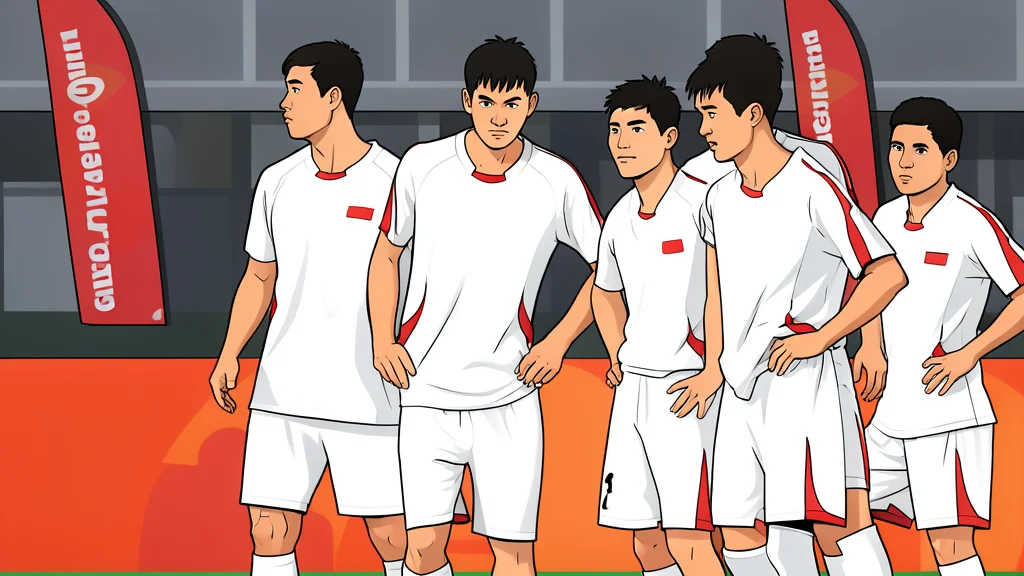
Under the blinding floodlights of Wave Stadium, a delicate lob silenced the crowd and handed China a stunning comeback victory.
The air in Kariya hangs thick with the scent of cut grass and damp earth. Three hundred voices from the Pro-North Korea Federation of Korean Residents in Japan rise in a unified roar, a wall of sound that tries to push back the evening chill. But the ball does not care for noise. It cuts through the humid air, defying the heavy atmosphere of the 2026 Aichi-Nagoya Asian Games opener.
North Korea struck first, a sudden flash of green in a sea of white. But the momentum shifted, not with a thunderclap, but with a whisper. A 37-year-old veteran, Wusi, drifted into the space where defenders should have been. His foot tapped the ball with surgical precision. It floated. It dropped. The net rippled. The lead evaporated. China had turned the tide, stealing the match and the narrative in one breath.
Early Lead Fades Under Pressure
Choe Guk found the gap in the second tier of China’s defense. His right foot fired a low drive from inside the box, the ball skidding across the turf before kissing the back of the net. For twenty minutes, the North Korean side owned the pitch. But the lead was fragile. By the 44th minute, the rhythm broke. Zhang Yining, a towering striker, rose above the fray, meeting Wusi’s cross with a header that buried the equalizer. The score was level, the tension taut as a wire.
The second half became a battle of missed chances and near misses. Choe Ryong-il’s shot slammed into the crossbar, the wood vibrating with the force of the impact. Ri Geum-cheol’s header sailed inches wide, a ghost of a goal. The North Korean attack pressed, their bodies leaning into the wind, but the final touch remained elusive. The ball bounced off the post, then over the bar, each miss a small defeat in itself.
Wusi’s Decisive Touch
The turning point arrived in the 22nd minute of the second half. A long pass from deep found Zhang Yining, who nodded it down. Wusi was there, unseen until he moved. He ran through the channel, his stride long and purposeful. As goalkeeper Kang Ju-hyeok rushed out to narrow the angle, Wusi did not power the shot. He lifted it. A delicate lob, arcing high over the keeper’s outstretched hands, sailing into the empty net. The goal was quiet, almost elegant, and devastating.
The Chinese squad exhaled. The crowd’s roar faded into a murmur. Wusi’s experience, a wildcard selection, proved decisive. He had provided the assist for the equalizer and the goal for the victory. The 37-year-old became the axis around which the match turned, his presence a testament to the value of seasoned instinct over raw youth.
Implications for Group B
With Iran securing a 3-1 victory over the United Arab Emirates, the group table tightened. North Korea’s defeat places them in a precarious position, their path to the knockout stages now fraught with difficulty. China, riding the momentum from their runner-up finish at the AFC U-23 Asian Cup, emerged as a dark horse. Their victory was not just a win; it was a statement of intent, a declaration that experience and tactical discipline can outlast early dominance.
The match ended not with a roar, but with a sigh. The floodlights dimmed, casting long shadows across the green pitch. The story of the night belongs to Wusi, to the lob, and to the quiet certainty that in football, the final touch is all that matters. As reported by GN auto sports/multisport: Asian Games, the result was a stark reminder of the sport’s unpredictability.