Containers, Chaos, and Historical Shadows at the 2026 Asian Games

The grand entrance to the Aichi-Nagoya Asian Games is clogged with rusted pipes, wrong turns, and the heavy weight of history.
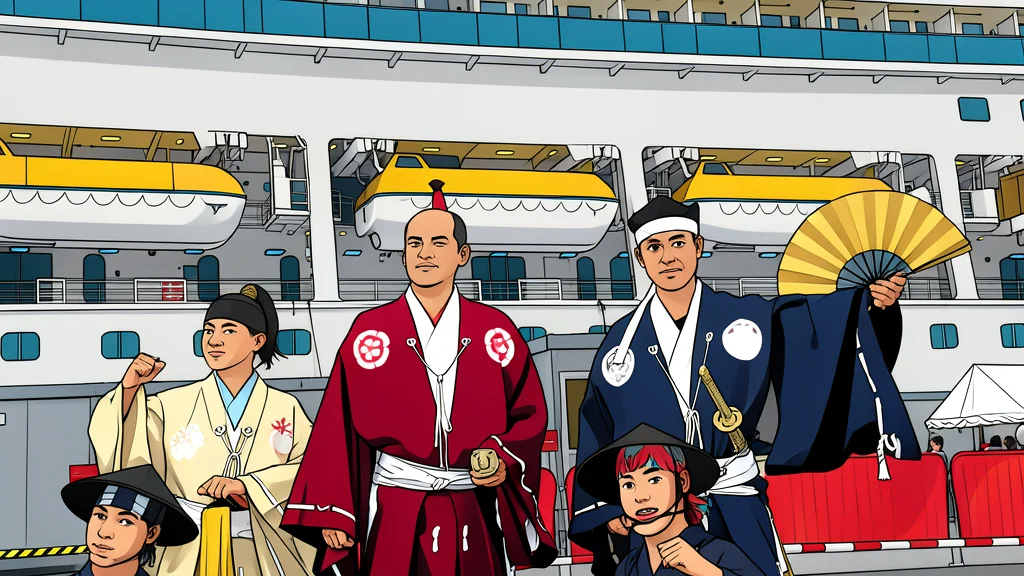
Water sprays from a burst pipe, soaking the concrete floor of a prefabricated bathroom. In the corner, a basketball player named Byeon Jun-hyeong stands in the damp, his phone screen glowing with a single, desperate caption: "Save me." This is not a scene from a war zone, but the athletes' village for the 20th Summer Asian Games, a sprawling lot of stacked shipping containers on an asphalt expanse. The air smells of tar and stale metal. Outside the narrow door, a massive cruise ship, the Costa Serena, looms against the harbor pier, its white hull a stark, sterile contrast to the gritty, industrial reality on land. The slogan "Imagine One Asia" hangs in the digital wind, but on the ground, the image is fractured.
The 2026 Aichi-Nagoya Asian Games are set to open on the 19th at Paroma Mizuhō Stadium, a sixteen-day festival of 43 sports and 469 gold medals. Approximately 15,000 athletes from 45 National Olympic Committees are expected to converge on this patchwork of logistics and legacy. Yet, before the first whistle blows, the event is already marred by a dissonance between its eco-friendly ambitions and its operational failures. The organizing committee pushed for a low-cost model, swapping traditional buildings for containers and a docked ship. The result is a venue that feels less like a celebration and more like a temporary holding pen, where the basics of hospitality have slipped through the cracks.
Logistical Failures Undermine Athlete Readiness
The container village, intended as a sustainable showcase, has become a source of acute frustration for early arrivals. Five Korean teams, including the basketball and cycling squads, are lodged in these modular units. The conditions are stark. Byeon Jun-hyeong’s video of the leaking bathroom went viral, exposing the raw inadequacy of the setup. The organizing committee acknowledges a shortage of bedrooms, scrambling to secure hotel rooms at the last minute. But the problem is not just the bed; it is the chaos surrounding it. Transportation to venues is erratic. Food provision is uncertain. For athletes who must be in peak physical condition, these disruptions are not minor inconveniences; they are threats to performance.
The men’s football team, led by Coach Lee Min-sung, experienced this chaos firsthand on the 15th. Their bus driver, heading toward the Qatar match, mistakenly took them to a baseball stadium. The mistake was a minor navigation error, but the consequences were significant. Traffic congestion turned a twenty-minute drive into an hour. They arrived at the football venue just in time for kickoff, but the adrenaline of the error lingered. Later, a bus for post-match training failed to appear, fueling suspicions of intentional neglect. Earlier still, the Vietnamese women’s volleyball team was dropped at the wrong location, forced to carry their luggage on foot. These are not isolated incidents; they are symptoms of a system straining under the weight of its own ambition.
Historical Tensions Surface at Harbor Ceremony
Beyond the logistical snarls, a deeper, more volatile tension simmers. A pre-event performance at Nagoya Port’s Kintetsu Pier, commemorating the docking of the Costa Serena, featured performers dressed as Oda Nobunaga, Toyotomi Hideyoshi, and Tokugawa Ieyasu. Known as the "Three Outstanding Men of Nagoya," these figures are celebrated in local history. For Korea, however, the sight of Hideyoshi on stage is a painful reminder of the 1592 invasion that triggered the Imjin War, a conflict that shook East Asia for seven years. The organizing committee defended the act as a showcase of local culture and tourism, denying any historical intent. But the symbolism is inescapable. The Korean Sport & Olympic Committee issued a strong protest, highlighting a rift that goes far beyond the games themselves.
Operational Gaps at the Border
The friction extends to the very threshold of the event. The main Korean delegation entered through Nagoya’s Chubu Centrair International Airport, where immigration procedures were marked by delays and confusion. It is a small detail, easily overlooked in the grand narrative of the Asian Games, but it underscores a broader theme of disarray. According to GN auto sports/multisport: Asian Games, the event is facing a perfect storm of operational failures and historical controversy. The containers may be cheap, and the ship may be large, but the foundation of the games is crumbling under the weight of poor planning and unresolved tensions. As the opening ceremony approaches, the question is not just who will win the gold, but whether the organizers can hold the event together at all.