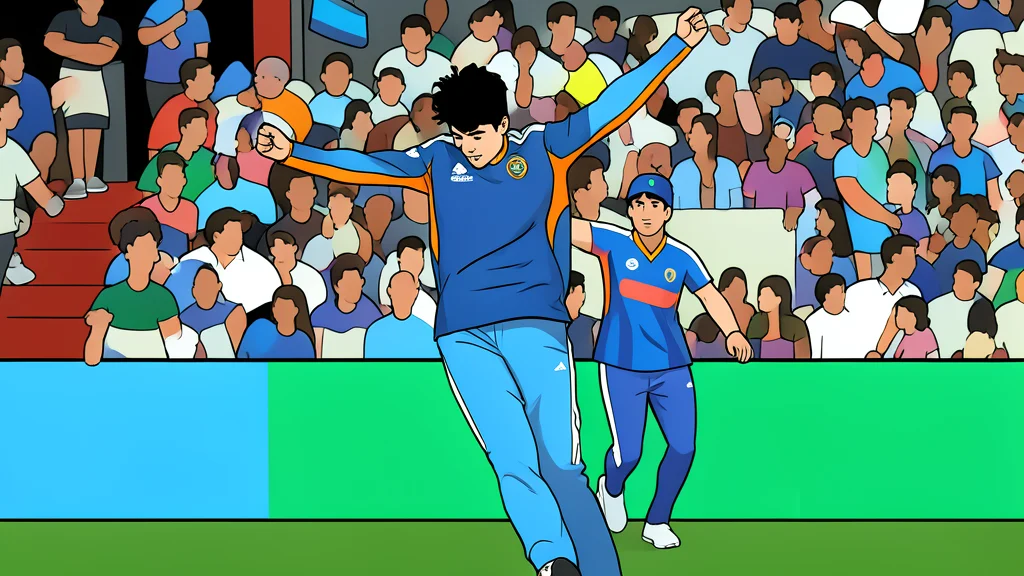
Cricket's Sporadic Rise in Asian Games History

The sport arrived late to the continental stage, bouncing between inclusion and exclusion before finally securing a consistent presence in the multi-sport calendar.
The leather ball strikes the willow with a sharp crack, echoing off the stadium roof. Dust hangs in the air, thick and golden, catching the afternoon sun. This is not the dusty, rain-soaked chaos of a local village match. This is the polished, high-stakes arena of the Asian Games. For decades, cricket was an outsider here, a spectator sport that watched from the sidelines while hockey and athletics dominated the field. Now, the game has broken through the glass ceiling, finding its footing on the continental stage with a history that is as fragmented as it is fierce.
The inclusion of cricket marked a shift in the sporting landscape of Asia. It was a deliberate move to broaden the appeal of the Games, adding a discipline that resonates deeply with the region’s largest populations. Yet, the path has been uneven. The sport has appeared and vanished, dictated by organizational budgets and logistical hurdles. As reported by GN sports/cricket, this sporadic participation creates a unique narrative, one where medals are hard-won in a tournament that does not happen every four years, but rather in a scattered timeline of opportunity.
Guangzhou Sets the Initial Stage
The debut came in 2010, in the sprawling city of Guangzhou, China. The Olympic Council of Asia had made the decision three years prior, in 2007, to introduce the sport as a medal discipline. The format was T20, a choice that matched the fast-paced nature of the Games. The men’s final saw Bangladesh rise to the top, defeating Afghanistan to claim the first-ever gold. Pakistan secured the bronze, edging out Sri Lanka in a tense third-place match. Notably, the host nation, India, did not participate in the men’s event, leaving the title open for the underdogs.
In the women’s competition, the dynamics shifted. Pakistan dominated the field, taking the gold medal. Bangladesh followed closely behind for silver, while Japan claimed the bronze. These early matches set the tone for the sport’s future at the Games: competitive, unpredictable, and heavily influenced by regional rivalries. The grass was crisp, the stumps stood firm, and the first chapter of this continental cricket story was written in ink.
Jakarta’s Cost-Cutting Exclusion
Then, silence. The 2018 Asian Games in Jakarta and Palembang saw no cricket. The organizers faced financial constraints, seeking to trim costs and reduce the total number of sports included. Indonesia lacked the appropriate venues for the game, a logistical hurdle that proved insurmountable in the short timeframe. For cricket players across Asia, the Games had vanished. The silence was deafening, a pause in the rhythm of the sport’s continental presence.
This absence highlighted the fragility of cricket’s position in the multi-sport event. Unlike the core disciplines that have been staples since the inaugural Games, cricket remained a guest, subject to the whims of budget and infrastructure. The exclusion forced a reflection on the sport’s integration. It was not enough to simply be popular; it had to be viable, practical, and financially sustainable to remain on the schedule.
Hangzhou Marks a New Era
The sport returned for the 2022 Asian Games, held in Hangzhou, China. Due to the global pandemic, the event was postponed until September and October 2023. This delay allowed for a more stable environment, and the competition was intense. India, absent in the 2010 men’s final, made a powerful statement in 2023. They claimed gold in both the men’s and women’s events, a historic achievement that solidified their status in continental cricket.
The medal tables tell a story of shifting power. Sri Lanka had taken the men’s gold in 2014 in Incheon, defeating Afghanistan. Afghanistan has been a consistent force, claiming silver in 2010, 2014, and 2023. Bangladesh has also been a regular contender, winning bronze in 2010, 2014, and 2023. In the women’s game, Pakistan’s dominance in 2010 and 2014 was eventually challenged, with Sri Lanka taking silver in 2023 and Bangladesh claiming bronze. The inclusion of cricket in the 2026 Asian Games in Aichi-Nagoya suggests a permanent place is finally being carved out, the stumps set and the pitch prepared for a future that is no longer sporadic.