India Ends Asian Games Karate Run Without Medal
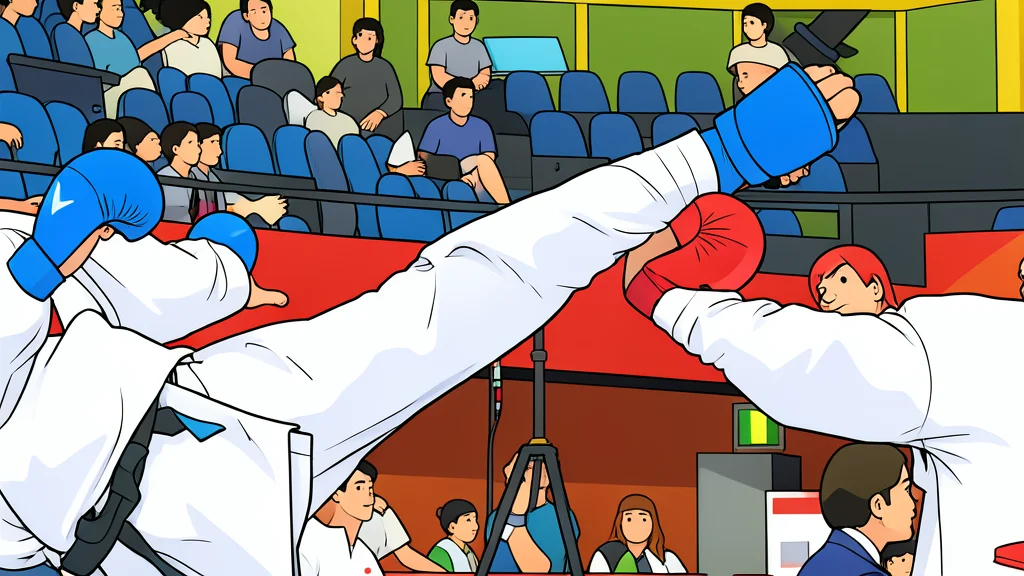
Chetan Bhatt lost the bronze bout on Senshu while Alisha Choudhary fell in the round of 16, leaving the team empty-handed.
Key points
- Chetan Bhatt lost the men’s 84kg kumite bronze bout to Meng-yu Chung on Senshu after a 1-1 tie.
- Alisha Choudhary, the reigning Asian champion, lost to Indonesia’s Cok Istri Agung Sanistyarani 6-1 in the round of 16.
- India finished the Asian Games 2026 karate competition without winning any medals.
The tatami in Toyohashi Gymnasium held its breath as the final points were tallied. Chetan Bhatt stood at the center, the air thick with the scent of sweat and the echo of prior impacts. He had pushed hard, trading blows with Meng-yu Chung from Chinese Taipei, but the score remained locked at one point apiece. The crowd’s murmur swelled, a low tide of anticipation rolling over the spectators.
Then the referee’s hand dropped. The decision was made not by the final strike, but by the first unopposed score. Chung had landed her initial point before Bhatt could answer, securing the bronze through the Senshu rule. Bhatt’s jaw tightened, the metallic taste of defeat sharp on his tongue. He had missed the podium by a technicality, a nuance of timing that turned a tied contest into a loss.
A technicality decides the bronze
Kumite is a discipline of precision, where every limb movement must land with intent. Both competitors scored a Yuko, worth one point, yet the outcome hinged on who struck first without opposition. Bhatt had advanced to this bout after a semi-final loss to Jordan’s Mohammad Aljafari, who had dominated that match 8-0. The path to the bronze was clear, but the final step required a specific sequence of events that did not materialize.
According to olympics.com, the Senshu rule grants the advantage to the athlete who registers the first unopposed score if the bout ends level. Chung’s early strike gave her that edge. Bhatt’s subsequent point equalized the score but could not overturn the temporal advantage. The result was a narrow margin, a sliver of difference that separated a medal from an empty hand.
Champion falls in early rounds
On the other side of the mat, Alisha Choudhary faced a different kind of wall. The 22-year-old, reigning Asian champion in the women’s 55kg category, entered the tournament with high expectations. Her title came from a victory in Bali earlier this year, a performance that had solidified her status as a force to be reckoned with.
But the Asian Games brought a tougher test. Cok Istri Agung Sanistyarani from Indonesia controlled the round of 16, outscoring Choudhary 6-1. The Indian fighter remained in contention for the repechage, a second chance to fight for a medal. Yet those hopes dissolved when Sanistyarani failed to reach the final, cutting off the pathway back to the podium.
A quiet end to the campaign
India had fielded only two karatekas for the Asian Games 2026, a lean team that placed immense pressure on both athletes. The absence of a third competitor meant no internal depth to cushion the blows. Each bout carried the weight of the nation’s hopes, a burden that became palpable in the silence of the loss.
The campaign concluded without a single medal, a stark statistic that underscored the difficulty of the competition. Bhatt’s near miss and Choudhary’s early exit painted a picture of a team that fought with intensity but lacked the final margin of victory. The tatami, once a stage for triumph, now witnessed a quiet departure, the athletes leaving the mat with the dust of their efforts still hanging in the air.