Wales Netballers Target Triple Win to Secure 2027 World Cup Spot
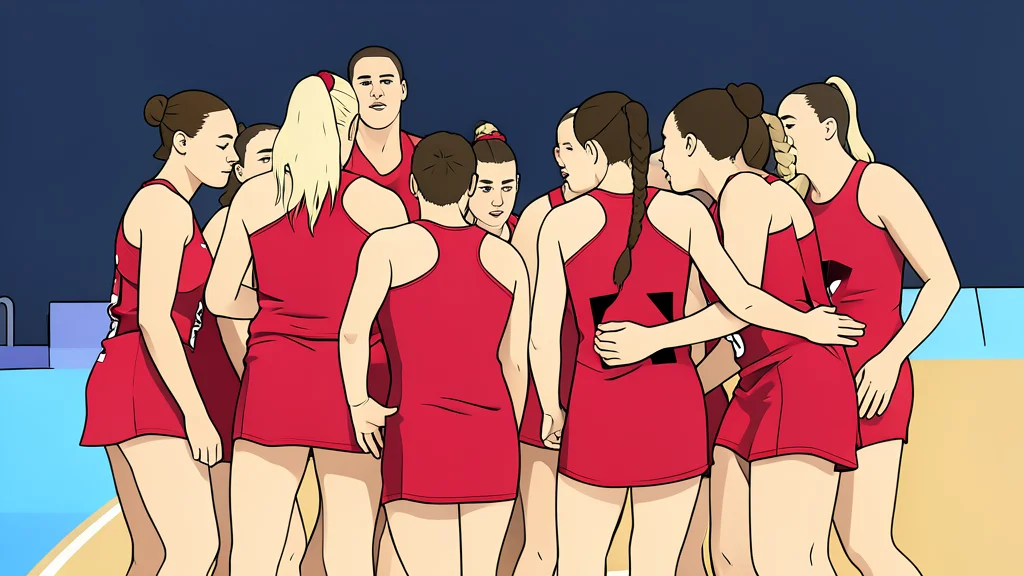
Wales face Scotland, NI, and Ireland in Glasgow, seeking to redeem their 10th-place Commonwealth finish with three straight victories.
Key points
- Wales must win all three matches against Scotland, Northern Ireland, and Ireland to qualify for the 2027 World Cup.
- The team finished 10th at the Commonwealth Games, dropping from 7th to 9th in the world rankings, prompting a coaching change.
- Interim coach Reinga Bloxham and new goal defender Millie Carter aim to fix consistency issues highlighted in the summer's underperformance.
The air in Glasgow hangs thick with expectation as the Welsh Feathers prepare to step onto the court. This is not a routine qualifier; it is a redemption arc written in sweat and strategy. Two months after the sting of a tenth-place finish at the Commonwealth Games, the team faces a binary choice: dominate three consecutive matches to lock in a ticket for Sydney 2027, or let the dream slip away. The stakes are physical and visceral, every possession a test of the mental fortitude they have rebuilt since the summer’s disappointment.
Interim head coach Reinga Bloxham stands at the center of this transformation. A New Zealander who also guides the Welsh club side Dragons, she brings a clarity that cuts through the fog of past failures. Her squad includes goal shooter Georgia Rowe, who speaks openly about the emotional toll of underperforming, and captain Bethan Partridge, a veteran of three Commonwealth Games who demands accountability. Together, they face Scotland, Northern Ireland, and the Republic of Ireland. Two spots are up for grabs. The margin for error is zero.
Confronting the mental weight
The Commonwealth Games left a scar that went beyond the scoreboard. Rowe, a 31-year-old shooting with precision for the Cardiff-based Dragons, admits the team was mentally fractured during those matches. "We didn't perform as well as I'd hoped," she reflects, her voice carrying the weight of unmet expectations. The early losses were particularly bitter, a cruel twist for a squad that had sacrificed four years of training for the opportunity. Yet, in that disappointment, a strange resilience formed. The players learned to maintain their own atmosphere, to find their vibe even when the results did not align with their effort.
Partridge, who has carried the captaincy through the 2015 and 2023 World Cups, echoes this sentiment. She describes the post-Games period as a time of honest reflection. The group engaged in difficult conversations, stripping away excuses to examine their own play. This introspection was not passive; it was a structural rebuild. The team moved from a state of reactive frustration to one of proactive control. The goal now is simple but demanding: consistency. They must hold their form for sixty full minutes, not just in bursts, to prove that the summer’s failure was an anomaly, not a pattern.
Strategic shifts under Bloxham
Bloxham’s approach is rooted in process. She has instilled a rigour in the squad’s understanding of roles and responsibilities. The aim is to move from sporadic brilliance to sustained dominance. This shift is evident in the team’s recent practice sessions, where the focus is on controlling possession for longer periods. The coach believes the squad has the raw talent to compete with the world's best, but the missing link was the durability of their effort. Now, that link is being forged through daily discipline.
A new face has joined this evolving unit: Millie Carter, a 24-year-old goal defence. Carter earned her first cap last November and missed the Commonwealth Games selection. For her, this tournament is a chance to prove her worth. Bloxham describes her as "really dogged and determined," a player who uses setbacks as fuel. Carter’s addition brings fresh energy to the defensive line, a critical area where Wales must tighten its grip. Her inclusion signals a squad that is dynamic, adaptable, and hungry for proof of its capabilities.
Bright spots in the shadows
Even in the shadow of the Commonwealth disappointment, flashes of excellence remained. Against silver medallists Jamaica, Wales led 11-13 after the first quarter, showing they could trade blows with elite opposition. In the second half against gold medallists New Zealand, the Feathers scored 22 goals, a testament to their offensive firepower. These moments were not anomalies; they were glimpses of the team’s true potential. The problem was never a lack of ability, but a lack of continuity. The players know this. They have seen the ceiling. Now, they must build the floor.
As the weekend approaches, the focus narrows to the immediate task. Three opponents. Three wins required. The path to Sydney is clear, if narrow. The Feathers have the time, the talent, and the resolve. They have faced the difficult conversations and emerged with a sharper edge. The court in Glasgow awaits, a neutral stage for a decisive performance. The past is a lesson, not a shackle. The future is written in the next sixty minutes of play.