Nagoya Asian Games: A Floating Village and 43 Sports
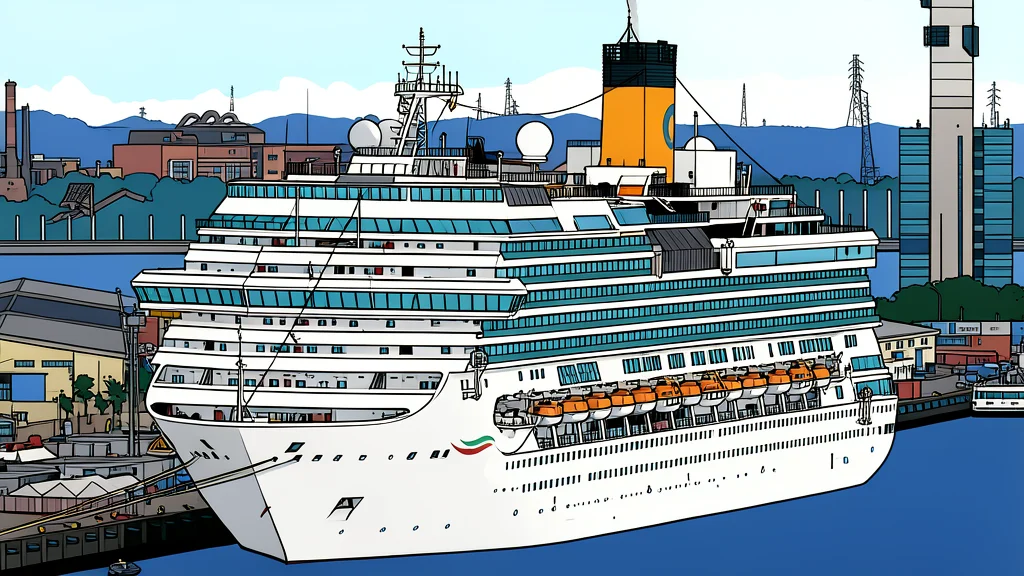
The Costa Serena cuts through the Pacific swell, its white hull a stark contrast to the blue water. Inside, 5,000 athletes prepare for a historic opening. The stakes are high, the beds are short, and the city hums with industrial energy.
Salt air hangs heavy over the Nagoya pier, mingling with the low thrum of the Costa Serena’s engines. This massive cruise ship is not here for leisure; it is the beating heart of the 2025 Asian Games, a floating village that will house thousands of competitors. The vessel sits docked against the steel and glass of Japan’s third-largest metro, a symbol of a budget-conscious approach to hosting one of the world’s largest sporting events.
Saturday marks the start of a fortnight that rivals the Olympics in scale. Organizers report more than 11,000 athletes registered, a number that has surged beyond initial projections. It is a sea of athletes, officials, and dreams, all converging on the Pacific coast for a competition that stretches from Afghanistan to Yemen.
A Harbor of Unconventional Competition
The program defies traditional expectations. Beyond the familiar lanes of track and field and the splash of the pool, the schedule includes 43 distinct sports. Kabaddi players lunge for the midline in dusty arenas, while practitioners of kurash grapple in tight quarters. Teqball players kick a ball over a curved table, and padel racquets hiss against hard walls. This is a showcase of regional identity as much as athletic prowess.
The source material from GN auto sports/multisport highlights the breadth of participation. Forty-five countries and regions have sent teams, creating a mosaic of flags and flags. North Korea’s delegation is smaller than last time, yet the presence of a refugee team underscores the Games’ role as a universal stage. The competition is fierce, with China aiming to defend its dominance after sweeping 201 golds in Hangzhou.
Logistics Strain Under Pressure
The drive to save money has created friction. With no formal village, athletes are scattered across hotels and converted containers. The last-minute scramble for rooms has drawn criticism. Basketball players complain of beds too short for their frames, a mundane detail that highlights the human cost of tight budgets. Imroze Ahmed, leading the Bangladesh delegation, acknowledges the chaos but urges patience, noting that such massive operations inevitably generate kinks.
Japan’s third hosting attempt carries the weight of the 2021 Tokyo Olympics, a event delayed by the pandemic and riddled with financial overruns. This time, the strategy is leaner. The cruise ship is a practical solution, a floating hotel that saves land costs. Yet, the comfort of the athletes remains a point of contention, with some groups scrutinizing the small, cramped spaces typical of Japanese hospitality.
Stars Shine in Nagoya
Amid the logistical hurdles, talent abounds. China’s Yu Zidi, a 13-year-old swimming prodigy, headlines the delegation. Last year in Singapore, she placed fourth in three individual events at the World Championships. Her presence signals a new era of dominance in the pool. Japan, sending nearly 900 athletes, hopes to leverage home advantage and a deep bench to challenge for the top spot on the medal table.
The scale is undeniable. With 17,000 officials and athletes, the Games surpass the Paris Olympics in sheer volume. The city of Nagoya, with its 9.5 million residents, buzzes with anticipation. The ships are docked, the pools are filled, and the racetracks are polished. For two weeks, the focus shifts entirely to the athletes, their sweat, and their triumphs in the heart of Japan.