Caleb Williams' Flawless Debut Sparks Grading Controversy
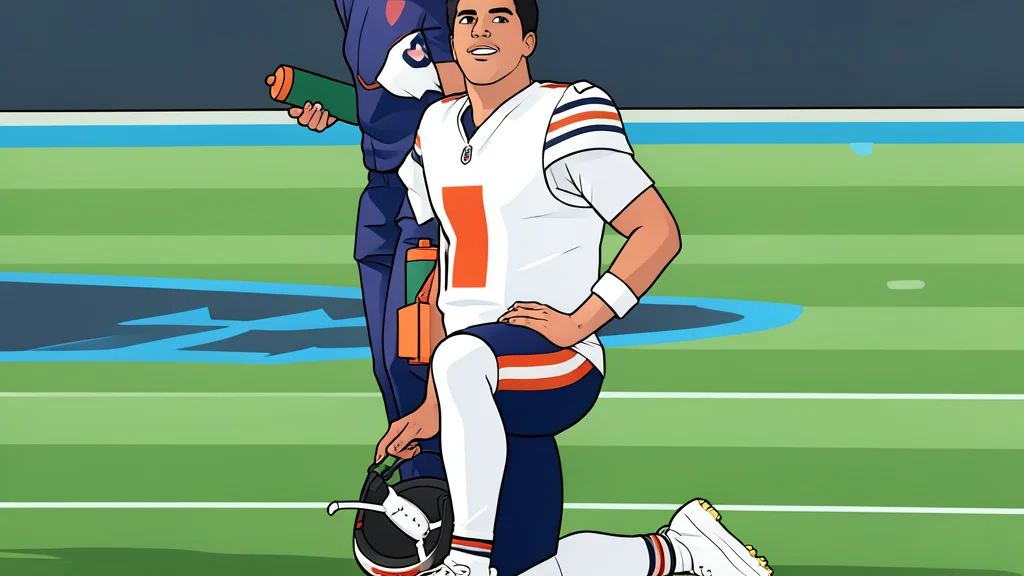
A 59-point explosion and zero turnovers should have been a walk in the park, yet the metrics told a different story, igniting a fierce debate over how we measure success in the modern NFL.
The air in Chicago still crackles with the residual heat of a dominant offensive display. Caleb Williams stood at the center of a storm, having just guided the Bears to a 59-point victory that left the scoreboard glowing with authority. His arm worked with surgical precision, completing 72.4% of his attempts for 269 yards and two touchdowns. He did not fumble, did not force a mistake, and added 65 rushing yards with two more scores. The eye test was unambiguous: a quarterback in full command, painting the field with a steady, confident hand.
Yet, the digital ledger told a colder story. Pro Football Focus assigned Williams a 64.6 grade, placing him 18th among qualified starters. That number sat just above Carson Wentz and just below Patrick Mahomes, a placement that felt jarringly out of step with the performance on the turf. While the box score sang of efficiency and impact, the algorithmic verdict whispered of mediocrity, creating a dissonance that has since rippled through the sports community.
Metrics Clash With Visible Reality
The disconnect was not limited to one observer. FS1 analyst Nick Wright took to his podcast to dismantle the grading structure, arguing that the numbers failed to capture the nuance of the football played. He pointed to the absurdity of ranking a quarterback who threw three passes due to injury nearly equal to a player who dominated the field. For Wright, the grade did not merely understate the performance; it obscured it, offering a formula that felt detached from the physical reality of the game.
Wright Condemns Analytical Arrogance
Wright’s critique was sharp and visceral. He accused the grading body of an arrogance that dismissed traditional statistical evidence as primitive. In his view, the box score provided the factual anchor of what occurred, while the grade was intended to explain the how. By failing to provide a clear rationale for Williams' mid-tier ranking, the system had lost its utility. The analyst’s frustration stemmed from a desire for clarity, a transparent bridge between raw data and human judgment that he felt was missing.
A Broader Debate On Evaluation
This incident has ignited a wider conversation on social media, with fans and analysts alike questioning the reliability of automated metrics. The backlash extends beyond a single grade, challenging the very foundation of how performance is quantified in the NFL. As the discussion continues, the tension between human perception and algorithmic precision remains unresolved, leaving the true measure of a great game up for debate.