Kenneth Walker III Defies NFL Fine with Crowd-Thrown Ball

A football sails over the sideline barrier, landing in the hands of a fan. The league office issues a fine. The running back laughs, calling the memory priceless.
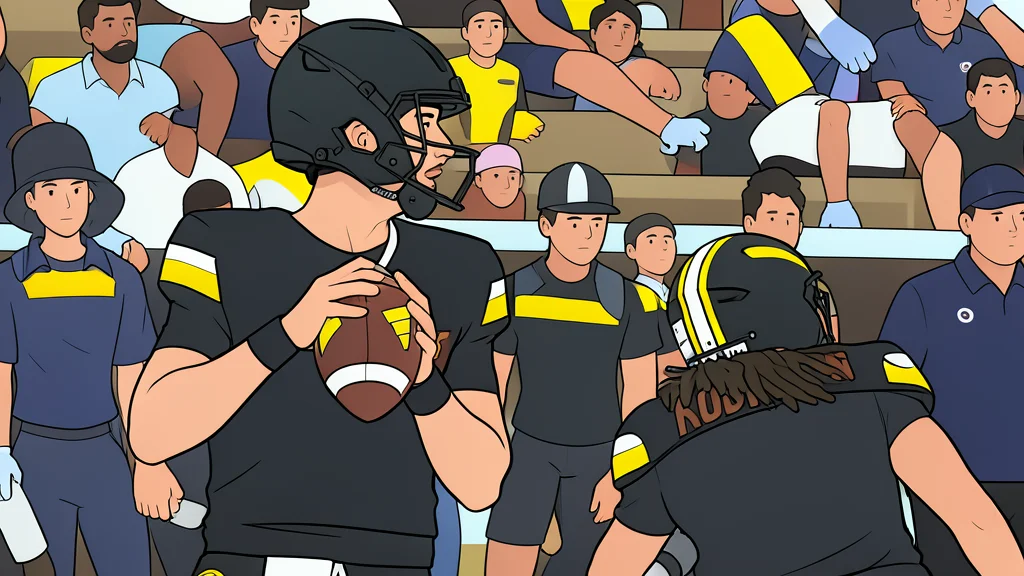
The leather sphere arcs high above the green turf, cutting through the humid air of a Kansas City night. It clears the yellow pylon, drifts over the chain, and settles into the grasp of a fan in the stands. For Kenneth Walker III, the act was pure exuberance, a raw release of joy after a dominant Week 1 performance. For the NFL, it was a violation of sportsmanship policy, triggering an automatic penalty that landed on his desk days later.
The league office released its weekly disciplinary report, citing the specific infraction: throwing the football into the stands during the victory over the Denver Broncos. The fine stood at $8,357, a sum that would escalate to $14,328 should a second offense occur. Walker did not issue a formal statement or a legal challenge. Instead, he turned to TikTok, posting a video where the ball’s flight became the centerpiece of his narrative.
Priceless Memory Over Financial Penalty
On social media, Walker addressed the sanction with a caption that rejected the league’s framing. He acknowledged the cost, noting the $8,000 deduction, but immediately pivoted to the value of the moment. "This man's memory is priceless," he wrote, signaling that the tactile connection with the crowd outweighed the monetary loss. The response was not defensive, but rather a confident assertion that the joy of the game supersedes administrative rules.
This interaction highlights the friction between player expression and league compliance. The NFL Officiating Department reviews every play from every game, referring potential violations to the Football Operations compliance team. Walker’s action was caught in this net, a mechanical process that identifies rule breaches regardless of context or intent. Yet, the player’s public embrace of the act suggests a disconnect between the league’s rigid enforcement and the emotional reality of the athletes.
Historic Performance Behind The Fine
The fine is a footnote to a remarkable week. Walker led the league with 191 scrimmage yards, combining 173 rushing yards with 18 receiving yards. He scored two touchdowns, one on the ground and one in the air, earning the AFC Offensive Player of the Week award. As the reigning Super Bowl MVP, his performance solidified his status as a dual-threat force, a rarity in the modern NFL.
His Week 1 stats placed him in exclusive company. Walker became one of only six running backs in league history to tally at least 190 scrimmage yards, a rushing touchdown, and a receiving touchdown in the opening game. This statistical feat underscores the high level of play that accompanied the controversial celebration. The fine, while significant, did not diminish the historical weight of his production.
League Enforcement Mechanisms In Action
Player infractions reach the league office through multiple channels. Officials may flag a call during the game, or teams may submit specific plays for review. Beyond these direct reports, the Officiating Department conducts a comprehensive review of all games, scanning for potential violations. Walker’s act fell into this category, identified by the compliance team as a breach of the sportsmanship code.
According to Yahoo Sports reporting, this process is standard, applying to all players regardless of their accolades. The fine serves as a deterrent, but Walker’s response suggests that for some, the experience of the moment is the only metric that truly matters. The ball is back in the league’s hands, but the memory remains with the fans, and with the player who threw it.