Ladd McConkey Injury Risk Assessment
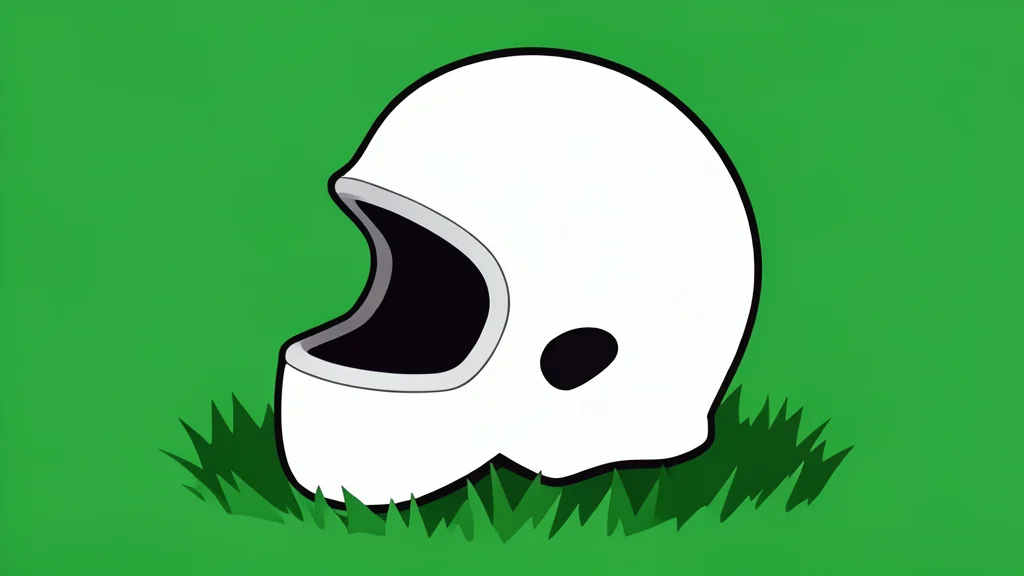
The white helmet sits motionless on the turf, a stark contrast to the green blades beneath it. In the quiet before the storm, the focus narrows to the physical vulnerability of Ladd McConkey.
The white shell of the helmet rests on the artificial turf, the dark facemask cutting a sharp line against the synthetic grass. It is a still image, yet it carries the weight of expectation. The air is still, but the tension is palpable, hanging in the atmosphere like smoke. This is the moment before the noise, where the physical reality of the game presses against the silence.
Ladd McConkey stands at the center of this quiet tension. The injury risk check, as reported by GN sports/football (en-US), places his physical condition under the microscope. It is not merely a statistical query, but a visceral assessment of fragility. The body is a machine of bone and muscle, prone to breaking under the relentless pressure of the sport. The helmet, a symbol of protection, becomes a marker of the danger lurking just beneath the surface.
The Weight of the White Shell
The helmet is more than equipment; it is a shield against the chaos. Its white color blazes against the dark green, a beacon of clarity in the murky waters of athletic risk. The facemask, a grid of metal, offers a glimpse of the eyes behind the steel. It is a barrier, a filter through which the world is seen. In the context of McConkey’s injury report, the helmet becomes a symbol of the protective measures that can only go so far. The body is the ultimate liability, and the gear is the last line of defense.
The turf beneath is a landscape of its own. The blades are uniform, precise, yet they lack the organic chaos of natural grass. They represent the controlled environment of the modern game, where every variable is measured and managed. Yet, even in this sterile setting, the risk remains. The injury check is a ritual, a necessary pause in the relentless march of the season. It is a moment to assess, to evaluate, to prepare for the impact that is always waiting in the wings.
Assessing the Physical Fragility
McConkey’s name is spoken with a weight that reflects the gravity of the situation. The injury risk is not a distant concept, but a present reality. It is a shadow that looms over the practice field, a reminder of the body’s limitations. The assessment is thorough, probing the depths of physical resilience. It is a search for the weak points, the places where the structure might fail. The outcome is not guaranteed, but the process is essential.
The silence of the moment is broken only by the rustle of the turf, a subtle sound that underscores the stillness. The helmet remains, a silent witness to the internal struggle. The injury check is a testament to the human element in the game, the part that cannot be quantified or predicted. It is a reminder that behind the stats and the strategies, there is a body, a heart, a will. The risk is real, and the assessment is the only way to navigate it.
The Quiet Before the Impact
As the moment stretches on, the focus remains on the helmet, the turf, the player. The injury risk check is a ritual of preparation, a way to mitigate the inevitable. It is a dance with danger, a negotiation with the body’s limits. The outcome is uncertain, but the intent is clear: to protect, to assess, to prepare. The helmet sits, a symbol of the resilience required to face the unknown. The game awaits, and the risk remains.