Shough's Dual-Threat Surge and Jets' Offensive Revival Define Week 2

Tyler Shough's second-half explosion and the Jets' improved output force fantasy managers to rethink their lineup strategies after two weeks of play.
Key points
- Tyler Shough’s passing success rate improved from 33.3% to 51.9% in the second half, leading New Orleans to a comeback win.
- The New York Jets’ yards per game increased to 326.0, up from 263.6 in 2025, signaling a significant offensive improvement.
- Devaughn Vele has recorded back-to-back games with seven or more targets, establishing himself as a consistent WR3 candidate.
The afternoon sun beats down on the southwest Ohio grass, where an eleven-year-old defender stands like a brick wall against the opposing offense. He uses his size to redirect shots, a physicality that belies his age, yet his confidence often pulls him too far forward. He over-anticipates the sequence, finds himself behind the play, and huffs air while trying to catch up. That frantic scramble is the defining image of fantasy football Sunday for many managers. Week 1’s solid workloads created a false sense of security, convincing us that our lineups were set. Then Week 2 arrived, and the need to play catch-up became immediate and visceral.
Skepticism is the natural response to a single week of data, especially when results clash with offseason narratives. However, two weeks of performance offer a clearer lens, filtering out the noise of flukes. For a select group of teams, the repeat performance has alleviated doubt, revealing genuine talent rather than statistical anomalies. The conversation shifts from potential to proven capability, forcing a hard look at who is truly driving the league's scoring board.
Shough's second-half explosion
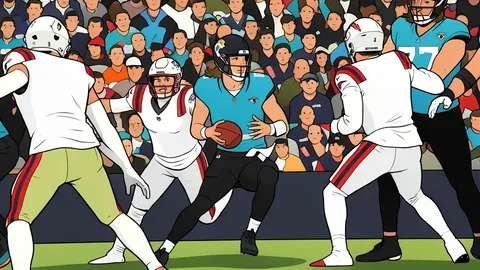
Tyler Shough did not merely lead the New Orleans Saints to a victory; he engineered a second-half masterpiece. Entering the fourth quarter trailing 17 to 9, the Saints were in a perilous position, their defense allowing a successful play on over 35% of snaps and a score on more than half of red zone trips. Shough responded with precision, throwing the tying touchdown before scoring the go-ahead himself. His passing success rate jumped from 33.3% in the first half to 51.9% in the second, while his EPA per dropback swung from negative 0.28 to positive 0.12. This is not just a highlight reel; it is a statistical shift that demands attention.
The supporting cast reinforces this trajectory. Chris Olave and Juwan Johnson both rank fifth among top wide receivers in average depth of target, providing a deep threat that stretches the field. But the emergence of Devaughn Vele is the quiet story of the week. With back-to-back games featuring seven or more targets, Vele has established himself as the team's leading slot receiver, operating in the short area with an 8.6-yard average depth. Half of his receptions turn into first downs or scores, making him a consistent WR3 candidate and a primary streaming option for Shough.
Jets' offensive momentum builds
The New York Jets entered the summer with the third-fewest skill players drafted in the top 100, a roster that invited caution. Geno Smith, the QB28, was viewed with skepticism. Yet two weeks in, against weaker defenses, their production totals have climbed sharply. Yards per game have surged to 326.0, up from 263.6 in 2025, while offensive points per game have risen to 20.0 from 15.9. The EPA per play has improved from negative 0.15 to negative 0.05, signaling a tangible shift in efficiency and impact.
Garrett Wilson anchors this offense with a floor of seven targets per week, sitting just three touchdowns away from tying his 2025 total. Breece Hall has joined the elite, ranking in the top 12 for both touches and targets. Adonai Mitchell’s 56.5% air-yard share adds a vertical dimension that offers FLEX appeal. With Frank Reich calling the plays, the upcoming trips to Detroit and Chicago present opportunities that keep the Jets' offensive options firmly in the conversation. The momentum is real, and the numbers back it up.
Unlikely candidates emerge in data
A look at the broader landscape reveals a quarterback whose stats defy expectation. Ranked 12th in passing success rate, 16th in EPA per dropback, and 16th in QB rushing rate, this signal-caller has outperformed the likes of Trevor Lawrence, Drake Maye, and Justin Herbert in passing yards over two weeks. He averages just one fewer yard per game as a runner than Jalen Hurts. This is not a breakout star with household name recognition, but a wire option that has snuck past the radar. The name will likely be on your league’s wire, and the last two weeks suggest it is time to take notice.