India Selects Thirteen Players for Nagoya Rugby Sevens
Six veterans return as India targets the 2026 Asian Games in Nagoya, facing defending champions China in Pool B.
Key points
- India has named a 13-member senior women’s rugby sevens team for the 2026 Asian Games in Nagoya, Japan.
- The squad is drawn in Pool B alongside defending champions China, Hong Kong, China, and Malaysia.
- Six players from the Hangzhou 2022 squad, including captain Shikha Yadav, return to the team.
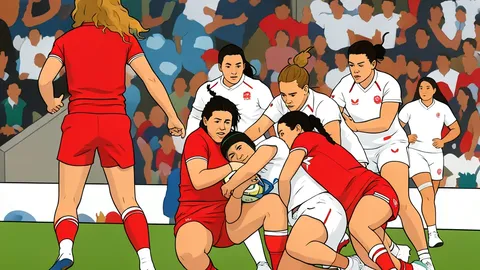
The grass at the Netaji Subhas Eastern Centre in Kolkata is still damp from the morning rain when the first sprint begins. Thirteen women cut across the green, their boots digging into the earth, leaving temporary furrows in the soil. This is the physical reality of the last stretch before Nagoya. The air is thick, the pace is relentless, and the focus is singular. They are not just running drills; they are etching muscle memory into their bodies. Every pass is tight, every break is sharp. The stadium lights hum in the distance, a low vibration that mixes with the heavy breathing of the players. There is no noise here, only the rhythmic thud of feet against turf and the whistling wind. The team is a machine in motion, calibrated for the specific demands of sevens rugby.
This squad carries the weight of history and the burden of expectation. India’s journey through the Asian Games has been jagged, marked by absence and return. After debuting in Guangzhou in 2010, the team vanished from the map for two editions. The silence was broken in Hangzhou, where they finished seventh. Now, they step into the arena again, this time in Japan. The continuity is the anchor. Six players from that Hangzhou campaign are still here, their bodies scarred by experience. Shikha Yadav leads the charge, her eyes fixed on the horizon. Beside her, Dumuni Marndi, Sandhya Rai, Mama Naik, Kalyani Patil, and Vaishnavi Patil form a core of stability. They know the rhythm of the game, the pressure of the continental stage. They are the bridge between past struggles and future ambitions.
Pool B presents a gauntlet
The draw has placed India in a crucible. Pool B is stacked with talent and aggression. China, the defending champions, sit at the top of the mountain, their dominance well-documented. Hong Kong, China, brings a rapid, technical edge that can dismantle slower defenses. Malaysia offers a physical threat, a team that fights for every inch of ground. It is a pool of giants. For India, the path to the knockout stages is narrow and steep. There is no room for error. Every tackle must be clean, every line break must be decisive. The competition level is known, as Head Coach Paul Delport emphasized. The goal is not just to participate, but to execute under pressure. The players have trained to stay composed when the stakes are highest. They have worked on consistency, on trusting the process. The challenge is to translate that training into performance when the stadium roars.
Preparation has been methodical and intense. The team has spent the season in the Asia Rugby Emirates Sevens Series, testing their mettle against the best in the region. In Suzhou, they finished sixth in Round 1 of the 2026 series, a result that mirrors their previous year’s performance. It is a solid foundation, a proof of concept. But the Asian Games is different. It is a multi-sport event, a spectacle that draws the eye of the nation. The pressure is amplified. The training camp in Kolkata focused on the details that often go unnoticed: team combinations, tactical shifts, conditioning, and match readiness. Every session was designed to sharpen the edge. The players have absorbed the tactics, internalized the systems. Now, it is time to unleash them.
Leadership drives the cultural shift
The voice guiding this group is Paul Delport. His words are measured, focused on the internal state of the team. He speaks of building toward this moment, of preparing players to be consistent. He emphasizes trust, trust in the work put in, trust in each other. It is a message of quiet confidence. Delport knows the level of competition they will face. He does not promise miracles; he promises preparation. He asks the players to stay composed, to let the training speak. This approach has fostered a culture of resilience. The players are not just athletes; they are a unit. They move together, think together, breathe together. The coach’s influence is felt in their posture, in their eye contact, in their shared determination.
Rugby India President Rahul Bose sees this squad as a vital platform for the sport’s growth. He highlights the significance of the Asian Games for the women’s program. The return to the Games for the second time in succession is a milestone. It signals stability, progress. Bose is proud of the group, of their development through regular international competition. He sees the continuity from Hangzhou as a positive sign. The team is maturing, gaining depth. The support from the governing body is strong, providing the resources needed for such high-level competition. The message is clear: India is committed to rugby sevens. This squad is the embodiment of that commitment. They are not just playing a game; they are representing a nation, a sport, a dream.
Thirteen names define the future
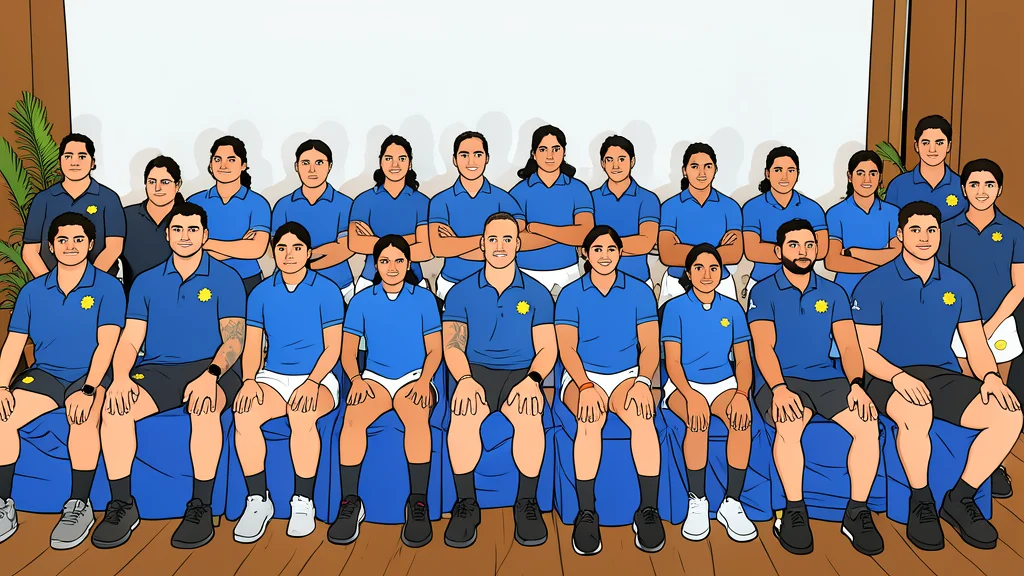
The roster is a blend of experience and energy. Shikha Yadav, the captain, sets the tone. Dumuni Marndi, the vice-captain, provides the backup leadership. Amandeep Kaur, Arti Kumari, Bhumika Shukla, and Vaishnavi Patil bring speed and skill. Guriya Kumari, Kalyani Patil, and Mama Naik offer power and precision. Nirmalya Rout, Sandhya Rai, Sandhyarani Tudu, and Ujjwala Ghuge complete the thirteen. Each name carries a story, a journey. They have trained together, suffered together, celebrated together. They are a family on the field. The diversity of their skills creates a dynamic force. They can adapt to any situation, counter any strategy. The chemistry is palpable. When they line up at the start line, the world seems to hold its breath. They are ready. The ball is on the grass, the goalposts stand tall, and the future is theirs to seize.